


 For all latest news, follow the Daily Sun's Google News channel.


Bangladesh, Pakistan sign five-year deal to boost essential goods trade
Daily Sun Report, Dhaka
Published: 29 Nov 2026, 12:55 PM
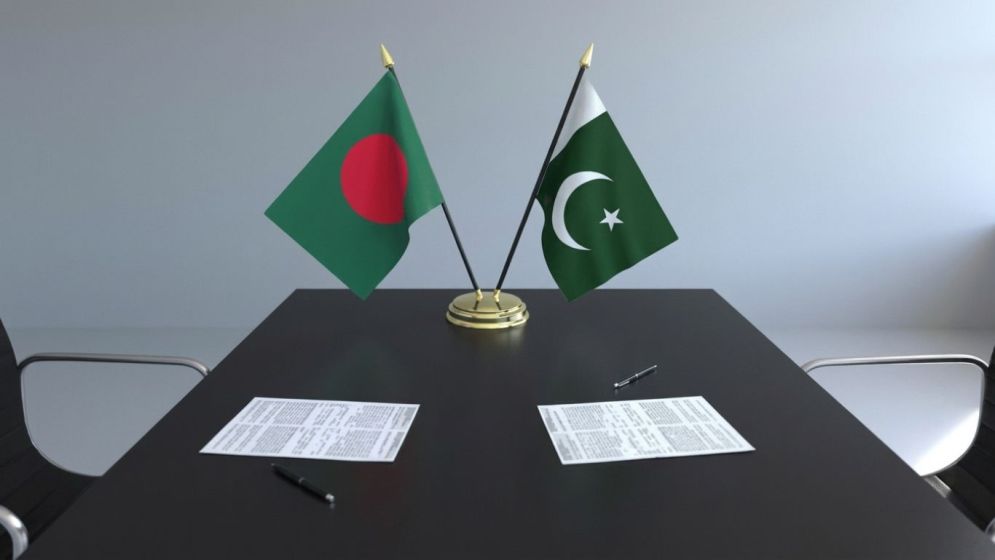
Bangladesh and Pakistan have signed a five-year memorandum of understanding (MoU) to strengthen bilateral trade cooperation and ensure a stable supply of essential commodities, opening up new opportunities for government-to-government (G2G) trade in rice, wheat, sugar, edible oil, pulses and various agricultural products.
The Trading Corporation of Bangladesh (TCB) and the Trading Corporation of Pakistan (TCP) signed the agreement on Sunday at the conference room of the Ministry of Commerce at the Secretariat.
TCB Chairman Brig Gen Mohammad Faisal Azad signed the MoU on behalf of Bangladesh, while Pakistan High Commissioner to Bangladesh Imran Haider signed it on behalf of Pakistan.
Commerce Secretary Sharif Uddin Ahmed Chowdhury and officials from both countries were present at the signing ceremony.
Under the agreement, the state-owned trading organisations of the two countries will be able to import and export various essential commodities, agricultural products and agricultural inputs based on mutual requirements and agreement.
The potential items include all varieties of rice, wheat, refined and raw sugar, canola, soybean, sunflower, rice bran and palm oils.
The list also covers sesame, potatoes, onions, lentils, chickpeas, tea, pineapples, jackfruits, dates and fertilisers, among other agricultural products.
However, the signing of the MoU does not mean that any immediate import or export deal has been finalised.
If either party intends to procure a particular product, it will have to submit a written proposal specifying the quality, quantity, specifications and expected delivery schedule. Separate product-specific agreements will subsequently be negotiated to finalise prices, quantities, quality standards and supply conditions.
Speaking at the ceremony, Commerce Secretary Sharif Uddin Ahmed Chowdhury said the MoU would establish direct and organised trade relations between the state-owned trading organisations of the two countries.
He said the agreement would create new opportunities for cooperation in the import and export of essential commodities and agricultural products while safeguarding the economic interests of both countries.
The relevant organisations will be able to directly negotiate and finalise transaction terms, including product quality, quantity, delivery schedules and financial arrangements, he added.
The commerce secretary also stressed the importance of regular communication between TCB and TCP, timely assessment of trade proposals and cooperation between the commerce ministries of the two countries for effective implementation of the agreement.
Pakistan High Commissioner Imran Haider said the MoU would establish direct institutional relations between the state-owned trading organisations, helping streamline the import, export and supply of essential commodities.
He said Pakistan had surplus stocks of various agricultural products, including basmati rice, onions, potatoes and spices, and was ready to supply these items according to Bangladesh's requirements.
Highlighting recent developments in bilateral relations, the high commissioner said cooperation between the two countries had increased in trade, education and connectivity.
Pakistan has withdrawn anti-dumping duties on hydrogen peroxide imported from Bangladesh and retained a duty-free quota for importing 10,000 metric tonnes of Bangladeshi tea annually, he said.
He also mentioned that the first consignment of Bangladeshi pineapples had reached Karachi from Dhaka in October.
TCB Chairman Brigadier General Mohammad Faisal Azad said the MoU would not remain merely a formal document or an expression of goodwill, but would be translated into tangible commercial outcomes through the joint efforts of the two organisations.
He said the agreement would serve as an important institutional platform for exploring mutually beneficial trade opportunities, facilitating procurement processes and strengthening cooperation between TCB and TCP.
He added that the two organisations would work closely to identify specific products, ensure competitive pricing and maintain quality standards while ensuring timely supplies in line with the requirements of both countries.
The MoU will remain effective for five years from the date of signing and will automatically be renewed for another five years unless either party decides otherwise.
However, either party may terminate the agreement by providing at least three months' written notice through diplomatic channels.
Officials said the agreement could provide Bangladesh with an alternative source of essential commodities amid supply disruptions, price hikes and uncertainties in traditional international markets.
They said the direct government-to-government trade framework could facilitate procurement and ensure greater flexibility in sourcing essential commodities.
However, the impact of the agreement on the country's domestic market will depend on the conclusion of product-specific contracts, competitive import prices, quality assurance and timely delivery.
The five-year agreement is expected to strengthen commercial ties between Bangladesh and Pakistan while creating additional opportunities to diversify Bangladesh's sources of essential commodities and agricultural supplies.