


 For all latest news, follow the Daily Sun's Google News channel.


Liberation War echoes Algerian Revolution, envoy says
Daily Sun Report, Dhaka
Published: 01 Nov 2026, 12:00 AM
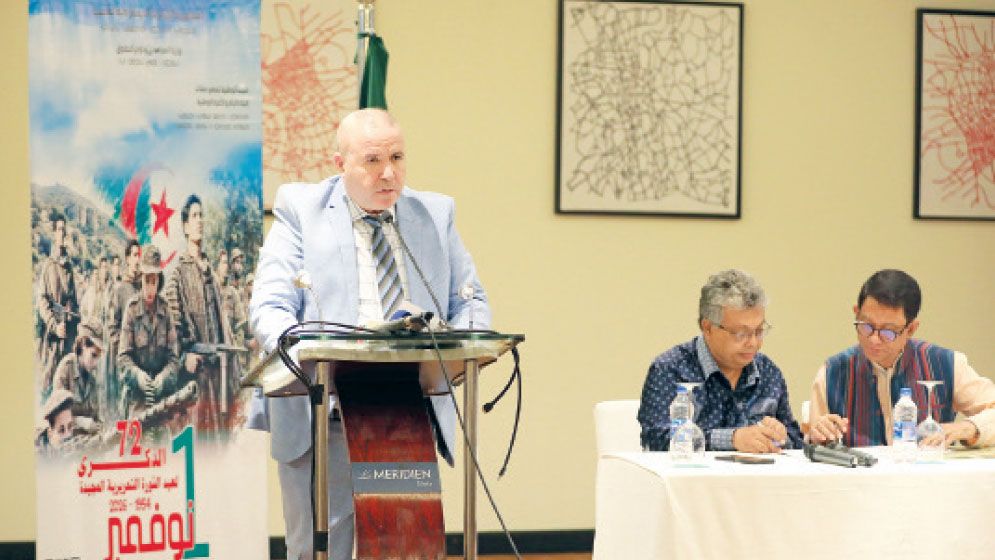
Algeria’s Ambassador to Bangladesh Abdelouahab Saidani speaks on the eve of the Algerian Revolution on Sunday. - DAILY SUN PHOTO
Algerian Ambassador Abdelouahab Saidani on Saturday said his country’s struggle for independence resonates deeply with Bangladesh, where sacrifice and national self-determination hold high significance.
The independence struggles of the two countries reminds both nations of “the value of independence and the responsibility to preserve it through peace, inclusion and respect for humanity,” he said.
Hosted at a city hotel in Dhaka, the event marked Algerian Revolution Day on 1 November.
“It is an honour to reflect on the Algerian Revolution on 1 November 1954 – a defining struggle whose significance extends far beyond Algeria borders,” the envoy said in opening remarks.
For people living under colonial domination, Algeria became a powerful symbol of hope and the determination to achieve freedom.
After 132 years of French colonial rule, Algeria achieved independence through immense sacrifice, courage, and determination.
The revolution transformed its future while influencing international diplomacy, liberation movements, human rights debates, and the global understanding of sovereignty.
The Algerian Revolution placed the rights of colonized peoples at the center of international debate. It exposed the contradiction between proclaiming universal human rights and denying entire populations their freedom, dignity, and political voice.
The struggle strengthened the understanding that human rights include a people’s right to determine their own future. Its international influence can be understood through several important developments.
Abdelouahab said Algeria became widely known as the “Makkah of Revolutionaries”, as its independence demonstrated that a determined liberation movement could challenge a powerful colonial state through resistance, organisation, diplomacy, and international solidarity.
Following independence, Algeria became an important meeting place and source of support for liberation movements, connecting struggles across Africa, Asia, and the Americas.
“The Algerian struggle inspired anti-apartheid activists, including Nelson Mandela, as well as the Black Panther Party and movements across Asia and Latin America,” he added.
Abdelouahab also said Algeria’s demand for independence became part of a broader movement affirming that people have the right to choose their political status and pursue their own development. “Algerian Revolution helped strengthen South-South cooperation and the belief that countries emerging from colonial rule could support one another through diplomacy, mutual assistance, and shared advocacy,” he added.