


 For all latest news, follow the Daily Sun's Google News channel.


Named in Nepal unrest probe, Pakistani cleric plans fresh Bangladesh tour
Wireast
Published: 31 Oct 2026, 02:05 PM
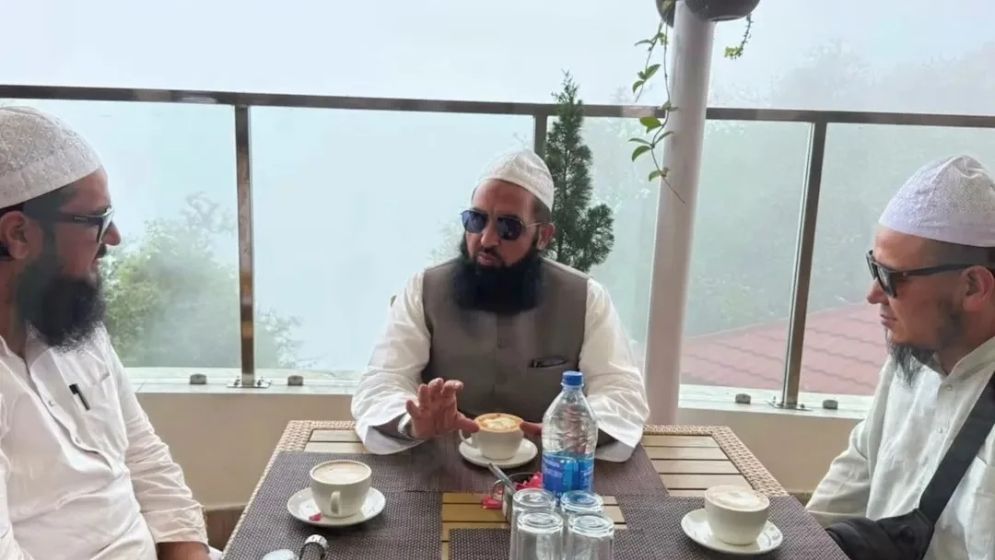
Photo: Collected
A Pakistani cleric whose movements were reportedly examined after deadly communal unrest in Nepal is being advertised for religious gatherings in northern Bangladesh, where earlier preaching tours have given him access to an established network of seminaries and organisers.
Maulana Muhammad Ilyas Ghuman is listed to speak on 6
November in Mianpur, near the northern city of Rajshahi, and on 7 November at a
two-day Islamic conference in Porsha, in neighbouring Naogaon district.
The proposed engagements would take him back to a region
included in his advertised Bangladesh itinerary in August.
They also follow Indian and Nepalese media reports alleging
that Nepal’s intelligence service had examined his travels and meetings before
communal violence erupted in the country’s southern border belt in July.
Ghuman is being advertised for fresh religious gatherings in
northern Bangladesh, months after reports about a Nepalese intelligence inquiry
placed his movements under scrutiny following deadly communal unrest.
Those prospective appearances raise questions about what
checks Bangladesh’s authorities have conducted, what information they have
sought from Nepal and who is responsible for arranging his visits.
The record that can be traced is broader than a single
controversial visit.
It shows an established relationship with Bangladeshi
religious institutions, repeated preaching engagements and attendance at a
Dhaka gathering demanding state action against the Ahmadiyya community.
That history provides a firmer basis for examining his
influence in Bangladesh.
A recurring
Bangladesh circuit
Bangladeshi reporting indicates that Ghuman’s visits predate
the Nepal controversy.
On 7 November 2025, the religious news outlet Our Islam
reported that he had returned to Bangladesh following a visit the previous
November.
It identified Al-Markazul Islami as the organisation
managing and supervising his trip.
The report quoted Al-Markazul Islami chairman Hamza Shahidul
Islam discussing Ghuman’s arrangements and said his first programme, at
Chattogram’s Jiri Madrasa, had already taken place.
An August 2026 itinerary published by the same outlet
advertised a substantially wider circuit. It listed religious and educational
engagements in Dhaka and several districts, including Rajshahi, Naogaon, Bogura
and Pabna.
The schedule included Jamia Usmania in Katakhali, Rajshahi,
on 26 August, and Jamia Islamia Darul Hidaya in Porsha on 27 August. It also
advertised engagements involving Al-Markazul Islami.
The November program has been advertised as an eighth annual
waz mahfil at a madrasa-adjacent field in Miapur at 10am on Friday, 6 November,
organised by Jamia Islamia Jamiria Darul Quran. They also list Ghuman for 7
November at the Porsha conference, which continues on 8 November.
The earlier published itinerary is significant: Porsha, an upazila in Naogaon district near the Indo-Bangla border appears as a recurring destination rather than a newly announced stop.
A former Afghan
Jihadi
Ghuman is associated with Markaz Ahle Sunnat Wal Jamaat in
Sargodha, Pakistan.
It was established under his patronage in 2002 and their
activities include religious education, specialist study, online courses and
spiritual training.
An older Urdu profile published by Ahnaf Media offers a more
revealing account of his background.
Written in an admiring tone, the profile states that Ghuman
participated in the Afghan jihad during his religious studies.
It also records arrests in 1996 and 1999, while asserting
that he was subsequently acquitted in both cases.
The Nepal allegations
Media reports in August alleged that Nepalese intelligence
was examining Ghuman’s movements following the 26 July unrest in Sunsari.
A preliminary intelligence assessment reportedly examined
the presence of Ghuman and Kathmandu mosque imam Mufti Abu Bakr Qasmi, in
sensitive border districts.
Nepali media subsequently carried a report alleging links
between Ghuman and Harkat-ul-Mujahideen, Harkat-ul-Ansar and Hizbul Mujahideen.
It also described alleged meetings in Nepal’s border
districts and scrutiny of visiting Bangladeshi clerics.
A documented connection to sectarian mobilisation
In Bangladesh, a more directly documented concern involves
the political use of religious identity.
The local media reports identified Ghuman among foreign
religious figures attending a November 2025 gathering at Dhaka’s Suhrawardy
Udyan where organisers demanded that the government declare Ahmadiyyas a
non-Muslim minority.
Ahmadiyyas identify as Muslims, but their beliefs are
rejected by the clerics behind such campaigns.
The gathering launched a year-long campaign involving
signatures, memorandums and further conferences. The newspaper also reported
that the Ahmadiyya Muslim Jama’at had written to the chief adviser before the
event requesting protection for its members, lives and property.
It places him at an event organised around securing state
restrictions on a religious community’s recognised identity.
This is relevant to assessing his public role. The issue
extends beyond whether a foreign preacher has committed a criminal offence: it
includes whether prominent platforms help legitimise campaigns that expose a
minority to exclusion and intimidation.
The locally circulated posters set out a three-day sequence
of religious engagements.
The poster names Rajshahi businessman Abdul Kaiyum Shah as
chief guest, cleric Shahidul Islam as chair, and Itidal Foundation Rajshahi as
the managing organisation.
A separate poster advertises a two-day Islamic conference at
Porsha’s main field in Naogaon on 7-8 November, running from after the
afternoon Asr prayer until dawn.
Organised by Islami Sammelan Sangstha, Porsha, it lists
Ghuman as the principal speaker on the first day and Bangladeshi Islamist
leader Mamunul Haque as chief guest on the second. Both programmes draw on a
wider roster of local and visiting clerics.
Mamunul’s inclusion brings another contentious figure into
the programme. The leader of Bangladesh Khelafat Majlis, an Islamist political
party, and a senior figure in Hefazat-e-Islam, a movement rooted in the
country’s conservative seminaries, he became a prominent voice against public
sculptures in 2020.
During the dispute over a planned sculpture of Bangladesh’s
founding president, Sheikh Mujibur Rahman, Mamunul said he would seek the
removal of all sculptures if he had the legal, moral and political capacity.
His position placed religious objections to sculpture at the
centre of a confrontation over the country’s public culture and national commemorations.
His name also figured in the events preceding an attack on
Hindu homes in Shalla, northeastern Bangladesh, in March 2021. After a Hindu
resident criticised his remarks on Facebook, a mob attacked and looted houses
in Noagaon village.
Police identified the attackers as Hefazat supporters; the
organisation denied involvement. The episode exposed how criticism of a
powerful preacher could become the trigger for collective retaliation against a
minority community.
After the 2024 regime change Mamunul has become more
influential allegedly with the support of a part of the government.
Reporting on his election affidavit in early 2026, he had
disclosed 38 disposed cases, ending in withdrawals or acquittals, and three
remaining cases, including proceedings involving explosives legislation and the
Penal Code.
Mamunul was prominent in the movement opposing Indian Prime
Minister Narendra Modi’s 2021 visit.
His inclusion gives the Porsha gathering a connection to
organised Islamist politics beyond its advertised religious program.