


 For all latest news, follow the Daily Sun's Google News channel.


Bangladesh prioritises national interests in strengthening ties with Japan: Humaiun
One of the key objectives of the visit was to translate that interest into actual investment, he said
BSS, Dhaka
Published: 27 Oct 2026, 11:59 PM
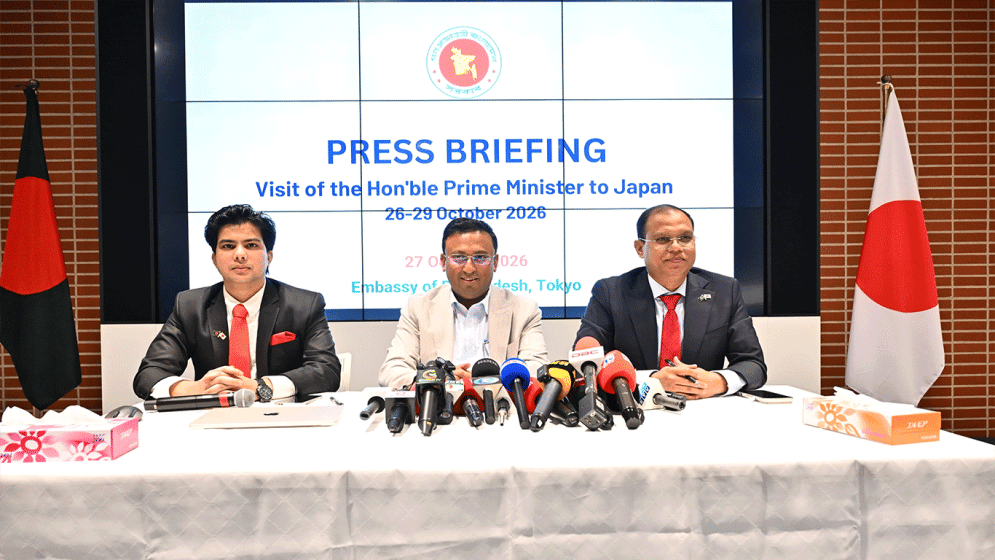
Photo: BSS
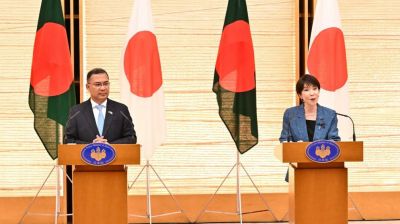
State Minister for Foreign Affairs Humaiun Kobir has said Prime Minister Tarique Rahman has prioritised Bangladesh’s national interests in strengthening bilateral ties with Japan and advancing development projects during his bilateral summit with Japanese Prime Minister Sanae Takaichi.
“The two leaders discussed enhancing trade,
investment and economic cooperation between the countries, with a particular
focus on employment-generating industries and strategic economic projects,” he
told journalists at the Bangladesh Embassy in Tokyo on Tuesday night following
the summit.
Kobir said the prime minister had emphasised
prioritising Japanese investment in sectors capable of creating jobs in
Bangladesh.
Japan’s private sector plans to invest around USD$6.34
billion in Bangladesh over the next five years, potentially creating about
200,000 jobs, he said.
The two sides also discussed expediting the
implementation of the Bangladesh-Japan Economic Partnership Agreement (EPA) and
Japan’s support was sought for a smooth and sustainable graduation of
Bangladesh from the Least Developed Country (LDC) category.
Against the backdrop of the COVID-19 pandemic,
longstanding economic challenges and the recent global energy crisis,
Bangladesh has sought an additional three years to prepare for LDC graduation,
Kobir said, adding that Japan was urged to consider the request seriously.
He said the two countries discussed establishing a
joint ministerial-level mechanism to accelerate bilateral cooperation, identify
priority sectors, set specific timelines and regularly review progress.
Strengthening cooperation between the private sectors of both countries was
also emphasised.
Japan has shown interest in investment in
Bangladesh’s energy sector, the development of technology-driven industrial
cities and infrastructure projects, including elevated expressways at various
locations, the state minister said.
He also referred to Japan’s development assistance
of 5 billion yen, equivalent to around $34 million.
Describing the prime minister’s visit as an
important opportunity to attract new investment and strengthen bilateral
economic ties, Kobir said international partners were showing growing interest
in investing in Bangladesh in the context of its new democratic journey.
One of the key objectives of the visit was to
translate that interest into actual investment, he said.
During the visit, the prime minister’s tours of
Japan’s energy infrastructure and logistics facilities provided opportunities
to learn from Japanese experience for Bangladesh’s development plans,
particularly in LNG terminal development and modern logistics management, Kobir
added.
Replying to a question about language proficiency
and employment opportunities for Bangladeshi students studying in Japan, the
state minister said the two countries were discussing Japanese-language
education and skilled workforce development, with a mechanism in this regard at
the implementation stage.
On the Rohingya issue, he said Bangladesh planned to
raise the matter prominently in various multilateral diplomatic forums next
year and expected Japan to play a positive role in resolving the crisis.
Overall, the visit had been highly productive, Kobir
said, expressing hope that the constructive discussions between the two leaders
in a cordial atmosphere would create new opportunities for Bangladesh’s
development, industrialisation and job creation.
Additional Press Secretary to the Prime Minister
Atikur Rahman Rumon and Deputy Press Secretary Shahadat Shadhin were also
present at the briefing.