


 For all latest news, follow the Daily Sun's Google News channel.


JAPAN VISIT: FROM SHAHEED ZIA TO TARIQUE RAHMAN
Special Correspondent
Published: 25 Oct 2026, 12:00 AM
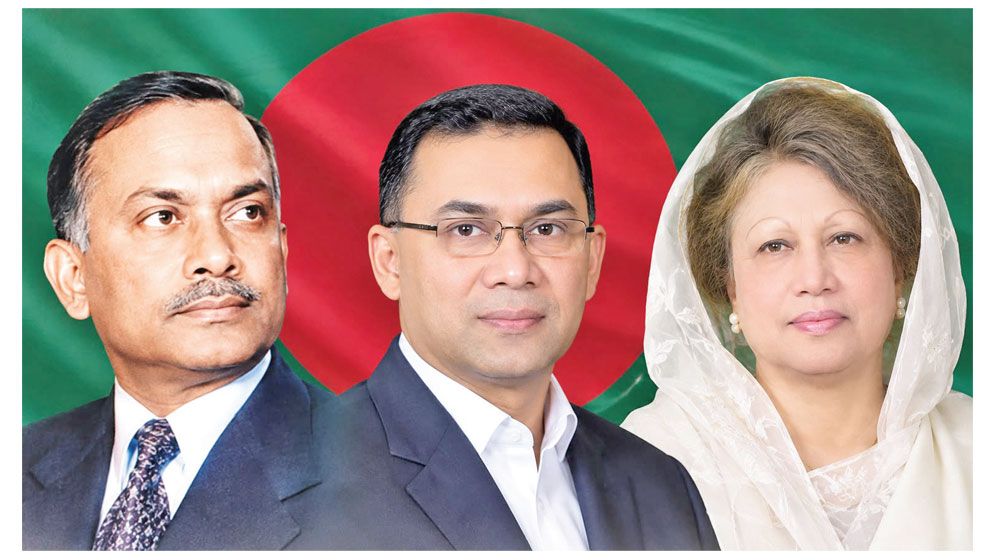
Japan is a close friend and development partner of Bangladesh. For a long time, Japan has been making important contributions to Bangladesh's economic development. Across the country, the footprint of Japanese development cooperation is visible. The economic relationship between Bangladesh and Japan was initiated by Shaheed President Ziaur Rahman. The new journey in relations launched by Zia was elevated to new heights by Begum Khaleda Zia. Now, it is expected that Shaheed Zia and Begum Zia’s worthy son, Tarique Rahman, will further strengthen this relationship.
Tokyo hopes that Prime Minister Tarique Rahman’s upcoming visit to Japan will inject new momentum into bilateral economic cooperation, increase two-way investment, and bolster business confidence. Japan is giving particular emphasis to advancing cooperation in investment, infrastructure development, and creating a business-friendly environment.
At the invitation of Japanese Prime Minister Sanae Takaichi, Prime Minister Tarique Rahman will pay an official visit to the country from 26 to 29 October. On October 20, the governments of both countries officially announced the visit.
On 27 October, the second day of the visit, Tarique Rahman will hold high-level bilateral talks with Sanae Takaichi at the Prime Minister's Office in Tokyo. Foreign Secretary Asad Alam Siam said at a press briefing at the Ministry of Foreign Affairs that the Prime Minister of Japan will host a luncheon in honour of the prime minister of Bangladesh on this occasion.
Welcoming Tarique Rahman’s first visit to Japan as prime minister, the Economic Division of the Japanese Embassy in Dhaka stated in response to a question from BSS that they hope this visit will further strengthen the strategic partnership between the two nations.
Japan believes this visit will create an opportunity to advance cooperation aimed at regional peace, security, and shared prosperity. At the same time, both countries will be able to reiterate their shared priorities and discuss how bilateral cooperation can play a more effective role in achieving Bangladesh’s development targets.
Regarding economic cooperation, the Economic Division of the Embassy of Japan said that due to the business-friendly policies of the new government, the sentiment among investors in Bangladesh is improving. Japan is also attaching special importance to improving the investment climate, expanding cooperation in the infrastructure sector, and enhancing human resources and institutional capacity.
During the visit, the prime minister will deliver the keynote address at the Japan-Bangladesh Economic Forum. In addition, he will hold meetings with Japanese business leaders to discuss investment opportunities, trade expansion, and industrial cooperation.
The prime minister’s tentative schedule also includes meetings with representatives of the Japan-Bangladesh Parliamentary Friendship League and the Japan-Bangladesh Committee for Commercial and Economic Cooperation.
Furthermore, meetings are planned between the Prime Minister and the President of the Japan International Cooperation Agency (JICA), the President of the Japan External Trade Organization (JETRO), the Governor of the Japan Bank for International Cooperation (JBIC), and the Chairman of the Sasakawa Peace Foundation.
Shaheed President Ziaur Rahman laid the foundation of Bangladesh-Japan relations. Ziaur Rahman visited Japan along with his wife, Khaleda Zia. He went to Japan in April 1978. On 8 April, he met with Emperor Hirohito of Japan.
Following that five-day visit from 5 to 9 April, President Zia visited Japan again on 8 July 1980. According to international media reports, that visit was to attend the funeral of then-Japanese Prime Minister Masayoshi Ohira.
During Begum Zia’s tenure as prime minister, initial discussions regarding the Padma Bridge were initiated during her visit to Japan. Begum Zia had sought Japan’s assistance for the Metro Rail project. Indeed, Begum Khaleda Zia envisioned today's Metro Rail.
Thus, the relationship between the Zia family and Japan is historic. The prime minister's visit to Japan conveys a message of making that relationship even stronger.
The tentative itinerary of the visit also includes visits to a liquefied natural gas (LNG) terminal and power plant in Futtsu City, Chiba Prefecture, as well as the headquarters of UNIQLO and a Toyota factory in Nagoya.
Attracting new Japanese investment, expanding bilateral trade, and accelerating ongoing development projects will receive special focus during the visit. Discussions are also expected on the effective implementation of the Bangladesh-Japan Economic Partnership Agreement (EPA), signed in February 2026, and ways to expand access for Bangladeshi products in the Japanese market.
The foreign secretary indicated that during the visit, memorandums of understanding (MoUs) or cooperation announcements might be made across various fields, including agriculture, fisheries, human resource development, skill enhancement, civil aviation, trade, environmental conservation, and the modernisation of local government systems.
Detailed discussions are also expected regarding Japanese cooperation in establishing factories in Bangladesh, job creation, and human resource development in line with the Prime Minister's priorities.
Alongside bilateral economic matters, the two countries may discuss strengthening cooperation on regional and international peace and stability, a sustainable and peaceful solution to the Rohingya crisis, and tackling the energy crisis.
The Economic Division of the Japanese Embassy noted that the visit will provide an opportunity to discuss ways to remove investment barriers, boost business confidence, and lay a solid foundation for future economic initiatives.
Japan has also emphasised the effective implementation of decisions and commitments made during the high-level meetings. According to Japan, beyond setting shared priorities in discussions, properly implementing subsequent steps is crucial to ensuring tangible benefits. Welcoming visible progress in ongoing areas of cooperation, Japan stated that real improvements in existing initiatives will help build business confidence and encourage new investments.