


 For all latest news, follow the Daily Sun's Google News channel.


Experts call for stronger action on information integrity
In the closing session, recommendations from the day were presented to help shape future policy and collaboration
Daily Sun Report, Dhaka
Published: 18 Aug 2026, 11:13 PM
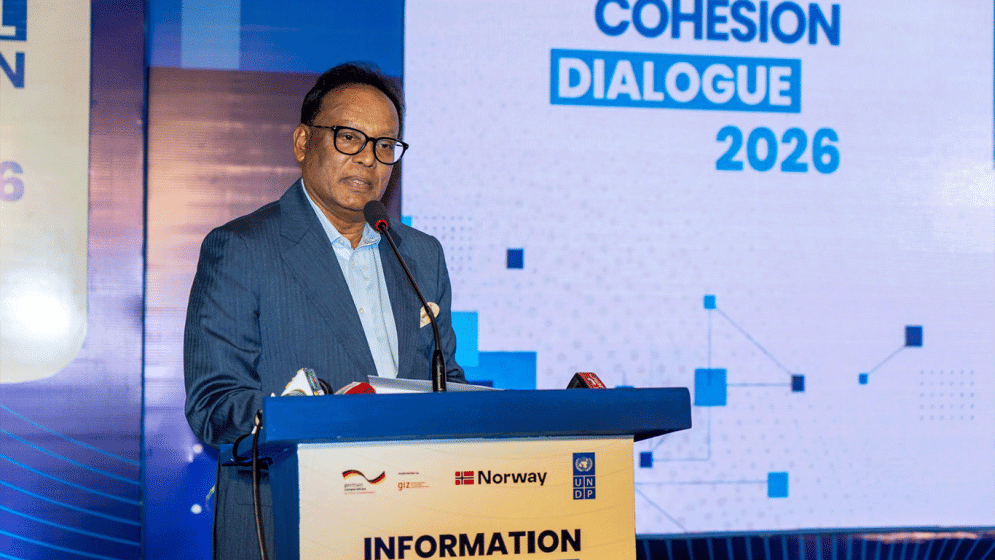
Photo: Courtesy
Experts on Tuesday said at a high-level dialogue in the capital that strengthening access to credible information, building public trust and protecting people from the growing harms of misinformation and manipulated content are essential to maintaining social cohesion and inclusive democratic participation.
The “Dialogue on Information Integrity and Social
Cohesion in Bangladesh: Policy, Platform Accountability and Collective Action,”
organised by the United Nations Development Programme (UNDP) and supported by
GIZ, brought together government representatives, media professionals,
technology platforms, civil society, fact-checkers, development partners and
other stakeholders to identify practical responses to emerging challenges in
Bangladesh’s information environment, said a press release.
Speaking as Chief Guest at the inaugural session,
Faqir Mahbub Anam, member of parliament and minister at the Ministry of Post
and Telecommunications and the ICT Division, emphasised that information
integrity is closely connected to trust, participation and social harmony.
“Information integrity is about ensuring that people
have access to accurate, reliable, and trustworthy information, so they can
make informed decisions, participate meaningfully in society, and engage
constructively with one another,” he said, calling for collaboration among
government, media, digital platforms, civil society, academia, youth and
development partners.
Stephen Rodriques, resident representative of UNDP Bangladesh,
highlighted the need to translate discussions on information integrity into
concrete and coordinated action. “Let us use today’s discussion to move from
analysis to action. We need greater clarity on who needs to act, what pathways
are needed, and how we can respond more quickly when people or communities are
at risk.”
He also said, “information integrity is not simply
about protecting the information environment, it is about protecting people,
strengthening trust, and preserving the space for peaceful and inclusive public
life.”
Mahfuz Anam, editor of The Daily Star, highlighted
the growing responsibility of professional journalism and citizens in an
information environment transformed by social media and artificial
intelligence.
“The more freedom you get, the more responsibility
comes on your shoulder,” he said, stressing the importance of verification,
credible journalism and the growing role of professional fact-checkers.
The dialogue featured three thematic discussions on
policy and institutional frameworks for information integrity, digital safety
and security, and collective action for social cohesion and narrative
resilience.
Across the sessions, participants highlighted the
need for stronger institutional coordination, platform accountability, media
literacy, early-warning mechanisms and rights-based responses to harmful online
narratives, while stressing that addressing disinformation requires not only
technological solutions but also responsible platforms, credible and
independent media, public awareness, institutional trust and collective action.
In the closing session, recommendations from the day
were presented to help shape future policy and collaboration. Member of
Parliament and Information and Broadcasting Minister Zahir Uddin Swapon was the
chief guest in the closing session.
During his remarks, he said, “We cannot ignore the
technological wave; we must engage with it actively. The government is ready to
work with UNDP and other partners to strengthen public trust, build stronger
institutions and develop adaptive safeguards that protect citizens in a rapidly
evolving information environment. The time is now to move from dialogue to
action.”
“Information integrity is essential to building
trust and social cohesion. We now need coordinated action to protect people and
create a safer, more inclusive information environment,” said Sonali Dayaratne,
deputy resident representative at UNDP Bangladesh.
Among others, Alexander Falck-Bilden, deputy head of
mission at the Royal Norwegian Embassy, Susan Vize, UNESCO representative to
Bangladesh, Sheela Tasneem Haq, UNDP, Kazi Faisal Bin Seraj, country representative
of The Asia Foundation also spoke.
The discussions will inform a policy brief with key
recommendations and help strengthen collaboration towards a more resilient and
trustworthy information ecosystem in Bangladesh.