


 For all latest news, follow the Daily Sun's Google News channel.


India at 80: What Its Journey Means for Bangladesh
Special Correspondent
Published: 15 Aug 2026, 06:12 PM
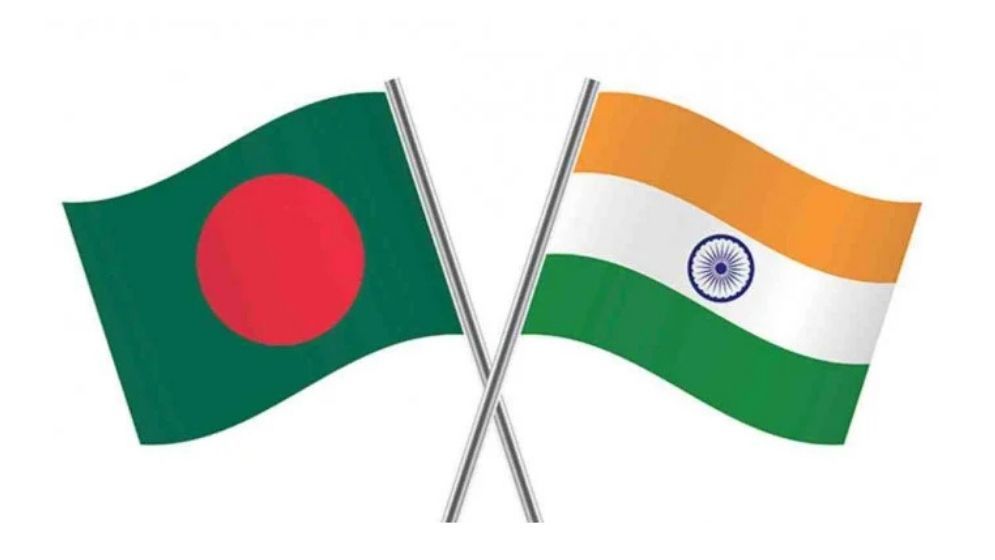
As India celebrates its 80th Independence Day on 15 August, Bangladesh has more than a passing interest in the story unfolding across its western and northern borders. India is not simply Bangladesh's largest neighbour. It is a country with which Bangladesh shares history, rivers, culture, trade, geography and, most importantly, the defining experience of 1971.
For Bangladesh, therefore, India's rise
matters.
What happens in India has consequences far
beyond India. Its economic growth affects regional trade. Its infrastructure
plans shape connectivity. Its domestic politics influence the neighbourhood.
Its foreign policy has implications for South Asia. And its success -- or
failure -- in managing its enormous diversity carries lessons for every country
in the region.
When India became independent in 1947, the
odds did not appear particularly favourable. The country inherited widespread
poverty, illiteracy, food shortages and weak infrastructure. Its extraordinary
linguistic, religious, ethnic and cultural diversity led many observers to question
whether such a vast and fragmented society could sustain democracy, let alone
remain united.
Eight decades later, the answer is difficult
to dispute.
India survived. It consolidated. And it
transformed.
Perhaps India's most important political
achievement has been the endurance of its constitutional system. Through wars,
economic crises, political upheavals and profound social change, India has
continued to hold elections and transfer political power through the ballot
box.
From a Bangladeshi perspective, this
institutional continuity deserves particular recognition. South Asia has a
difficult democratic history. Military interventions, political instability and
interruptions of constitutional government have marked the region at different
times. Against that backdrop, India's ability to maintain a functioning
electoral system for eight decades is no small achievement.
India's unity is perhaps even more
remarkable.
Its hundreds of languages and dialects,
religions, ethnicities and regional identities could easily have become sources
of weakness. Instead, they have largely been accommodated within a single
political framework.
That is not to say that India's record is
without challenges. Communal tensions, political polarisation, caste
discrimination and debates over minority rights remain part of its contemporary
reality. But the larger achievement remains: India has shown that a country
does not have to become culturally or religiously uniform to remain politically
united.
That lesson has resonance across South Asia.
India's economic transformation is another
story altogether.
At independence, it was a predominantly
agrarian and impoverished economy. Today, it is the world's fourth largest
economy, with globally competitive sectors ranging from information technology
and pharmaceuticals to manufacturing, financial services and digital
technology.
But the transformation is not fully even,
with millions of Indians still struggling with poverty and inadequate public
services. Yet the scale of change is undeniable.
The Green Revolution was a turning point.
Agricultural research, irrigation, improved seeds and the hard work of millions
of farmers helped turn a country once dependent on food imports into a major
agricultural producer. For a region that has known famine and food insecurity,
India's journey towards food self-sufficiency is one of modern Asia's
significant development stories.
India's progress in reducing poverty has also
been substantial. The expansion of electricity, sanitation, housing, banking,
roads, education and social protection has brought millions more people into
the formal economy and improved living standards across much of the country.
Then there is infrastructure.
India today is criss-crossed by highways and
expressways, modern rail networks and metro systems, airports, ports, bridges
and tunnels. The country's engineering capabilities have expanded dramatically,
while digital connectivity has transformed the way citizens communicate,
transact and access government services.
For Bangladesh, this development has a
practical significance.
Better roads, railways, ports and waterways
across the region can transform eastern South Asia into a more integrated
economic space. Bangladesh stands to benefit from greater connectivity with
India and the wider region -- provided such connectivity is based on
reciprocity and produces tangible benefits for both sides.
India's technological ambitions have also
changed its global image.
Its space programme, once built with modest
resources, has become a source of national pride and international respect. The
Chandrayaan and Mangalyaan missions demonstrated that India could pursue
sophisticated scientific goals without the budgets traditionally associated
with major space powers. Chandrayaan-3's successful lunar landing reinforced
that reputation.
India's advances in nuclear science,
biotechnology, telecommunications, information technology, engineering and
advanced manufacturing have similarly strengthened its position in the global
economy.
Its pharmaceutical industry is now of global
importance. Its vaccine-manufacturing capacity has made it a major player in
international public health. Indian doctors, scientists and medical
professionals are respected around the world.
The country's digital transformation may
prove equally consequential.
Digital identity, mobile connectivity,
instant payments and digital public services have been deployed at an
extraordinary scale. India's experience shows how technology can potentially
bring millions of people into formal financial and economic systems.
For Bangladesh, which is pursuing its own
digital transformation, there are useful lessons here -- both in what India has
achieved and in the challenges it has encountered.
All of this has inevitably changed India's
place in the world.
The country that emerged from colonial rule
in 1947 as an economically fragile new republic is today a major global
economy, an important strategic power and an increasingly influential voice in
international affairs. Its growing relationships with the United States,
Europe, Russia, Japan, the Gulf and other Asian powers reflect its expanding
economic and geopolitical weight.
But greater power also brings greater
responsibility.
For Bangladesh and other neighbours, a
stronger India is welcome when that strength contributes to regional stability,
economic opportunity and connectivity. At the same time, smaller neighbours
reasonably expect India's power to be exercised with sensitivity to their
interests.
This is where the Bangladesh-India
relationship becomes particularly important.
The two countries have achieved much in
recent years in trade, connectivity, energy and security cooperation. But
unresolved questions continue to shape public opinion in Bangladesh -- most
notably water sharing, border killings, trade imbalances and the political
sensitivities surrounding the continued presence and activities of former prime
minister Sheikh Hasina in India.
These issues should not obscure the larger
relationship, but neither should friendship be used as a reason to avoid
difficult conversations.
A mature relationship must have room for both
appreciation and disagreement.
That principle is equally relevant to India's
own democratic journey.
One of India's greatest civilisational
strengths has historically been its capacity to accommodate difference. Its
constitutional promise of liberty, equality and freedom of belief is central to
the idea of India. Preserving that pluralism will be critical to India's future
standing -- not only domestically but also internationally.
A strong India does not need conformity. It
needs confidence.
And that confidence should extend to
criticism.
Institutions -- including Parliament, the
judiciary, the media and civil society -- are strongest when they can
scrutinise power without fear.
This matters to Bangladesh because the health
of India's democracy matters to the neighbourhood.
A peaceful, stable, prosperous and plural
India is good for South Asia. Conversely, deep political polarisation and
instability or institutional weakening in India would inevitably have regional
consequences.
India's young population presents another
defining challenge.
For today's generation, independence means
more than freedom from colonial rule. It means freedom from poverty, discrimination
and bureaucratic failure -- and the freedom to innovate, question, create and
prosper.
That aspiration is shared by young
Bangladeshis.
The two countries differ enormously in size,
economic weight and political structure. Yet both face similar questions: How
can enough good jobs be created? How can education and healthcare be improved?
How can women participate more fully in the economy? How can technology be used
to expand opportunity? And how can economic growth be made more inclusive?
At 80, India's story is therefore not just an
Indian story.
It is a South Asian story.
India's journey from food scarcity to food
security, from technological dependence to innovation, from inadequate
infrastructure to engineering achievements of global scale, and from economic
fragility to global economic influence represents an extraordinary
transformation.
But perhaps India's most consequential
achievement is the endurance of the idea of India -- the proposition that a
vast and deeply diverse civilisation can remain politically united without
demanding cultural uniformity.
Across languages, religions, castes, cultures
and regions, India has demonstrated that diversity does not necessarily have to
be a fault line. It can also be the foundation of a shared national identity.
For Bangladesh, that is both an inspiration
and a reminder.
The strongest nations are not necessarily
those that demand uniformity, but those confident enough to accommodate
difference. The strongest democracies are not those without disagreement, but
those capable of managing disagreement through institutions rather than
confrontation.
As the Indian tricolour rises for the 80th
time, Bangladesh can acknowledge India's achievements without surrendering its
own independent perspective.
The future of Bangladesh-India relations
should be built on mutual respect, sovereign equality, transparency and
sensitivity to each other's interests.
India has travelled a remarkable distance in
eight decades.
Its next challenge is not simply to become
richer or more powerful. It is to ensure that its growing power is matched by
stronger institutions, greater social cohesion and a neighbourhood policy that
gives its smaller neighbours confidence.
For Bangladesh, that would be the most
welcome achievement of India's next chapter.
At 80, India's answer to those who once
doubted its survival is clear: the Republic endured, and it transformed itself.
The question for the further is more
demanding.
Can India convert its enormous economic,
technological and geopolitical weight into a more inclusive society and a more
peaceful, prosperous South Asia?
The answer will matter not only to Indians,
but to every country that shares this region -- and perhaps to none more than
Bangladesh.