


 For all latest news, follow the Daily Sun's Google News channel.


International Mother Language Day observed in Saudi Arabia
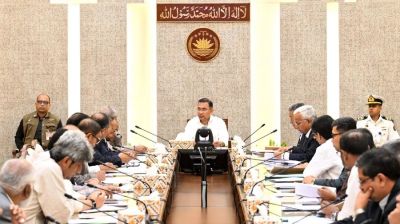
A discussion meeting was held at the embassy auditorium
Daily Sun Report, Dhaka
Published: 21 Feb 2026, 08:49 PM
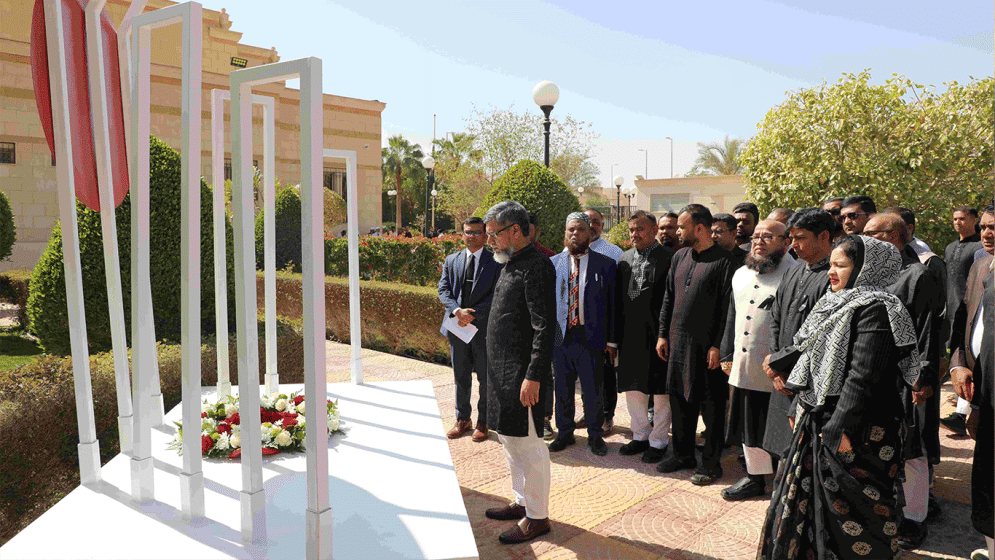
Photo: Courtesy
The Embassy of Bangladesh in Saudi Arabia observed Martyrs’ Day and International Mother Language Day 2026 with due solemnity and respect.
Marking the occasion, Bangladesh Ambassador to Saudi
Arabia Md Delwar Hossain hoisted the national flag at half-mast at the embassy
premises in the morning, according to a press release.
He later paid tribute to the language martyrs by
placing a wreath at the Shaheed Minar along with embassy officials.
Members of the Bangladeshi expatriate community in
Riyadh also laid floral wreaths at the monument to honour the martyrs.
As part of the observance, a discussion meeting was
held at the embassy auditorium. The programme began with the reading of
messages from the president, the prime minister, the foreign minister and the
state minister for foreign affairs of Bangladesh.
Speakers at the discussion included prominent
members of the Bangladeshi expatriate community in Riyadh—Hamidul Haque Shamim,
Md Tajul Islam Gazi and AKM Golam Hasnain Sohan.
The Ambassador concluded the session by highlighting
the significance and importance of the day.
Paying deep respect to all language martyrs, the ambassador
said that the Language Movement awakened the nation’s sense of identity and
nationalism, making people conscious of their rights.
He noted that through a series of struggles and
movements, Bangladesh eventually emerged as an independent state on the world map.
He added that history has proven that whenever the
people of Bangladesh unite over a just cause, success inevitably follows.
Referring to the context of Saudi Arabia, the ambassador
said that Bangladeshis, through their work and dedication, have earned a place
of trust within Saudi society.
He emphasised the importance of expatriate workers
performing their duties with skill and integrity in their respective fields to
positively represent Bangladesh abroad.
He expressed hope that establishing “Bangladesh” as
a nation known for a skilled and trustworthy workforce would further advance
the country and promote its language and culture globally.
In his concluding remarks, he urged expatriates to
uphold the indomitable spirit of the 1952 Language Movement by playing responsible
roles from their respective positions to enhance Bangladesh’s image abroad and
contribute constructively to the country’s overall development.
The programme ended with a special prayer seeking
the welfare of the country and the nation.