



 For all latest news, follow the Daily Sun's Google News channel.


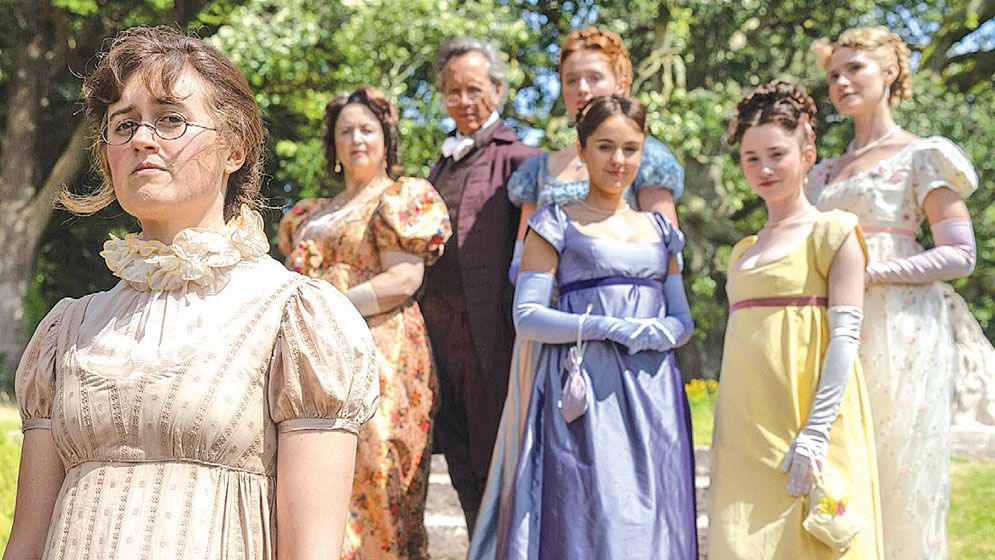
The Other Bennet Sister, inspired by Pride and Prejudice, brings Mary Bennet; one of the most overlooked yet complex figures in Jane Austen’s world; into narrative focus in its BBC adaptation. Her journey of self-awareness reframes her understanding of love, identity, independence, and self-acceptance.
Within the Bennet household, Mary exists in a quiet absence, where recognition and emotional care are scarce. Mrs. Bennet’s obsession with advantageous marriages leaves little room for Mary’s more introspective presence. Compared to Jane’s beauty, Elizabeth’s wit, and Lydia’s charm, Mary is often reduced to a moralising, awkward figure, socially out of place. She retreats into books and moral reflection as coping mechanisms, constructing an identity rooted in intellectualism rather than emotional experience or genuine human connection. This early portrayal lays the foundation for her later transformation.
Mary’s journey shifts when she leaves home to work as a governess in London. Removed from familiar structures, she begins to navigate life without a fixed sense of self. At her aunt Mrs. Gardiner’s home, she encounters an alternative domestic environment that blends guidance with quiet judgment. Figures such as Mr. Ryder challenge her intellectual rigidity, exposing the limits of her bookish knowledge. Meanwhile, Mrs. Bingley represents a polished femininity Mary cannot emulate, sharpening her awareness of class and social expectations. Most significant is Mr. Tom Hayward, whose influence proves deeply personal and transformative. These interactions do not change Mary instantly; rather, they create a tension between who she is and who she believes she ought to be.
Mary’s early understanding of love is similarly constrained. She approaches it through duty, propriety, and rational admiration rather than emotional intimacy. Unlike her sisters, whose experiences are shaped by passion and attraction, Mary treats love as something to be studied and performed correctly. Mr. Tom’s influence, however, is not merely romantic but revelatory. He compels Mary to recognize her own worth and challenges her belief that she belongs on the margins of life. Through this relationship, she comes to understand love as a lived experience—one that requires vulnerability, mutual respect, and self-acceptance.
With its immersive period detail and carefully composed visuals, London functions not just as a setting but as a catalyst for Mary’s growth. The series captures a rich social texture, allowing emotional tensions to unfold with quiet depth against soft, picturesque English landscapes. Its restrained visual language enhances the story’s psychological intimacy.
As a governess, Mary occupies an in-between space; neither fully part of the family nor entirely free from social hierarchy. This ambiguous position confronts her with class realities while granting a measure of independence. Gradually, she moves beyond comparisons with her sisters and rigid social ideals, developing a more nuanced understanding of human behavior and emotional complexity.
Through its sensitive portrayal, The Other Bennet Sister gives voice to a character long defined by silence. It becomes a reflective study of how identity is shaped by environment and experience. By the end, Mary does not transform into someone extraordinary; instead, she allows herself to be fully, honestly human. Her journey leads to the realisation that love is not something to be found, but something to be lived; through an understanding of one’s own worth and desires.
The writer is an undergraduate student of the English department at Southeast University.