



 For all latest news, follow the Daily Sun's Google News channel.


Finance minister urges all stakeholders to come forward with courage
BSS, Dhaka
Published: 28 Nov 2026, 03:31 PM
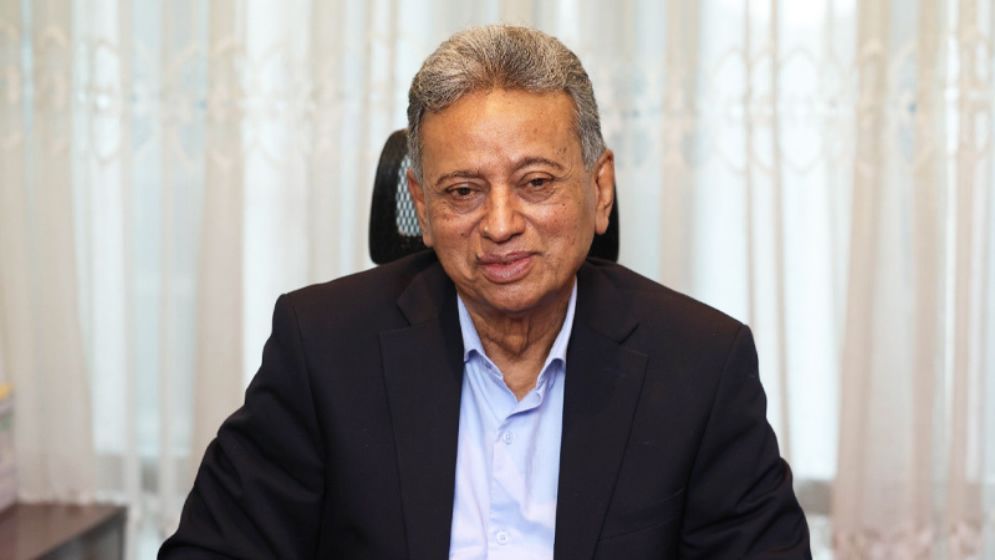
Finance Minister Amir Khosru Mahmud Chowdhury. File Photo
Finance Minister Amir Khosru Mahmud Chowdhury on Saturday called upon all stakeholders to come forward with courage and extend cooperation to the government in implementing its various measures to ensure transparency, improve efficiency, reduce the cost of doing business, and strengthen the country’s trade and investment environment.
“We need cooperation from all stakeholders. I urge everyone to come forward with courage. The government has extended its hand, and you also have to do your part. We are ready to take painful decisions if those decisions help the country’s business, trade, investment and the people,” he said.
The finance minister made the remarks while addressing a programme as the chief guest to inaugurate a digital platform for trade-related services in the capital.
The Bangladesh Bank launched the online platform titled Bangladesh Real-time Trade Arrangement (BARTA) to facilitate the exchange of information on transactions related to local letters of credit (LCs) at the ANM Hamidullah Auditorium of Bangladesh Bank Training Academy (BBTA) in Mirpur-2.
Bangladesh Bank Governor Md Mostaqur Rahman spoke on the occasion while Deputy Governor Dr Md Habibur Rahman gave the welcome address. Deputy Governor Md. Sarwar Hossain made a PowerPoint presentation on the various aspects of BARTA.
Federation of Bangladesh Chambers of Commerce and Industry (FBCCI) Administrator Md. Fazlul Hoque, Bangladesh Garment Manufacturers and Exporters Association (BGMEA) President Mahmud Hasan Khan, renowned business personality Syed Nasim Manzur, Association of Bankers, Bangladesh (ABB) Acting Chairman Hassan O Rashid spoke on the occasion.
The Finance Minister said the government’s fundamental economic policy was based on a belief in the free market, with a focus on developing a market-based business environment through appropriate policies and institutional reforms.
“Global trade and investment are moving in real time. So, we have to move in real time to remain connected with global investment. This is extremely important for ensuring transparency, reducing costs and increasing local value addition,” he said.
Amir Khosru said the pace of global business had changed significantly, making it essential for Bangladesh to modernize its institutional and technological systems to remain competitive in international trade and attract investment.
He said the government was working to establish real-time interoperability among different government agencies and financial institutions to ensure seamless information exchange, effective monitoring and greater transparency in business transactions.
Referring to the limitations of existing systems, he said many ministries, government projects and institutions operated through separate systems that lacked interoperability. Even the banking system and capital market had previously faced similar limitations in exchanging information.
“We are working to ensure real-time interoperability wherever necessary. There will be monitoring, transparency and coordination among the institutions. This will reduce the time and cost of doing business,” he said.
The minister, however, cautioned that reducing costs in only one sector would not bring the desired improvement in the overall business environment unless other sources of unnecessary expenditure and inefficiency were also addressed.
He said the government had taken initiatives to connect the National Board of Revenue (NBR), Bangladesh Bank and insurance companies through an integrated system to improve accountability and prevent irregularities in trade-related financial transactions.
Explaining the problems in the insurance sector, Amir Khosru said the government had found serious irregularities in the operations of some insurance companies, particularly in settling claims and managing investments.
He alleged that some insurance companies had failed to pay legitimate claims while their owners and stakeholders had invested money in properties and other ventures.
The minister also referred to irregularities involving insurance cover notes issued against import shipments without collecting the required premiums.
“As a result, the government lost revenue, while insurance companies and their shareholders were also affected,” he said.
He said such practices had created losses for the government, insurance companies and legitimate shareholders, adding that the government was now working with Bangladesh Bank and the relevant insurance authorities to prevent these irregularities.
The minister particularly stressed the need for stronger coordination in letter of credit (LC) and back-to-back LC transactions to ensure that all relevant financial and insurance information remained accessible to the concerned institutions in real time.
He said the government had also initiated measures to establish an integrated information-sharing system in the capital market involving the Bangladesh Securities and Exchange Commission (BSEC), Dhaka Stock Exchange, Chittagong Stock Exchange, listed companies and brokerage houses.
Under the proposed system, relevant institutions would have access to necessary information, which would help prevent market manipulation, collusion and underhanded dealings.
“Automation does not simply increase efficiency. It also reduces costs, ensures transparency and helps increase government revenue by preventing irregularities,” he said.
Amir Khosru said the government needed to strengthen revenue collection because public investment and social development programmes depended on adequate government revenue.
He said the government could not ensure the country’s economic progress, investment expansion and implementation of social programmes without improving revenue collection and maintaining a balance among investment, trade and economic activities.
The finance minister also appreciated the initiatives taken by the Bangladesh Bank governor, saying the country needed more practical action and fewer unnecessary formalities to implement reforms.
“We need to work more and talk less. That is what the country needs now,” he said.
Emphasising stakeholder consultation, Amir Khosru said the government wanted to maintain an open consultation process while formulating and implementing policies. He said both the Prime Minister and the government were trying to incorporate opinions and suggestions from relevant stakeholders.
He noted that business people had repeatedly raised concerns about NBR-related issues during his visits to different countries, including Japan and South Korea, demonstrating the importance of addressing business-related concerns through consultation.
He urged stakeholders to express their opinions freely, even if they had critical views about government policies or decisions.
“Even if your views are critical or aggressive, you should speak up. We need to hear you. Without the participation of stakeholders, these initiatives will not succeed,” he said.
The finance minister said the government was prepared to take difficult and politically challenging decisions to improve the business climate, attract investment and protect the broader economic interests of the country.
“Taking painful decisions, if they help the country’s business, trade, investment and the people remain well, is the duty of a political government,” he added.
He called on all concerned to work together with mutual trust and commitment to implement the reforms and build a transparent, efficient and competitive economic environment.
Representatives from the Bangladesh Knitwear Manufacturers and Exporters Association (BKMEA), Bangladesh Textile Mills Association (BTMA) and Bangladesh Buying House Association, and other senior officials, representatives of the National Board of Revenue (NBR), Export Promotion Bureau (EPB), relevant departments of Bangladesh Bank, managing directors and chief executive officers of commercial banks, and representatives of different business organisations attended the event.
The central bank developed BARTA as an online platform for exchanging information related to local LC transactions.