





 For all latest news, follow the Daily Sun's Google News channel.


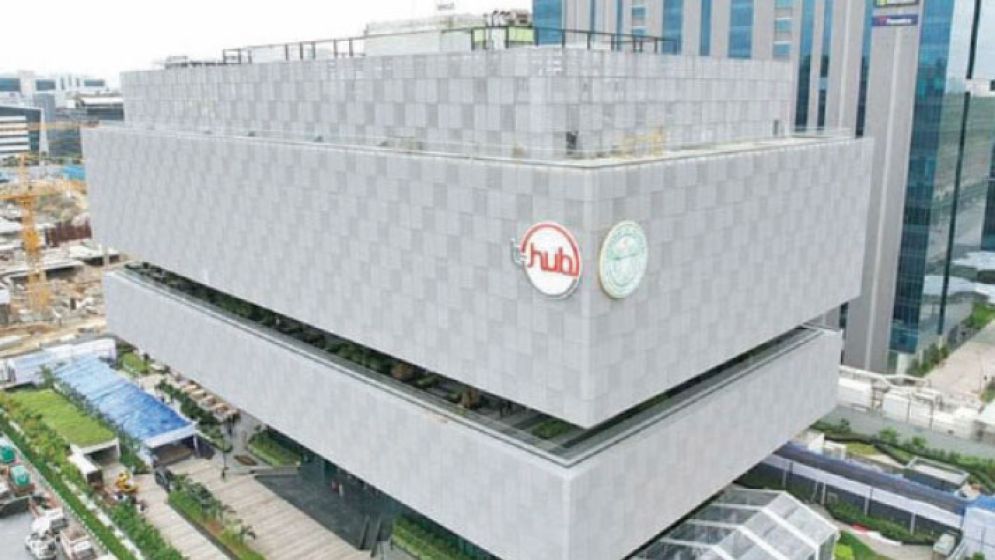
Turning an innovative idea into a successful business takes more than entrepreneurial ambition. Startups need investment, experienced mentors, technological support, corporate partnerships and access to markets. In Hyderabad, India, T-Hub has brought these elements together under one roof, creating an extensive ecosystem designed to help technology entrepreneurs turn ideas into viable businesses.
Spread across 572,000 square feet, T-Hub is more than a conventional startup incubator or shared workspace. It offers an integrated platform where entrepreneurs can develop products, connect with investors, collaborate with established companies and explore international markets.
During a recent visit to the institution, its scale and range of activities offered an insight into how a structured support system can help technology-driven businesses grow. Established in 2015 under a public-private partnership (PPP) model, T-Hub aims to promote innovation, nurture entrepreneurs and help startups expand beyond their initial markets.
The institution describes itself as the world’s largest startup incubator. According to its presentation, India’s Department of Science and Technology recognised it as the country’s best incubator in 2022, while the Department for Promotion of Industry and Internal Trade named it India’s best technology business incubator in 2023.
Even its architecture reflects its identity. Drawing inspiration from Hyderabad’s historic Charminar and the shape of the letter “T”, representing technology, the building combines glass, modern structural elements and open spaces to create an environment intended to encourage interaction and collaboration.
An ecosystem under one roof
T-Hub’s infrastructure is designed to accommodate more than 1,000 startups. Its facilities include five Centres of Excellence (CoEs), dedicated spaces for investors, large event venues, experience-sharing facilities and arrangements for hosting international delegations.
According to the institution’s presentation, its event spaces can accommodate up to 1,100 participants at a time. A 1,600-square-foot Experience Centre showcases technological solutions and innovations developed by more than 20 startups, providing an opportunity for potential customers, investors and corporate organisations to explore emerging products and services.
The institution’s reported achievements are substantial. More than 2,200 startups are associated with T-Hub, with connections to over 600 corporate organisations. These ventures have collectively generated more than 25,000 jobs and raised over $2 billion in funding, according to figures sourced from Tracxn and presented by the institution.
Its wider network includes more than 100 investors, 260 mentors, 35 educational institutions, 90 innovation partners and 80 value partners. It also maintains connections with over 40 trade representatives and consulates and has facilitated more than 1,800 market access opportunities.
Bridging the investment and corporate gap
Access to finance remains one of the biggest hurdles for startups. Entrepreneurs may have promising ideas and technological solutions but often struggle to secure funding, reach customers and establish relationships with larger businesses.
T-Hub seeks to address these gaps through a dedicated Investor Hub, which, according to its presentation, has connections with more than 190 venture capital firms. The institution also facilitates access to banking services and business advisory support.
Its corporate engagement programmes provide another route for startups to test and commercialise their innovations. T-Hub reports having facilitated more than 200 corporate engagements, over 1,000 corporate immersions and more than 250 corporate events and launches.
These activities have resulted in over 1,200 connections between startups and corporate organisations, leading to more than 350 startup deals or pilot projects, according to the presentation.
The institution works with companies at different stages of innovation. Its framework identifies three levels: Emergence, involving improvements to existing business models and operations; Breakthrough, introducing significant changes that create new market opportunities; and Disruption, developing technologies or business models capable of creating entirely new markets or replacing established products and services.
To support these processes, T-Hub runs corporate membership programmes, solution accelerators, startup engagement initiatives, internal innovation programmes, Build-Operate-Transfer (BOT) arrangements and hackathons.
Opening doors to global markets
International market access is another important part of T-Hub’s work. Its initiatives are designed both to help Indian startups expand overseas and to support foreign startups seeking entry into the Indian market.
The institution says it has helped more than 300 Indian startups explore international markets, while over 200 international startups have received support to enter India.
Its international network includes innovation collaborations with more than 40 countries, programmes involving over 25 global accelerators, more than 100 international initiatives and over 25 market access programmes. Its global ecosystem partnerships extend across 11 countries.
These partnerships also involve universities, governments and corporate organisations, with initiatives aimed at strengthening technological cooperation, establishing incubation centres in new regions and supporting programmes linked to Invest India and Startup India.
Beyond conventional technology ventures
Startups associated with T-Hub operate across more than 10 sectors, including deep technology, defence technology and sustainable development. This broad engagement allows entrepreneurs from different fields to access technological expertise, business support and potential partners.
Mentorship and academic collaboration are central to this approach. With more than 260 mentors and partnerships involving over 35 educational institutions, T-Hub provides entrepreneurs with opportunities to strengthen their business and technical capabilities.
Many startups struggle not because their ideas lack potential but because their founders have limited experience in market research, product development, investor relations and business expansion. Experienced mentors and partner organisations can help them navigate these challenges and make better-informed decisions.
Ultimately, T-Hub’s model rests on bringing together the different elements that a startup needs to survive and grow. Its reported figures suggest the scale of activity such an ecosystem can generate: thousands of startups supported, billions of dollars raised and tens of thousands of jobs created.
Its experience offers a useful insight into the importance of building an organised support system for entrepreneurs, where innovation is connected not only to investment and expertise but also to customers, established businesses and international markets.
Read More