


 For all latest news, follow the Daily Sun's Google News channel.


Analysts, BGMEA chief call for research-based, permanent wage policy for RMG sector
Daily Sun Report, Dhaka
Published: 22 Nov 2026, 08:41 PM
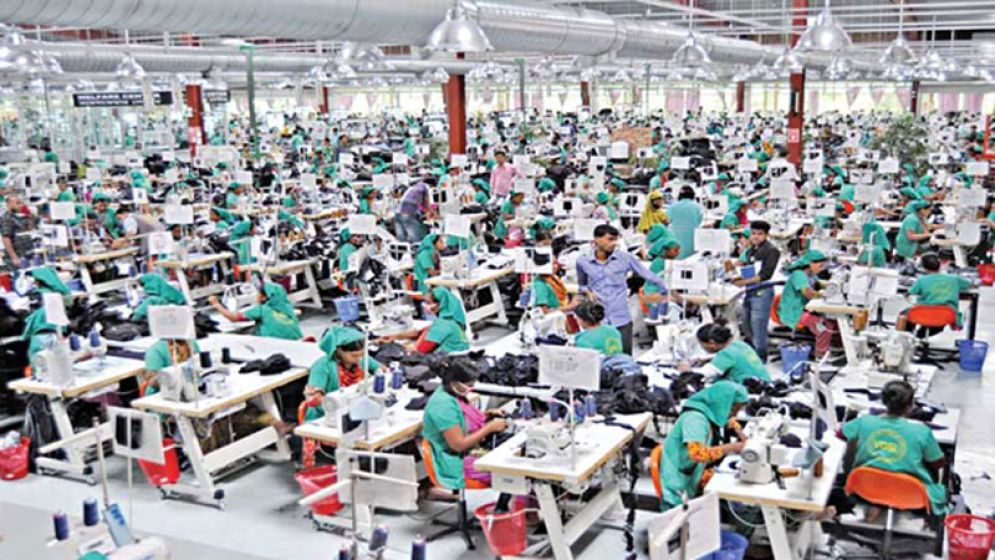
File Photo: BSS
Experts and representatives of the garment industry and
labour organisations have called for a permanent, transparent and
research-based minimum wage-setting framework to ensure fair wages for workers
while maintaining the competitiveness of Bangladesh’s readymade garment (RMG)
sector.
They made the call at a virtual dialogue titled “Garment
Workers’ Wages: Fairness and Industry Development”, organised by the Power and
Participation Research Centre (PPRC) under its Ajker Agenda series on Sunday.
The discussion came ahead of the Minimum Wage Board meeting
scheduled for 23 November, with participants stressing the need for credible
data and clear criteria to determine workers’ wages.
Dr Hossain Zillur Rahman, executive chairman of PPRC, who
moderated the dialogue, said wage revisions had repeatedly become contentious
due to a lack of adequate preparation and a clearly defined institutional
framework.
He said the Tk12,500 entry-level wage introduced in November
2023, followed by annual increments of 5% and 9% on basic pay and corresponding
adjustments to house rent, had brought the earlier wage structure to around
Tk15,044 in 2026.
However, he observed that the adjustments largely reflected
inflation rather than an improvement in workers’ real wages.
Syed Sultan Uddin Ahmed, executive director of the
Bangladesh Institute of Labour Studies (BILS), said the absence of a national
minimum wage and clearly defined criteria for wage determination remained major
institutional weaknesses.
He said workers’ actual living costs, supported by credible
data from the Bangladesh Bureau of Statistics (BBS) and research organisations,
should form the primary basis for setting wages.
He also urged the Minimum Wage Board to prepare its own research-based
proposal instead of relying solely on competing demands from workers and
employers.
“The Minimum Wage Board should have its own research report.
It should examine the available evidence and prepare a proposal, instead of
starting with two widely divergent demands,” he said.
Mahmud Hasan Khan, president of the Bangladesh Garment
Manufacturers and Exporters Association (BGMEA), acknowledged the need for fair
wages but said the industry was facing mounting business pressures.
He said 287 factories had closed over the past three years,
while 669 factories had been affected by recent unrest, with production
disruptions lasting between one and 21 days.
He stressed that inflation, previous wage adjustments,
productivity, infrastructure constraints and international competitiveness
should be considered when determining the new wage structure.
He also said a worker could earn around Tk19,520 a month by
including 78 hours of overtime, attendance bonuses and other applicable
incentives.
Calling for a permanent wage-setting mechanism, he said
clear guidelines for annual adjustments would help reduce uncertainty and
recurring tensions.
Taslima Akhter, president of Bangladesh Garment Sromik
Samhati, said minimum wages should be based on an eight-hour working day rather
than overtime earnings.
She said workers should be able to meet their basic needs
without having to work additional hours. She cited workers’ proposals of
Tk30,000 for apprentices and Tk32,000 for Grade 4 workers, alongside
adjustments for other grades.
She said a dignified wage should enable workers to afford
nutritious food, decent housing, education for their children and proper
healthcare.
Anwarul Alam Parvez, president of the Bangladesh Chamber of
Industries (BCI), highlighted stagnant export earnings, rising financing costs,
inadequate infrastructure and declining competitiveness as major challenges
facing the garment sector.
He said export earnings had remained broadly within the $36
billion to $39 billion range in recent financial years, stressing the need for
industrial diversification, skills development, technical education and
higher-value manufacturing to strengthen the sector.
Dr Musleh Uddin Ahmed, an independent member of the Minimum
Wage Board and professor of public administration at the University of Dhaka,
said the board had visited factories in Chattogram and Narayanganj to consult
workers and employers from establishments of different sizes.
He also highlighted the importance of complementary welfare
measures, including government commitments to healthcare facilities in six
labour-intensive areas.
In his concluding remarks, Dr Hossain Zillur Rahman said
wage policy should focus not only on minimum wages but also on ensuring a
dignified life for garment workers through affordable housing, healthcare,
education and transport.
He said representatives of workers and employers had
recognised the need for a systematic basis for wage determination and a
permanent institutional framework to make future revisions more predictable.
The dialogue concluded that fair wages and industrial sustainability should not be treated as competing priorities, stressing the importance of transparent criteria, reliable data, institutional trust and stronger public support for workers’ welfare.