


 For all latest news, follow the Daily Sun's Google News channel.


Bangladesh, Pakistan’s LNG imports to rise 70% by 2035: IEA
The Middle East would nevertheless remain the world's largest oil-exporting region
Daily Sun Report, Dhaka
Published: 19 Nov 2026, 06:27 PM
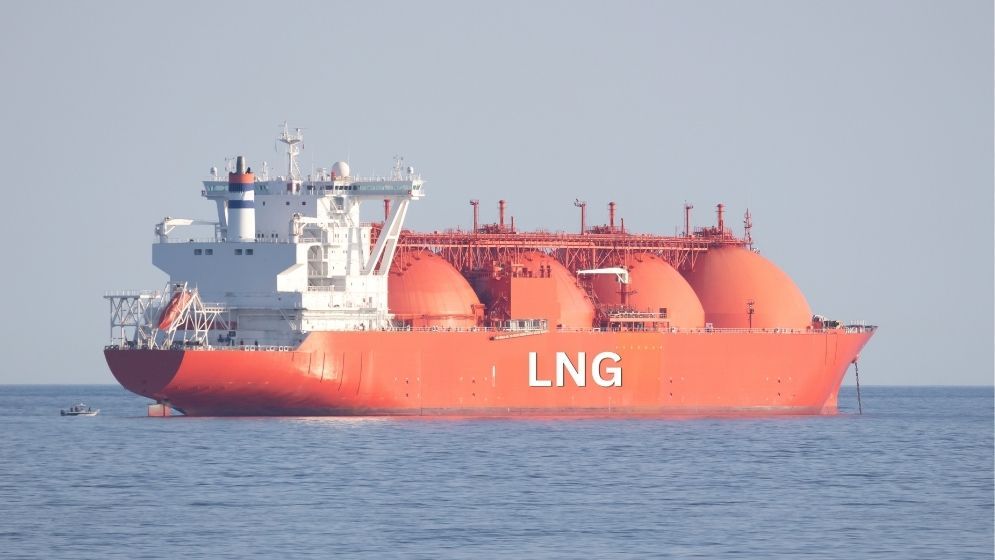
File Photo
Bangladesh and Pakistan’s combined gas imports are projected to rise by around 70% by 2035 as declining domestic production, raising concerns over energy security and economic risks, according to the International Energy Agency (IEA).
The projection comes at a time when the global
energy crisis, including disruptions linked to the Iran war, is prompting
countries to rethink their dependence on imported fossil fuels and accelerate
the shift towards renewable energy.
Bangladesh, too, has taken several initiatives to
expand renewable energy and reduce its dependence on imported fuel. At the same
time, however, it is pursuing plans to increase LNG imports, leaving the
country exposed to fluctuations in global energy markets and geopolitical tensions.
The IEA made the projection in its World Energy
Outlook 2026, released today. Under its Current Policies Scenario (CPS),
combined gas imports by Bangladesh and Pakistan are expected to rise from
current levels to around 80 billion cubic metres (bcm) in 2035.
The increase will be driven by rising gas demand and
declining output from mature domestic gas fields, the report says.
For Bangladesh, the projection highlights a growing
challenge: domestic gas production is falling while demand remains high, making
imported LNG increasingly important to meeting the country's energy needs.
The IEA also forecasts strong growth in global LNG
trade. Under its Stated Policies Scenario (STEPS), international LNG trade is
expected to increase by around 260 bcm between 2025 and 2035, at an average
annual rate of about 4%. This is significantly faster than the projected annual
growth of around 1 per cent in overall global gas demand.
Around one-quarter of the additional LNG demand is
expected to come from countries seeking to offset declining domestic gas
production or falling pipeline imports. Bangladesh and Pakistan are among them.
Despite rising demand in several Asian economies,
the global LNG market could see a substantial increase in supply in the coming years,
according to the IEA.
New projects, particularly in the United States and
the Middle East, are expected to expand export capacity. The resulting supply
growth could push the global LNG surplus to its highest level around 2030.
Under the STEPS, the surplus is projected to stand
at around 70 bcm in 2035.
The United States, currently the world's largest LNG
exporter, is expected to strengthen its position in the market. Under the IEA's
CPS, it could account for around 35% of global LNG supply by 2035.
For countries such as Bangladesh, an increase in
global supply could create more opportunities to secure fuel. But greater
dependence on imported gas would also leave them exposed to international price
volatility and supply disruptions.
Asia is expected to remain the main destination for
global LNG exports. Under the IEA's CPS, more than 70% of global LNG exports
could go to the region by 2035.
India's LNG imports, currently around 35 bcm, are
projected to rise to nearly 100 bcm by 2035.
Other emerging market and developing economies in
Asia, particularly Bangladesh and Pakistan, are also expected to increase their
combined gas imports by around 70% to approximately 80 bcm by 2035.
Southeast Asia, meanwhile, could become a net
LNG-importing region by 2030 as domestic production declines and demand grows.
Its LNG imports could reach 100 bcm by 2035.
The growing demand across Asian economies will make
the region increasingly important to the global LNG market.
The IEA's projections come against the backdrop of
the 2026 energy crisis, triggered by disruptions to energy flows through the
Strait of Hormuz following the conflict in the Middle East.
Around 110 bcm of LNG, equivalent to about 20% of
global LNG trade in 2025, passed through the strait. Around 90% of that volume
was destined for Asian markets, the report says.
Any prolonged disruption to shipping through the
waterway could therefore leave Asian economies that depend on imported gas
particularly vulnerable.
Unlike oil, which can be transported through
alternative routes, LNG has no feasible alternative route to bypass the Strait
of Hormuz, according to the IEA. This makes diversification of supply sources
and trade routes particularly important for importing countries.
The report also examines how prolonged shipping
risks through the strait could reshape global oil trade. Before the crisis,
around 20 million barrels of oil per day passed through the waterway. If
significant risks persist, investment in bypass pipelines, alternative supply
sources and demand-reduction measures could bring the volume down to 8.5
million barrels per day in 2030 and below two million barrels by 2035.
The Middle East would nevertheless remain the
world's largest oil-exporting region, underscoring its continuing importance to
global energy security.
The crisis is prompting countries to reconsider
their energy strategies, with greater emphasis on diversifying energy sources,
trade routes and technology supply chains, using domestic resources and
accelerating electrification, the IEA says.
Renewables, particularly solar power, and nuclear
energy are expected to benefit from this shift towards domestic energy sources.
The report also points to the potential for greater use of energy efficiency measures
and biofuels.
Global electricity demand has grown faster than the
world economy since 2019 and at twice the rate of overall energy demand. The
growth has been driven by greater use of electric motors in industries,
household appliances, air conditioners, electric vehicles, heat pumps and data
centres.
The IEA expects electricity demand to grow even
faster through 2035. Electricity could account for nearly 30% of global final
energy consumption across the exploratory scenarios examined in the report.
IEA Executive Director Fatih Birol said the
disruption in the Strait of Hormuz had delivered a major shock to the global
energy system, adding that the longer the crisis lasted, the deeper its effects
would become.
He cautioned countries against replacing one form of
energy dependence with another as they seek greater energy security.
Countries would follow different energy pathways depending on their resources, circumstances and priorities, Birol said. But all had a stake in building a more secure, affordable and sustainable energy system.