


 For all latest news, follow the Daily Sun's Google News channel.


Interview
‘Dhaka’s sovereign decisions are its own prerogative’
Daily Sun Report, Dhaka
Published: 19 Nov 2026, 12:00 AM
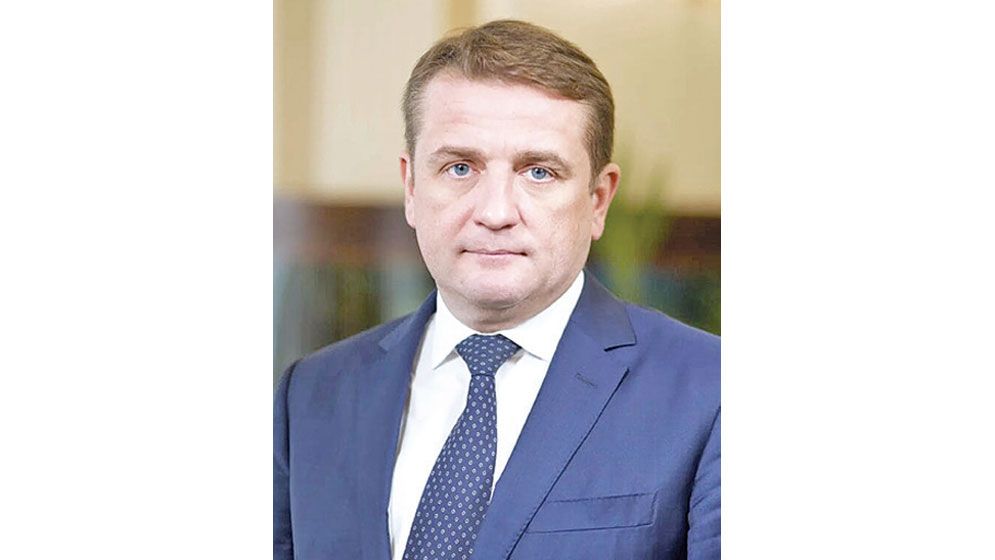
Russia does not comment on Bangladesh’s arrangements with third countries, regarding them as Dhaka’s sovereign decisions, and shares its view that external restrictions should not impede economic development, says Ilya Shestakov, head of the Federal Agency for Fisheries and chairperson of the Russian part of the Russia-Bangladesh Intergovernmental Commission on Trade, Economic, Scientific and Technical Cooperation. In an interview with Daily Sun Editor Rezaul Karim Lotus, he outlined work on bilateral payment infrastructure, market access for Bangladeshi goods and cooperation in fisheries.
dailysun: Bangladesh signed a trade deal with the US earlier this year, and it carries certain terms and conditions. What is Russia’s response to Bangladesh’s concerns about sanctions, financial transactions and international banking compliance?
Ilya Shestakov: Russia does not comment on bilateral arrangements that Bangladesh concludes with third countries. Dhaka’s sovereign decisions are its own prerogative. Russia has never posed its partners the question of whom to trade with.
As regards sanctions, there is no divergence with Bangladesh. It is Dhaka, not Moscow, that voices these concerns, and we share them:
external restrictions should not impede the development of third countries’ economies. Practice bears this out. International regulators have repeatedly extended Bangladesh’s permissions to purchase Russian petroleum products, recognising the country’s energy needs.
As far as settlements are concerned, what is required is bilateral payment infrastructure. This is a significant element of the financial sovereignty of our countries. The relevant work is under way.
dailysun: What is your assessment of the current trade imbalance between Bangladesh and Russia? What steps could Russia take to increase imports of Bangladeshi products, particularly ready-made garments, pharmaceuticals and leather goods?
Ilya Shestakov: Russian exports are concentrated in agricultural and food products, while Bangladeshi supplies have contracted in recent years, partly due to settlement difficulties. The task, therefore, is mutual: to broaden the range of trade in both directions.
For the first time, the Russian side has formally listed the Bangladeshi products it stands ready to import: apparel, including knitwear, footwear, headgear and pharmaceutical products. In parallel, we have proposed establishing a register of reliable Bangladeshi textile suppliers, the first practical tool for Russian importers. For pharmaceuticals and leather goods, the key step is product registration and certification under the standards of the Eurasian Economic Union (EAEU). A memorandum of cooperation between the Eurasian Economic Commission and the Government of Bangladesh is in force, and this framework allows practical work to proceed. For fishery products, the pathway lies in the accreditation of suppliers to the markets of Russia and the EAEU.
At the same time, Russia stands ready to expand its own supplies: wheat, pulses, oilseeds, dairy products and mineral fertilisers. Our objective is not merely to restore previous volumes, but to make the structure of trade resilient and diversified.
dailysun: Is Russia willing to share expertise in deep-sea fishing, marine research, fish stock assessment and sustainable fisheries management?
Ilya Shestakov: Russia is one of the world’s leading nations in fisheries science and in the management of aquatic biological resources. We propose a concrete set of avenues in which cooperation could be developed: joint research and stock assessment, exchange of technologies in aquaculture and fish processing, and capacity building.
A practical first step has already been outlined: accreditation of Bangladeshi suppliers of fish and seafood for the markets of Russia and the EAEU is under discussion. As for deep-sea fishing, we are open to dialogue, and specific arrangements have been reflected in the outcomes of the Commission’s work.
Read More