


 For all latest news, follow the Daily Sun's Google News channel.


Save garment industry, save private sector
Special Correspondent
Published: 16 Nov 2026, 12:00 AM
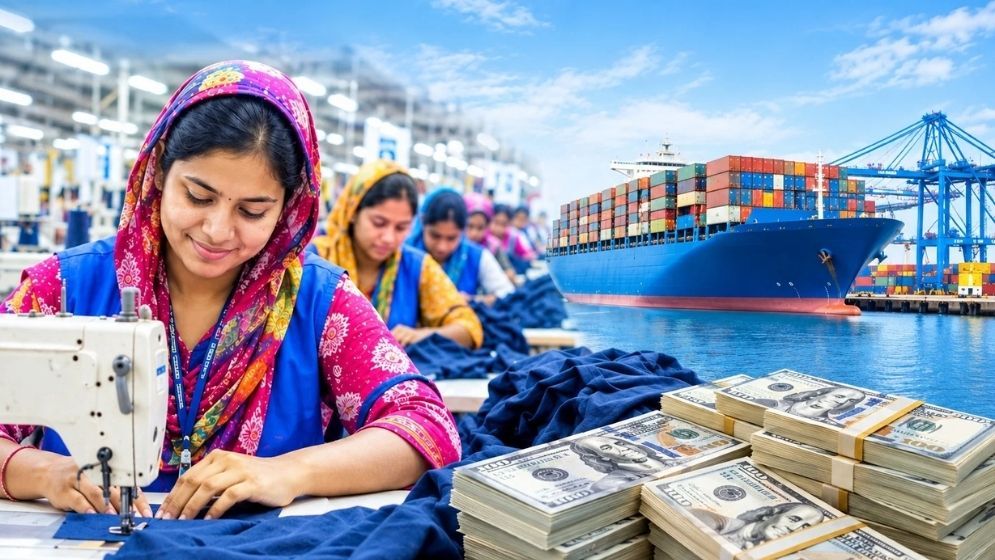
The private sector is the main driving force of Bangladesh’s economy, contributing 78%-86% to the country’s GDP and generating nearly 95% of employment. However, this key engine of the economy is currently in a fragile state. Entrepreneurs have been grappling with macroeconomic instability over the past few years, high interest rates, a severe energy crisis and an uncontrolled rise in the value of the dollar.
One of the main lifelines of the private sector is Bangladesh’s garment industry, the country’s primary source of export earnings. Yet, for nearly a month, this key export sector has been facing a stalemate and unrest, with workers staging protests demanding higher wages and disrupting production.
Prolonged unrest in the garment industry will have serious consequences for the economy. Export earnings will decline, unemployment will rise, and factory owners unable to repay bank loans may become defaulters, further weakening the banking sector. The unrest that has emerged in the garment sector in recent days is an ominous sign not only for the private sector but also for the entire economy.
Amid the ongoing crisis and discontent in the garment sector, many factories remained closed on Sunday. Although a government-formed wage board is working to increase workers’ salaries, unrest in the ready-made garment sector has yet to subside. To deal with the situation, factory owners have already shut down 147 garment factories. Furthermore, leaders of the Bangladesh Garment Manufacturers and Exporters Association (BGMEA), the owners’ association, have threatened to close factories from today if the protests continue. The organisation’s president, Mahmud Hasan Khan, disclosed this at a press conference on Saturday.
Economists and businesspeople say the recent developments are sending the wrong message to foreign buyers about Bangladesh’s garment industry. Buyers have already cancelled several purchase orders, while confirmed orders are being shifted away from Bangladesh. If this trend continues, it will create problems not only for the garment sector but also for the wider economy.
Following the outbreak of workers’ protests in late October, the government swiftly formed a wage board, which has already held two meetings. Factory owners are scheduled to submit their wage proposal on today. Stakeholders believe various factors are behind the continuation of the protests despite this formal initiative to raise wages. The BGMEA president said the owners would present their proposal at today’s wage board meeting. However, if disorder continues in the industrial areas, they will discuss whether to participate in the board’s deliberations.
Meanwhile, at a joint press conference on Friday, an alliance of five labour organisations urged workers to exercise patience and restraint. Labour leaders said the wage board was working to determine a fair wage and that workers should refrain from any activities that could obstruct the process. They also urged workers to avoid provocation and disruptive activities and return to work to allow the wage board to continue its discussions.
Workers’ wage demands must be addressed through dialogue rather than protests. There is no denying that their demand for higher wages is justified. It is impossible to make ends meet on the salaries garment workers currently receive. Factory owners should have held discussions with workers and raised their wages reasonably before the protests began, rather than delaying action. Why did workers have to take to the streets? Why were they left with a reason to protest? It is largely because of these workers that factory owners have become wealthy. The owners, therefore, have a responsibility to stand by them in their hardship.
Factory owners are now raising various objections to wage increases, citing global competition and the current economic slowdown. However, businesses inevitably face ups and downs and difficult periods, and industrial entrepreneurs must have the resilience to overcome such challenges. An entrepreneur’s responsibility is not merely to make a profit but also to create jobs and contribute to improving workers’ living standards.
If workers’ wages are increased, they are likely to work with greater dedication, boosting production and helping Bangladesh remain competitive in the global market. Better wages can improve productivity, reduce labour turnover and lower training costs. International garment brands have kept prices suppressed for years. Factory owners and the government must jointly persuade buyers to ring-fence workers’ wage costs within the purchase price. Factory owners must also allocate a fair share of their profits to wages, while the state should consider covering part of the shortfall through rationing, subsidised essential commodities, and housing and transport support.
In the current situation, factory owners and workers should sit together and reach a settlement through dialogue. If either side remains intransigent, the crisis will deepen. Resolving the current stalemate is therefore urgent for both owners and workers. If workers cannot make ends meet, production will eventually come to a halt and factories may close, causing losses to owners. Similarly, workers will lose their jobs if factories shut down. Both sides must, therefore, exercise restraint and tolerance.
The ongoing unrest in the garment sector also threatens other private industries, potentially pushing the country’s entire economy into deeper crisis.
Bangladesh’s private entrepreneurs are already facing a severe crisis. The downturn that developed in the country’s private sector during the Yunus government has yet to subside. There have been no strong initiatives to reopen shuttered industrial units, while enthusiasm for new investment remains low. Renewed uncertainty over gas and electricity supplies has further compounded the situation, affecting bank lending.
Banks are disbursing fewer new loans than they are recovering. As a result, private sector credit growth fell to 4.47% at the end of last June, the lowest on record, further limiting opportunities for new employment.
After taking office, the Yunus government took one measure after another that discouraged investment, including filing sweeping cases against private entrepreneurs and freezing the bank accounts of leading private institutions without proper investigation. The image of the private sector was also tarnished during the Yunus government by allegations of money laundering that were widely criticised as baseless. Consequently, the private sector, which makes the largest contribution to the country’s economy, has been severely weakened. High interest rates, gas and electricity shortages, dollar volatility and political uncertainty have slowed business, trade and investment for more than two years, preventing the creation of new jobs. Restoring normalcy in the garment sector is, therefore, essential.
If the stalemate in the garment industry continues, the damage will extend beyond the sector, potentially paralysing the entire private sector. This could further deepen the ongoing economic crisis and make recovery even more difficult.
The garment industry must be saved and the private sector must survive. Only then can the country’s economy turn around.