


 For all latest news, follow the Daily Sun's Google News channel.


Skills gap keeps Bangladesh’s garment industry dependent on foreign talent
Four decades of growth fail to end reliance on foreign experts
Daily Sun Report, Dhaka
Published: 15 Nov 2026, 10:28 AM
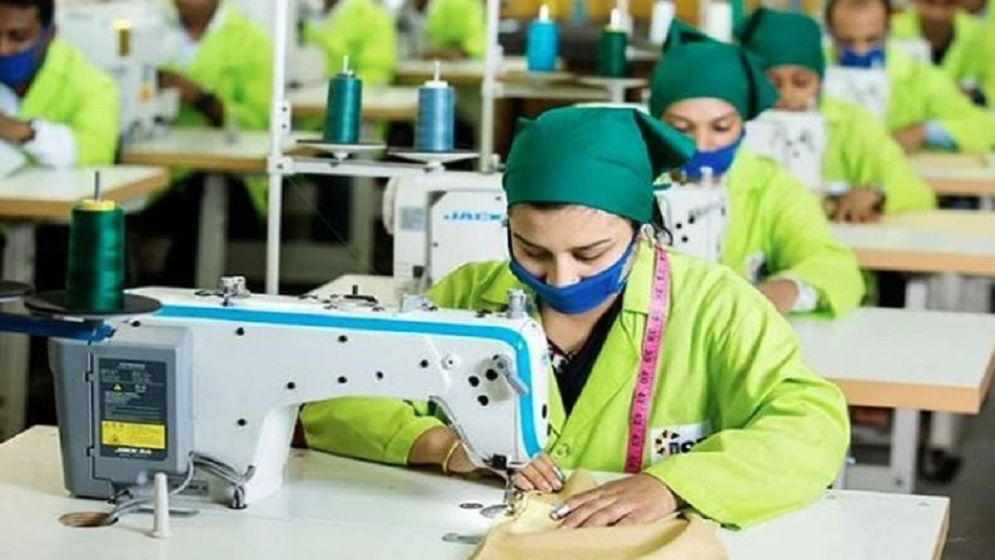
File Photo
Despite more than four decades of growth, Bangladesh’s readymade garment (RMG) and textile industries continue to rely on foreign professionals for key management and technical positions, raising questions about the development of skilled local talent.
Bangladesh has emerged as the world’s second-largest garment exporter through the efforts of millions of workers, entrepreneurs and local managers. However, foreign nationals still hold important positions in production management, merchandising, dyeing and finishing, quality control, compliance, industrial engineering and communication with international buyers.
Some industry owners argue that foreign experts remain essential for operating modern technology, improving productivity and meeting international buyers’ requirements.
However, concerns have grown over why the country has failed to develop enough skilled professionals for these positions after four decades of industrial expansion. Research has also found that foreign professionals can earn three to five times more than their local counterparts in similar positions. Questions have also arisen over recruitment transparency, underreporting of salaries, tax evasion and the risk of illegal fund transfers.
According to information provided by Faizur Rabbi, deputy director of Invest Bangladesh, 25,026 foreign nationals are currently working in different sectors across the country. The figure covers all sectors, not just the garment and textile industries.
ASM Anwar Parvez, executive director of the Bangladesh Export Processing Zones Authority (BEPZA), said 2,060 foreign nationals work in BEPZA-run export processing zones (EPZs). Most of them are engaged in merchandising and technical jobs.
Work permit renewals on the rise
Figures on foreign workers’ work permits also indicate long-term employment in Bangladesh.
According to the Bangladesh Investment Development Authority’s (BIDA) annual report for the 2024-25 fiscal year, the authority approved 15,898 work permits for foreign nationals during the period. Of these, 5,491 were new permits and 10,407 were renewals.
In the previous fiscal year, 2023-24, BIDA approved 5,761 new permits and 9,947 renewals, indicating a decline in new approvals but an increase in renewals.
However, these figures represent approved permits, not the total number of foreign nationals working in the country, as renewals for the same individuals are also included.
Entrepreneurs cite technology and skills gaps
Mohammad Khorshed Alam, director of the Bangladesh Textile Mills Association (BTMA) and chairman of Little Star Spinning Mills, said foreign professionals work in production management, dyeing, production supervision and technical operations. Most of them are from Sri Lanka and India.
He said many companies prefer foreign employees because local professionals lack adequate skills, experience in using technology and the ability to operate modern machinery.
Sharing his factory experience, Khorshed Alam said a factory that previously required around 1,100 workers to run production could reduce its workforce to approximately 350 after improvements in technology, training and management.
He also claimed that a Chinese spinning mill with 54,000 spindles could operate with just 80 workers. Citing these examples, he stressed the need to bridge the technology and skills gaps to improve productivity.
Fazle Shamim Ehsan, executive president of the Bangladesh Knitwear Manufacturers and Exporters Association (BKMEA), told Kaler Kantho that foreign experts are needed to install and operate new technology, improve production efficiency and train local employees.
In many cases, he said, foreign experts work for one to two years before transferring their knowledge and skills to local professionals.
According to his personal estimate, fewer than 100 foreign professionals work in the knitwear sector, while the number exceeds 150 in the woven garment sector. Their monthly salaries can range from Tk2 lakh to Tk10 lakh, depending on their positions.
He clarified that the figures were his personal estimates, not findings from an official industry survey.
Foreign professionals earn three to five times more
A 2020 study titled Enrolment of Expatriates in the Readymade Garments and Textile Sectors of Bangladesh highlighted significant salary disparities between foreign and local professionals.
Conducted by Saiful Islam and Tasnim Nabila Islam, the study interviewed 30 experts at different levels from 10 organisations. It found that foreign professionals could earn three to five times more than their local counterparts in similar positions.
The study cited monthly salaries of $5,000 to $10,000 for foreign general managers, compared with Tk1.5 lakh to Tk2.5 lakh for local professionals.
It also found that a significant number of foreign professionals came from India and Sri Lanka. They worked in production management, merchandising, dyeing, cutting, quality control, industrial engineering and senior management.
However, the researchers described it as an exploratory study based on a limited sample. Its findings, therefore, cannot establish current salary levels or the total number of foreign professionals across the entire industry.
Buyer preferences also influence recruitment
A human resources professional with 15 years of experience in the garment sector, identified by the pseudonym Md Rafiqul Islam, said skills shortages were not the only reason behind foreign recruitment. Preferences and influence of international buyers also played a role in some cases.
He said some factories recruited foreign professionals to facilitate communication with representatives and quality control officials of international buyers and retain export orders.
This practice could limit promotion opportunities for qualified local professionals and prevent them from taking on senior responsibilities, he added.
He alleged that some companies paid local employees Tk50,000 for similar responsibilities while offering foreign professionals Tk1.5 lakh or more.
He also alleged that some companies showed lower salaries in employment contracts and paid the remaining amount in cash. For instance, an employee receiving Tk2 lakh a month might have only Tk1 lakh recorded in official documents.
However, statements from the companies concerned and tax authorities would be needed to establish the validity of these allegations.
Governance gaps and tax evasion risks
Transparency International Bangladesh (TIB) has long raised concerns over irregularities, tax evasion and risks of money laundering in the recruitment of foreign nationals.
On 5 February 2020, the organisation published a study titled Employment of Expatriates in Bangladesh: Governance Challenges and Way-out. It later released an updated policy paper, Employment of Foreigners in Bangladesh: Challenges of Good Governance and Ways of Overcoming, on 30 March 2024.
According to TIB, some foreign nationals enter Bangladesh on tourist, visa-on-arrival or business visas and work for different organisations without proper work permits.
The organisation also reported allegations that some legally employed foreign professionals underreport their actual salaries to evade income tax. In some cases, only one-third of their actual salaries are reportedly paid through banking channels, while the rest is handed over in cash.
The study also highlighted violations of prescribed ratios of local and foreign employees and the risk of transferring money abroad through hundi.
Based on its 2020 estimates, TIB said at least 250,000 foreign nationals were working in Bangladesh at the time. It estimated that they sent at least $3.15 billion abroad illegally every year and that the government lost around $1.35 billion in revenue due to tax evasion.
At the exchange rate prevailing at the time, the amounts were equivalent to approximately Tk 26,400 crore and Tk 12,000 crore respectively.
However, TIB acknowledged that no reliable institutional data were available on the actual number of foreign workers or the amount of money illegally transferred abroad. These estimates, therefore, should not be treated as figures reflecting the current situation.
TIB recommended establishing a central database of foreign employees, identifying sector-wise workforce requirements, updating salary and income tax records, and strengthening coordination and monitoring among relevant government agencies.
Foreign nationals sent $130.58 million home in 10 months
An official figure on money legally sent abroad by foreign nationals working in Bangladesh was disclosed in parliament by former finance minister Abul Hassan Mahmood Ali.
On 24 June 2024, he told parliament that foreign nationals living in Bangladesh had remitted $130.58 million to their respective countries during the first 10 months of the 2023-24 fiscal year, from July to April.
Indian nationals sent $56 million, Chinese nationals $14.56 million and Sri Lankan nationals $12.71 million during the period.
Citizens of Japan, South Korea, Thailand, the United Kingdom, Pakistan, the United States and Malaysia also sent money abroad. Nationals of other countries remitted $21.92 million.
The former finance minister also said Bangladesh Bank did not maintain annual income records of foreign nationals living in the country.
The figures cover legal remittances by foreign nationals across all sectors, not just those employed in the garment and textile industries. Therefore, the total amount sent abroad by foreign professionals in these two sectors cannot be determined.
According to a Bangladesh Bank directive issued on 27 December 2021, foreign employees can remit up to 80 per cent of their net income abroad at any time after paying taxes. They can send the remaining 20 per cent after tax assessment, subject to certification from the relevant authorities.
The Bangladesh Garment Manufacturers and Exporters Association (BGMEA), the country's leading garment industry body, has also been unable to provide specific figures on foreign employees in the sector.
BGMEA President Mahmud Hasan Khan told Kaler Kantho that the association had written to its member factories seeking relevant information. He said garment manufacturers were currently concerned about labour unrest and overall instability in the industry.
Initiatives to develop local professionals
Initiatives are also underway to improve the skills of local professionals and reduce dependence on foreign employees.
On 25 June 2026, the BGMEA, BKMEA, BGMEA University of Fashion and Technology (BUFT) and the Export Promotion Bureau (EPB) signed separate memorandums of understanding to train 22,815 workers, employees and mid-level managers over three fiscal years.
The training programmes will cover machinery operation, compliance, production planning, inventory management and leadership skills.
On 13 September 2026, Mahdi Amin, adviser and spokesperson at the Prime Minister's Office, said the garment industry could develop an entirely local workforce if the necessary skills, quality education and working environment were ensured.
Industry stakeholders say the need for foreign experts cannot be dismissed entirely. However, their recruitment should focus on technology and knowledge transfer, training local employees and developing the skills of domestic professionals.
They also stressed the need to ensure promotion opportunities and leadership roles for qualified local officials in key positions.
After four decades of industrial growth, reducing dependence on foreign professionals in senior management and technical roles requires a clear understanding of the actual demand for foreign expertise, their qualifications, salaries, tax payments and overseas remittances.
A centralised information system, identification of positions that local professionals can fill, and time-bound plans for training and succession development are also essential.
Without such measures, Bangladesh may continue to expand one of its largest export sectors while remaining dependent on foreign professionals for senior management and advanced technical expertise.
Source: kalerkantho