



 For all latest news, follow the Daily Sun's Google News channel.


Gazprom eyes new energy projects without competitive bidding
Gazprom is again attempting to secure strategic energy projects through diplomatic channels
Daily Sun Report, Dhaka
Published: 09 Nov 2026, 08:56 PM
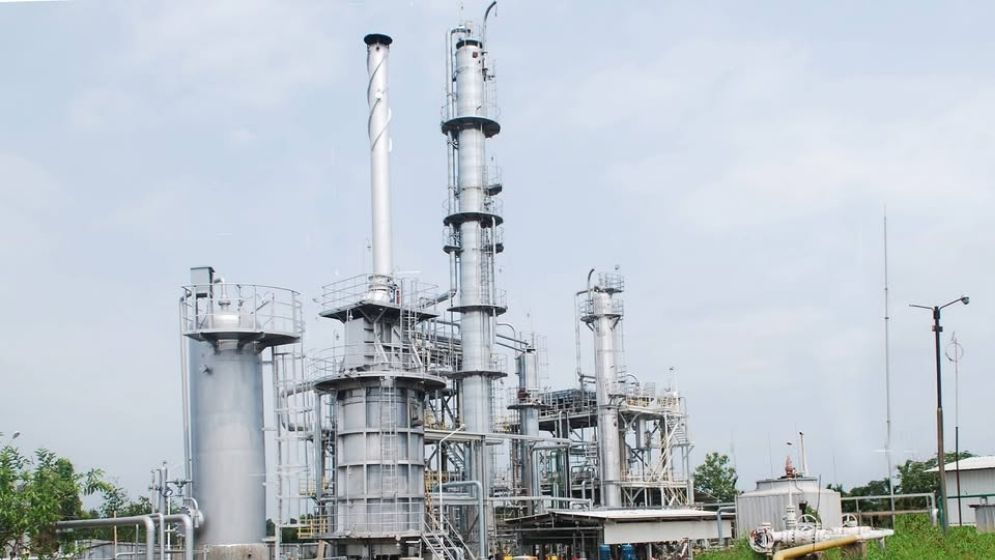
File Photo
Gazprom, the Russian state-owned energy company that benefitted from drilling contracts worth billions of taka in Bangladesh lacking competitive bidding under the now-defunct special energy law, is once again pushing for a new package of gas drilling and infrastructure projects through unsolicited proposals, sources said.
Wishing anonymity, a senior official of the Energy
and Mineral Resources Division (EMRD) under the Ministry of Power, Energy and
Mineral Resources said on Tuesday that Gazprom was seeking contracts to drill
five gas wells in Bhola, conduct a 3D seismic survey covering Bhola and Hatia,
participate in the proposed Bhola-Barishal gas transmission pipeline, and
establish a small-scale Liquefied Natural Gas (LNG) facility on the Bhola
Island, The Financial Express reported.
The proposals have reached the EMRD through the
Ministry of Foreign Affairs after being forwarded by the Russian embassy in
Dhaka.
The move has sparked criticism because the proposals
are largely based on offers originally submitted during the final years of the
Awami League government, when the controversial Speedy Supply of Power and
Energy (Special Provisions) Act was still in force, industry insiders say.
That law enabled the authorities to bypass normal
procurement rules and award energy contracts directly, a practice widely
criticised for undermining competition and price discovery.
Instead of participating in open international
tenders, Gazprom is again attempting to secure strategic energy projects
through diplomatic channels despite the repeal of the special law that
previously facilitated such contracts, sources said.
The Awami League government's syndicate, which had
strong connections in the diplomatic arena and played a proactive role in
bagging drilling jobs during the previous regime, is now active again to secure
the energy sector project works for Gazprom through an unsolicited mechanism,
according to allegations.
A private business person named Mia Sattar, who has
been accused in a case filed by the Anti-Corruption Commission (ACC), is
allegedly playing a key role in this matter.
Tying up with a private person or entity for
business was a complete violation of the Vienna Convention, a senior official
of the Ministry of Foreign Affairs said.
Currently, Chinese company Sinopec is carrying out a
drilling programme of five wells in Bhola at a cost of around Tk9.07 billion
($74.34 million) following competitive bidding.
The drilling cost of the wells stands at around $15
million each.
Another Chinese company CNPC Chuanqing Drilling
Engineering Company Ltd (CCDC) is carrying out deep drilling of several wells
following competitive bidding.
Gazprom never took part in any competitive bid to
get 20 well drilling jobs in the past, they said.
The Russian company drilled each well at an average
cost of around $19 million within the jurisdiction areas of Bangladesh
Petroleum Exploration and Production Company Ltd (BAPEX), Bangladesh Gas Fields
Company Ltd (BGFCL), & Sylhet Gas Fields Ltd (SGFL) previously, which was
much higher than the costs faced by other companies, according to allegations.
The renewed Russian interest comes as Bangladesh
faces mounting pressure to secure affordable energy supplies amid elevated
global fuel prices, geopolitical uncertainty in the Middle East, and persistent
concerns over the security of energy cargoes moving through the Strait of
Hormuz.
Sources say the absence of competitive bidding for
the wells drilled by Gazprom deprived Bangladesh of the opportunity to compare
costs and evaluate competing offers from international drilling contractors.
Industry insiders allege that the proposed rates are
considerably higher than what could potentially be achieved through competitive
procurement, although the financial details of the latest proposals have not
been publicly disclosed.
The Gazprom proposals, originally placed in 2024
during the Awami League government, stalled following the political transition
that year and the subsequent repeal of the controversial special law by the
interim government.