


 For all latest news, follow the Daily Sun's Google News channel.


Renewable investment meets just 13% of needs
Study finds $1.35b annual funding gap, warns heavy reliance on loans could deepen debt burden
Daily Sun Report, Dhaka
Published: 04 Nov 2026, 12:00 AM
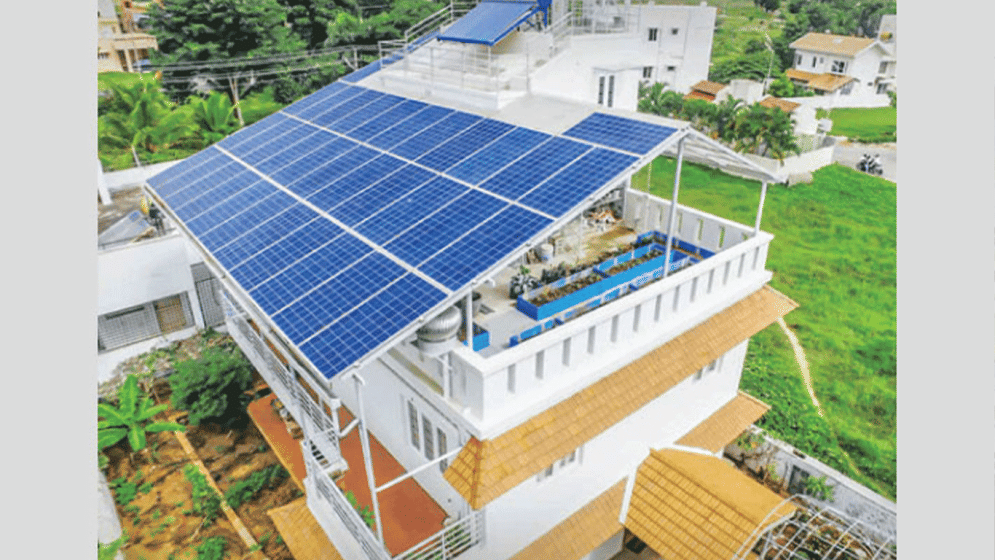
File Photo
Bangladesh is investing only about 13% of the funds needed annually to expand renewable energy, leaving a financing gap of approximately US$1.35 billion, according to a new study by Change Initiative.
The country requires an estimated $1.54 billion annually through 2030 to meet its renewable energy goals, but investment is projected to reach only around $190 million a year at the current pace of expansion.
The study also found that loans accounted for about 90% of energy-sector climate finance received by Bangladesh, raising concerns about mounting debt as the country accelerates its transition to clean energy.
The findings were presented at a national dialogue organised by Change Initiative at CIRDAP in Dhaka on Tuesday.
The report, titled Navigating Debt Sustainability in the Energy Sector in Bangladesh, calls for more grants, affordable local-currency financing and greater support from multilateral development banks.
M Zakir Hossain Khan, co-founder and chief executive of Change Initiative, said dependence on imported fossil fuels had exposed Bangladesh’s energy sector to external shocks.
“Accelerating renewable energy is essential to achieving energy sovereignty and securing greater control over our energy future,” he said.
He stressed the need for grants and concessional financing to achieve the government’s 10,000MW solar power target.
State Minister for Foreign Affairs Shama Obaed Islam said Bangladesh needed to reduce its dependence on imported fuels without accumulating excessive debt.
She reiterated the government’s targets of generating 20% of electricity from renewable sources by 2030 and 30% by 2040, emphasising coordinated investment and stronger climate diplomacy.
Heavy reliance on loans
The study found that Bangladesh received approximately $9 in loans for every $1 in grants for energy-sector climate finance between 2002 and 2023.
By comparison, the average ratio for least developed countries was $1.53 in loans per grant dollar, making Bangladesh’s reliance on debt nearly six times higher.
A separate analysis of renewable energy investment between 2000 and 2025 showed that debt accounted for 90.4% of financing, grants 7% and mezzanine financing, which combines debt and equity features, the remaining 2.6%.
Lawmaker Sultana Jesmen said the heavy reliance on loans was putting pressure on renewable energy entrepreneurs and called for affordable financing to help domestic businesses remain viable.
The report recommends using grants to reduce project preparation costs, development-bank guarantees to lower lending risks and taka-denominated loans to protect businesses from foreign-exchange fluctuations.
Development-bank funds underutilised
Five major multilateral development banks have a combined annual sovereign financing capacity of approximately $6.3 billion for Bangladesh, according to the study.
However, identified renewable energy-related eligible commitments for 2024-2026 totalled only around $820 million, equivalent to about 4% of the estimated three-year financing envelope.
The report cautions that the comparison is indicative because financing capacity, commitments and disbursements are measured differently.
Delays in accessing approved funds pose another obstacle. Citing World Bank documents, the study found that one renewable energy financing facility had disbursed just 12% of its funding five years after approval.
Budget releases for the associated project were also delayed by four to five months.
Khondkar Morshed Millat, former director of Bangladesh Bank’s Sustainable Finance Department, proposed allocating at least 1.5% of total bank lending to renewable energy and gradually increasing the overall green finance target to 15-20% by 2030.
He also called for stronger coordination among government agencies and financial institutions to accelerate investment.
New facility proposed to cut borrowing
The study proposes establishing a Renewable Energy Sovereignty Facility (RESF) under the Bangladesh Climate Development Partnership by mid-2027 to expand access to affordable financing.
Infrastructure Development Company Limited (IDCOL) would manage the facility, while PKSF would oversee support for community-based projects.
The facility would combine grants, equity, guarantees and local-currency loans to support decentralised renewable energy development, limiting sovereign borrowing for public infrastructure to 10%-15% of its total assets.
Under the study’s least-debt financing scenario, sovereign borrowing needed to meet the estimated $7.69 billion investment requirement for 2026-2030 could fall to $770 million, compared with approximately $4.61 billion under conventional financing.
The report emphasises that these figures are model-based projections rather than confirmed financing commitments.
It also recommends redirecting at least 5% of power and liquefied natural gas (LNG) subsidies from FY28 to support the facility’s non-debt financing window.
Based on subsidy allocations examined in the study, the measure could generate approximately $190 million annually.
Call for action ahead of COP31
State Minister for Environment, Forest and Climate Change Sheikh Faridul Islam, who chaired the programme, called for translating government commitments into practical action.
He identified rooftop solar expansion, reduced dependence on imported fossil fuels and stronger environmental protection as priorities.
He also urged Bangladesh to highlight climate-related loss and damage and work with other Global South countries to advance climate justice at COP31.
The report further recommends simplifying project approvals, providing green financing before construction and maintaining stable net-metering regulations.
The Change Initiative urged policymakers to focus not only on the volume of climate finance but also on its affordability, accessibility and implications for public debt.