



 For all latest news, follow the Daily Sun's Google News channel.


From grains to chicken, India faces prolonged food inflation
Reuters, New Delhi
Published: 03 Nov 2026, 08:08 PM
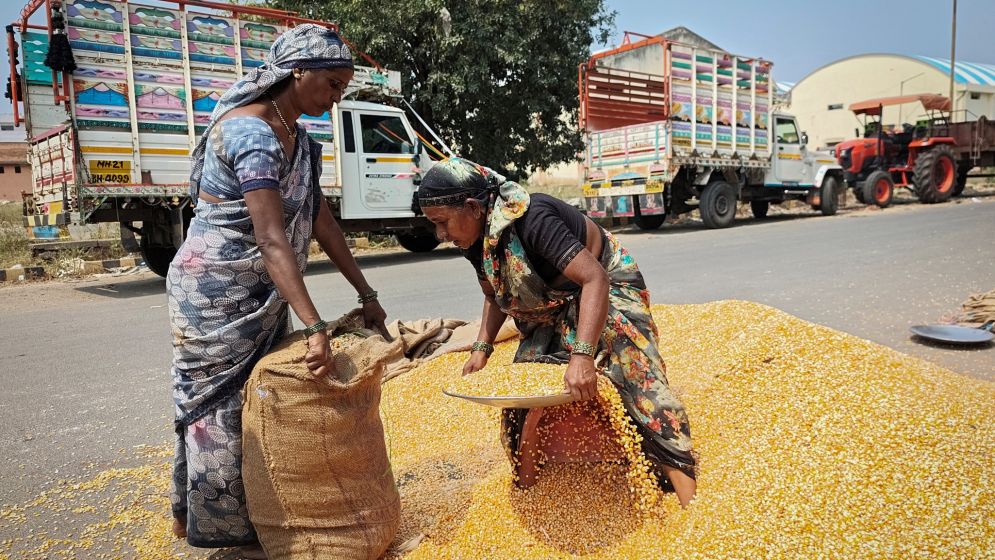
Labourers fill corn into sacks at a grain market in Jalna district, in the western state of Maharashtra, India, 23 October 2026. Photo: REUTERS
Indian farmer Amarsingh Gushinge wants to sow wheat and
chickpeas in coming weeks to capitalise on attractive prices, but dwindling
water supplies after below-average monsoon rains are preventing him from
planting either crop.
Like Gushinge, millions of farmers, especially in southern
and western India, are facing water shortages as they prepare to plant winter
crops.
"There's not enough moisture in the soil to sow the
next crop, and no money left to do so either," said Gushinge, 78, at
Rajewadi village, about 400 km (250 miles) east of Mumbai. The Jalna district
around his village has received about 48% less rain than average this year, the
local weather office has said.
A weak monsoon mean farmers will have to sow winter crops under less favourable conditions, raising the risk of stunted growth and lower yields.
Lower crop yields could further stoke food inflation, with
prices of sugar, pulses, wheat and rice already climbing amid a severe El Niño.
Onions, ubiquitous in Indian kitchens and widely used in curries, as well as
milk and poultry products, are also becoming more expensive.
A spike in prices of staples can anger millions of Indians -
increases in onion prices have ousted state governments in elections in the
past.
Higher food prices could further weaken discretionary
consumption across the economy, with the weakest monsoon rains in more than a
decade already dampening rural demand and dragging down sales of tractors and
farm equipment.
Food inflation could reach around 10% in the
October-December quarter, said Devendra Pant, chief economist at India Ratings
and Research, citing a combination of weak rains, higher global prices and
rupee depreciation.
In September, annual retail food inflation accelerated to
7.74%, pushing headline inflation to 5.54%, close to the Reserve Bank of
India's upper tolerance limit of 6%.
Higher food prices will likely prompt the central bank to
raise interest rates by a further 50-75 basis points, as it risks feeding into
broader price pressures, Pant said.
He said he expects the central bank to raise rates for a
second consecutive time at its December meeting, after its first hike in
October.
Protein inflation
Protein has been a key driver of price increases and could
prove difficult to bring down, economists said.
The central bank's September Monetary Policy Report said
animal protein and spices accounted for nearly half of the 200-basis point rise
in food inflation between March and August, driven by higher feed and fodder,
transport, packaging and energy costs, as well as bird mortality after a heat
wave.
In September, meat inflation eased to 8.7% from 12.0% in
August, largely due to a high base, while inflation in milk, other dairy
products and eggs rose to 5.1% from 4.8%.
Animal feed, mainly corn and soybean, accounts for 60%-70%
of poultry production costs, said Uday Singh Bayas, president of poultry
equipment makers' body IPEMA-Poultry India.
Poultry producers have yet to fully pass on higher feed
costs, and broiler prices could rise from January as higher costs and tighter
supplies put further pressure on the market, said Uddhav Ahire, chairman of the
Anand Agro Group.
Pulses, poultry and dairy are key sources of protein in
India. Prolonged protein inflation could hurt lower-income households and force
them to alter their diets, with implications for long-term health, said Madan
Sabnavis, chief economist at Bank of Baroda.
Limited relief
Sugar output is likely to fall short of domestic consumption
for a second consecutive year and may recover only in late 2028 if rains are
favourable in 2027, said Rahil Shaikh, managing director of Mumbai-based trader
MEIR Commodities India.
Sugar prices have risen nearly 30% over the past year,
prompting the government to allow duty-free imports of 1 million metric tons to
help bridge a shortfall, with consumption exceeding 29 million tons this year
against output of less than 27.5 million tons.
But global prices are higher than domestic rates, limiting
the impact of imports and making a return to last year's price levels unlikely,
Shaikh said.
While India can turn to imports of sugar, vegetable oils and
pulses to offset domestic production shortfalls, higher global prices, a weaker
rupee and rising freight costs are making overseas supplies more expensive.
El Niño is also affecting farm production in other
countries, while the Russia-Ukraine war has hit grain and sunflower oil
supplies from the Black Sea region.
These factors are pushing up prices of vegetable oils, said
Sandeep Bajoria, chief executive of Mumbai-based brokerage Sunvin Group.
India holds surplus stocks of rice and wheat, but prices
continue to rise as supplies of the premium quality grain preferred by
consumers remain tight.
Preferences vary across states, and dry weather has cut
supplies of rice varieties favoured in southern India, pushing up prices, said
BV Krishna Rao, president of the Rice Exporters Association.
Wheat, India's main winter crop, has climbed to a nearly
two-year high amid concerns that El Niño could bring warmer winter conditions
and curb production early next year.
Food inflation will depend partly on how the winter crop
season unfolds, with poor soil moisture and the risk of warmer temperatures
threatening to further squeeze supplies.
"Amidst elevated crude oil prices, higher food
inflation and an uncertain outlook for the kharif (winter) crop, sustaining
economic activity while safeguarding price stability will be the focus of
policymakers in the second half of the financial year," the government
said in its monthly economic report for October.