


 For all latest news, follow the Daily Sun's Google News channel.


Govt to implement reforms with five stakeholders to ensure sustainable LDC graduation: Titumir
He described the initiative as an unprecedented consensus-based partnership
BSS, Dhaka
Published: 01 Nov 2026, 07:25 PM

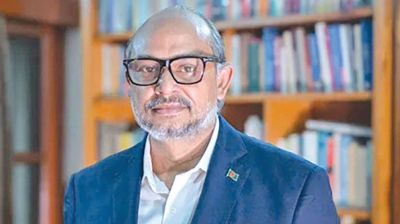
File Photo
The government has undertaken a comprehensive reform initiative involving five key stakeholders–the people, private sector, United Nations, development partners and multilateral development institutions–to ensure Bangladesh's sustainable graduation from the Least Developed Country (LDC) category.
The government does not want to treat the additional
three years granted for LDC graduation preparation merely as an extension of
time. Instead, it aims to utilise the period to implement structural reforms in
the economy, enhance productivity, explore new markets and lay the foundation
for long-term sustainable development.
Prime Minister's Adviser on Finance and Planning Dr
Rashed Al Mahmud Titumir said this in an interview at the Bangladesh
Secretariat on Sunday.
He said Prime Minister Tarique Rahman had set a
vision of transforming Bangladesh into a global manufacturing hub and an export
gateway. To achieve this goal, the government is working on a strategy to
transform the country from "graduation to a trillion-dollar economy",
while ensuring that the transformation remains sustainable.
Titumir said Bangladesh has the largest economy
among the LDCs and, therefore, requires major reforms to diversify its economy,
enhance competitiveness and increase productivity.
Explaining the rationale for the extended
preparation period, the adviser said the government considers it an integral
part of its broader economic strategy.
He identified three key considerations behind the
decision: domestic economic vulnerabilities inherited from the previous
administration, external pressures and economic uncertainties arising from the
Middle East crisis, and the country's inadequate preparation to address these
challenges.
"Taking these realities into consideration, the
government has started working on the necessary measures. However, the
government has supported LDC graduation from the very beginning," he said.
Regarding reform priorities, the Prime Minister's
adviser said restoring discipline in the banking sector and ensuring adequate
financing for investment are among the government's major objectives.
The government will also focus on strengthening
energy security, exploring new investment markets and diversifying the
country's export basket. It will pursue free trade agreements (FTAs) with
different countries to mitigate the possible loss of trade preferences
following LDC graduation.
Titumir said achieving these objectives would become
easier through an effective compact with the private sector.
He said private sector representatives had been
involved in every discussion on LDC graduation, adding that the initiative also
forms part of the government's “Three Rs” strategy.
The adviser said the government had brought five
stakeholders under the reform initiative: the people of Bangladesh, the private
sector, the United Nations, development partners and multilateral development
institutions.
He described the initiative as an unprecedented
consensus-based partnership.
Highlighting the role of the United Nations, Titumir
said a unanimously adopted proposal had mandated the UN system to provide all
forms of support, including technical assistance, to Bangladesh's graduation
preparations. The UN resident coordinator will lead the coordination of this
assistance.
He said the International Monetary Fund (IMF), World
Bank, Asian Development Bank (ADB), Asian Infrastructure Investment Bank (AIIB)
and Islamic Development Bank (IsDB) had assured support for the priority
reforms identified by the government.
Titumir added that the ongoing IMF programme and
other reform initiatives were aligned with the government's broader reform
agenda.
He said the reforms were being undertaken on the
basis of the people's mandate, which was one of the distinctive features of the
initiative.
"Never before have the people of the country
been involved in reform initiatives in this manner," he said, adding that
the participation of the five stakeholders would also help strengthen
confidence among foreign investors.
The adviser identified energy security as a major
prerequisite for sustainable industrialisation and investment.
He said the government planned to develop energy
infrastructure centred on Matarbari while expanding the necessary facilities in
other parts of the country.
To increase LNG import capacity, the government is
working on establishing land-based LNG terminals alongside floating storage and
regasification facilities.
The government is also prioritising increased solar
power generation, reducing wastage and system losses in the energy supply
chain, and diversifying sources of LNG imports.
Titumir said developing energy infrastructure beyond
Matarbari, particularly in the southwestern region and other parts of the
country, would create opportunities for geographically balanced
industrialisation.
He said the government was also focusing on exploring
new export destinations and pursuing FTAs or Comprehensive Economic Partnership
Agreements (CEPAs) with trading partners to address the potential reduction of
duty-free and quota-free market access after LDC graduation.
The additional three years, he said, have created an
important economic opportunity for Bangladesh.
Proper utilisation of the extended period could help
strengthen the country's economic foundations through higher investment, new
export markets, expanded production capacity and increased employment
opportunities.
The period, therefore, represents not only an
opportunity to prepare for LDC graduation but also a crucial window for
Bangladesh's long-term economic transformation.