


 For all latest news, follow the Daily Sun's Google News channel.


Bangladesh's LDC graduation deferred by 3 years
The same three-year extension applies to Nepal as well, as per the vote cast at UNGA around 1:30am Friday in Bangladesh time
Daily Sun Report, Dhaka
Published: 30 Oct 2026, 01:11 AM
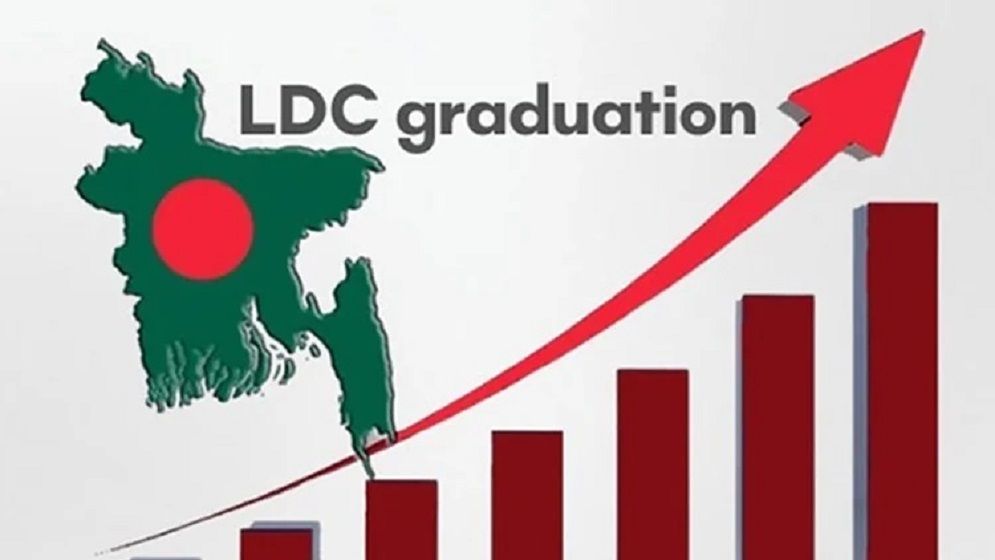
The United Nations General Assembly (UNGA) has approved a
proposal to extend Bangladesh's preparation period for graduating from the
least developed country (LDC) group by three years.
As a result, the new deadline for graduation has been set at
24 November 2029, instead of 24 November 2026. The same three-year extension
applies to Nepal as well, as per the vote cast at UNGA around 1:30am Friday in
Bangladesh time.
With the extra three years, Bangladesh will be able to
retain trade benefits for its exports for additional three years. In the
meantime, it can address structural weaknesses in the economy, boost
investment, and strengthen its competitiveness in international markets.
On Thursday, Uruguay moved the proposal at the UN General
Assembly on Bangladesh's behalf. In a vote, the Group of 77 and China, who
together form G77+China, backed the proposal. It is worth noting that the Group
of 77 started with 77 founding member countries in 1964, but now includes 134
countries.
Afterwards, the European Union, Canada, Australia and New
Zealand also explicitly voiced their support for deferring the graduation
deadline for both Bangladesh and Nepal.
With their support, Bangladesh's request to extend the
five-year preparation period for LDC graduation by another three years was
approved at the UNGA.
When presenting the proposal, the Uruguay representative
said that the UNGA approved the November 2026 LDC graduation deadline for Nepal
and Bangladesh in 2021. However, since then the two countries have faced
unexpected and unprecedented hurdles, the Uruguay side said.
“Since November 2021, their (Bangladesh and Nepal’s)
preparations have faced successive shocks, including the lingering effects of
the pandemic, climate related disasters, geopolitical conflicts and disruptions
to international trade and energy supplies, uncertainty affecting migrant
employment, remittances and tourism has added further pressure.
These external shocks have interacted with persistent
domestic vulnerabilities, complicating the implementation of smooth transition
strategies.
In view of this unforeseen issues, Uruguay said that meeting
the graduation criteria does not eliminate structural weaknesses “overnight.”
“The experience of Bangladesh and Nepal underscores the
importance of considering the conditions in which countries prepare for
graduation and their capacity to sustain progress afterwards.
“International support must respond to these realities,” the
Uruguay representative said.
Bangladesh had sought the extension in view of global
economic uncertainty, risks to energy supply, changing conditions in
international trade, and domestic economic challenges.
The government aims to use the additional time to build the
economy's capacity and complete the preparations needed for the post-LDC
reality.
Commerce Minister Khandakar Abdul Muktadir said recently
that a decision on Bangladesh's request to defer its graduation from the least
developed country (LDC) category by three years is expected within October.
"The government has prepared a time-bound action plan
to utilise the additional time for strengthening the country's preparedness for
graduation. It also aims to conclude negotiations on a free trade agreement
(FTA) with the European Union (EU) before Bangladesh graduates from the LDC
category," he said.
Time extension ‘an
investment in making graduation successful’
After the UNGA members backed the proposal, the assembly’s president
said that the consensus responds to the exceptional circumstances related to
ongoing conflicts in the Middle East, disruptions to energy supplies and supply
chains, global trade uncertainty and persistent structural vulnerabilities for
both Bangladesh and Nepal.
The political transitions that took place recently have
compounded external shocks and constrained the government's capacity to
respond, he said.
“Against this backdrop, three additional years is not a
retreat from graduation, but an investment in making it succeed. This extended
time is not time to stand still.
“It is time to act decisively, to strengthen institutions,
address vulnerabilities, and prepare for the challenges of life beyond
graduation.
“The Assembly invites Bangladesh to advance reforms
addressing persistent structural vulnerabilities.
“It invites Nepal to implement a clear time bound plan to
adjust and reprioritize its smooth transition strategy.
“Both countries must strengthen resilience, accelerate
progress towards the Sustainable Development Goals and translate preparations
into results.
“The objective is clear graduation should protect hard won gains and open new development opportunities.”