



 For all latest news, follow the Daily Sun's Google News channel.


Japan, Bangladesh partner to establish language, skill development centre
The signing ceremony was attended by Aya Yoshida, minister of the Embassy of Japan in Dhaka
Daily Sun Report, Dhaka
Published: 29 Oct 2026, 05:25 PM
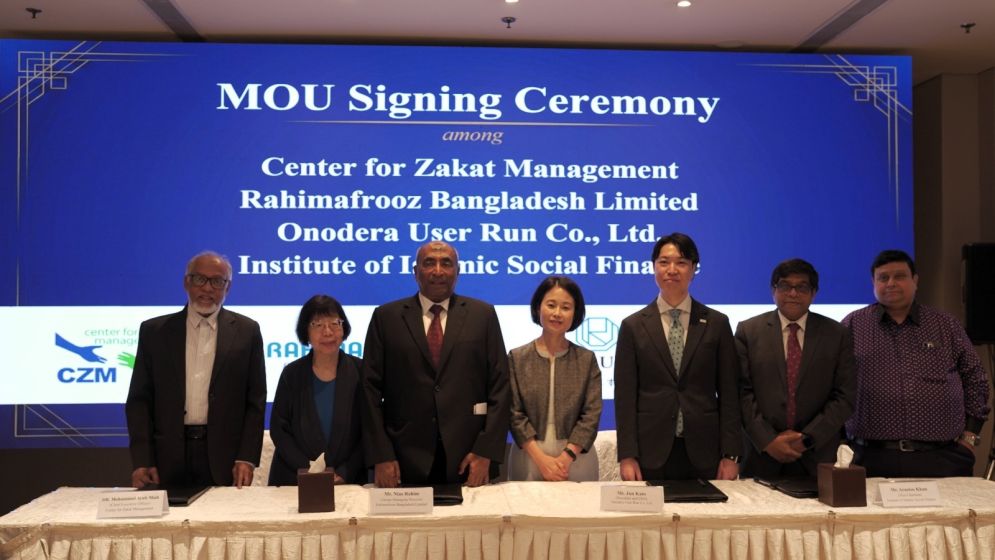
Photo: Daily Sun
Japan’s ONODERA User Run Co Ltd. will collaborate with the Centre for Zakat Management (CZM), the Institute of Islamic Social Finance (IISF), and Rahimafrooz to establish a Japanese language and skill development centre in Bangladesh.
A memorandum of understanding (MoU) formalising the
collaboration was signed in Dhaka on Thursday.
The initiative aims to equip young Bangladeshis,
particularly those from underprivileged communities, with Japanese language
proficiency, relevant professional skills, and an understanding of Japanese
workplace culture, enabling them to access credible employment opportunities in
Japan and Bangladesh and pursue sustainable livelihoods with dignity.
The four organisations will contribute complementary
expertise and resources to the initiative. ONODERA User Run Co Ltd will lead
Japanese language training, employment-oriented preparation, and orientation to
Japanese workplace culture, drawing on its experience in Japan’s human resource
and employment sector.
CZM will facilitate the identification and
engagement of eligible young people from underprivileged communities, support
access to training and scholarships where appropriate, and help connect the initiative
with its broader mission of sustainable poverty alleviation and social
empowerment.
IISF will support the initiative through its
institutional facilities and learning environment, helping provide the
infrastructure required to deliver the proposed training programmes.
Rahimafrooz will extend strategic support to the
partnership, contributing to its broader objective of youth development, social
responsibility, and the creation of dignified employment pathways, while
supporting collaboration among the participating organisations.
The MoU was signed by Jun Kato, president and CEO of
ONODERA User Run Co Ltd, Dr Mohammad Ayub Miah, chief executive officer of CZM,
Arastoo Khan, vice chairman of IISF and Niaz Rahim, group managing director of
Rahimafrooz.
The signing ceremony was attended by Aya Yoshida, minister
of the Embassy of Japan in Dhaka.
Speaking on the occasion, Jun Kato said, “We
recognise the diligence, commitment, and potential of young people in
Bangladesh. Through this initiative, we aim to help them develop Japanese
language proficiency, practical professional skills, and an understanding of
Japanese workplace culture, preparing them for meaningful employment
opportunities and successful integration into the workplace.”
Niaz Rahim said, “Bangladesh’s young people have
enormous potential. By bringing together the complementary strengths of our
partners, we hope to help connect their talent with international employment
opportunities through relevant skills, language proficiency, responsible
practices, and dignified work. We see this as an opportunity to contribute to
youth empowerment and sustainable livelihoods through a collaborative and
purposeful initiative.”
Mohammad Ayub Miah said, “Access to relevant skills,
quality training, and credible employment opportunities can make a lasting
difference in the lives of young people and their families. Through this
initiative, CZM aims to help young people from underprivileged communities
overcome barriers to employment, enhance their capabilities, and move towards
greater economic self-reliance and dignity.”
Aya Yoshida observed that Japan looked forward to
welcoming skilled workers from international labour markets, including
Bangladesh. He emphasised that Japanese language proficiency, relevant
professional skills, and an understanding of Japanese culture and workplace
practices were important for aspiring workers to prepare for successful
employment in Japan.
The proposed centre represents a collaborative
effort to bridge the gap between skills development and employment
opportunities. By combining Japanese employment-sector expertise, targeted
social development, institutional learning facilities, and strategic
private-sector support, the partners aspire to create a practical pathway for
young Bangladeshis to develop their capabilities, access meaningful employment,
and build more secure and self-reliant futures.