


 For all latest news, follow the Daily Sun's Google News channel.


UK weighs scrapping its largest untapped oilfield with crude over $100
Oil Price
Published: 27 Oct 2026, 08:13 PM
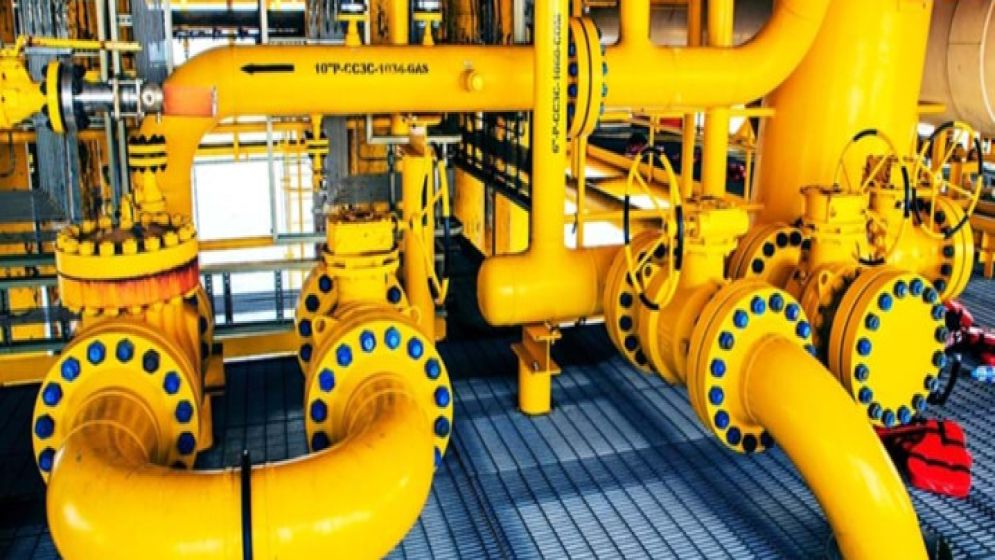
Britain is deciding whether to drill its largest untapped
oilfield in the middle of an oil shock, with Brent above 100 and more than 70%
of its oil already coming from abroad. Rosebank, west of Shetland, is an £8.7
billion ($11.6 billion) development that its operator says would pump about
69,000 barrels a day at peak, roughly a tenth of the country’s expected oil
output. The production vessel has been on site since June, and Ithaca Energy,
which owns a fifth of the field, says it will likely stop investing in Britain
if the government says no.
A major Cabinet split has emerged within Prime Minister Andy
Burnham’s government over whether to approve drilling at the Rosebank oilfield,
with energy security on one side and climate commitments on the other.
Chancellor John Healey wants Rosebank approved for the jobs
and the Treasury revenue, and Business Secretary Jonathan Reynolds is backing
him. An unnamed minister told the Mail on Sunday that Burnham will ultimately
back the development too. Unite and GMB, two of Britain’s largest unions, are
pushing for approval.
Energy Secretary Miatta Fahnbulleh makes the call, and she
is minded to say no. In 2022 she wrote that funding new fossil fuels was
“irresponsible and shortsighted,” and that the world “can’t have any new oil or
gas fields” if it wants to keep warming to 1.5C. Foreign Secretary Ed Miliband,
who blocked new licences when he held her job, is backing her.
Fahnbulleh approved Jackdaw on 21 October and has already
explained why Rosebank is different. She calls Jackdaw “a gasfield that caters
for the domestic market” and Rosebank “an oilfield that is mainly for export.”
She also says the decision is hers alone under a quasi-judicial framework, and
that bending it would invite a court to strike it down. Scotland’s Court of
Session did exactly that in January 2025, quashing the first consents for both
fields because their environmental assessments ignored the emissions from
burning the oil and gas.
Rosebank lies about 80 miles northwest of Shetland in the
North Atlantic. Rystad Energy estimates it holds nearly 500 million barrels of
oil equivalent, about 90% of its oil, and Ithaca puts recoverable oil across
two development phases at around 300 million barrels. Campaigners estimate that
burning that oil would release more than 200 million tonnes of CO2, and
government officials put the field’s emissions at roughly seven times
Jackdaw’s.
Adura, the North Sea joint venture between Equinor and Shell
Plc that operates Rosebank with an 80% stake, has deployed an
electrification-ready Floating Production Storage and Offloading (FPSO) vessel
at the field. Adura says the field will produce oil at about 12 kg of CO2 per
barrel, against a North Sea average of about 20 kg. Powering the vessel from
shore could cut those emissions by more than 70%, to below 3 kg per barrel,
once the technology is qualified and the consents are in place. The oil will be
shipped by shuttle tanker to customers’ refineries in Europe.
North Sea production is in steep decline. The North Sea
Transition Authority reported last week that UK proven and probable reserves
fell to 2.5 billion barrels of oil equivalent at the end of 2025, down 0.4
billion in a year, and that not a single exploration well was drilled on the UK
Continental Shelf in 2025.
Jackdaw, which is nearly complete, is expected to start
supplying gas within weeks and could account for about 6% of North Sea gas
production at full output. The government says approving it does not break
Labour’s pledge against new exploration licences because Jackdaw holds an
existing licence. The field had been held up by the legal challenge over
downstream emissions.
Alongside the Jackdaw approval, Healey announced a £2
billion down payment for a new Energy Wealth Fund. Future North Sea oil and gas
revenues will flow into it, and the capital is earmarked for renewable
generation, low-carbon infrastructure and industries to replace the oil and gas
economy. Treasury modelling found that had the UK invested its roughly £200
billion in North Sea receipts since the 1980s at returns similar to Norway’s,
the fund could have reached about £1 trillion.
Norway’s sovereign wealth fund, officially the Government Pension Fund Global, is worth approximately $2.3 trillion, making it the world’s largest sovereign wealth fund. It is financed primarily by surplus revenues from the Norwegian state’s petroleum sector, alongside returns from its global investments. Managed by Norges Bank Investment Management, the fund posted a record profit of $184.3 billion in the first half of 2026, then lost $29.7 billion in the third quarter as rising borrowing costs cut the value of its bond portfolio.