


 For all latest news, follow the Daily Sun's Google News channel.


Packaging industry faces skilled manpower shortage: Trade body chief
Daily Sun Report, Dhaka
Published: 26 Oct 2026, 09:47 PM
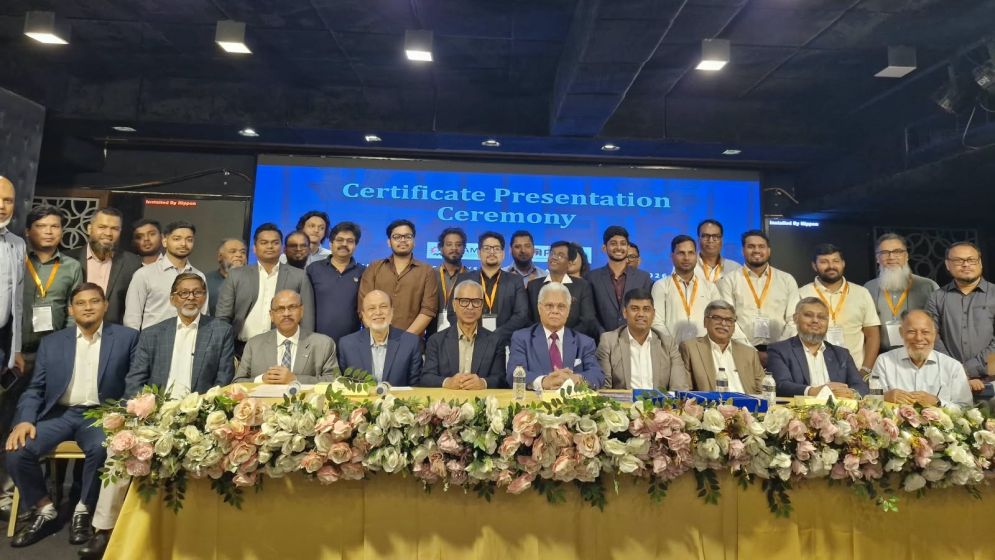
Photo: Courtesy
Bangladesh’s packaging and accessories
sector needs 20,000-50,000 skilled workers but cannot source them locally,
forcing businesses to recruit from Sri Lanka, India and China, said Mohammad
Shahriar, president of Bangladesh Packaging and Accessories Manufacturers and
Exporters Association (BPAMEA).
“We need 20,000 to 50,000 educated
personnel in our sector, but we cannot find them. We have to hire people from
Sri Lanka, India and China,” he said.
He was speaking at the closing ceremony of
a three-day international training programme named “Sustainable and Quality Packaging for Local
and Global Markets,” held at Banani Club in the capital on Monday, organised by
BPAMEA in collaboration with the Asian Packaging Federation (APF).
Shahriar said the global packaging market
offered enormous opportunities, but Bangladesh’s share remained negligible.
Citing Bloomberg estimates, he said the global paper packaging market was worth
around $700 billion, while the overall packaging market was valued at $1.3
trillion.
Despite years of neglect and inadequate
policy support, local entrepreneurs had developed the sector and demonstrated
their capacity during the Covid-19 pandemic by supplying packaging materials
and accessories to the garment and other manufacturing industries, he said.
Bangladesh can meet a substantial share of
the packaging needs of its world-class garment industry locally. However, the
sector has yet to achieve the expected progress in exports, despite having
production capacity, Shahriar said.
He called for stronger government and
National Board of Revenue (NBR) support, along with a more business-friendly
environment, to help the industry realise its export potential.
BPAMEA is working with Dhaka University and
other institutions to develop industry-oriented curricula.
He urged public universities to align their
courses with industry needs.
Shahriar also called for developing
printing, packaging and accessories as standalone industries rather than
treating them merely as supporting sectors. Businesses must first have a viable
operating environment before they can make further progress towards sustainable
and environmentally friendly packaging, he said.
He stressed the need for greater
coordination among industry bodies, including the Bangladesh Garment
Manufacturers and Exporters Association (BGMEA), Bangladesh Knitwear
Manufacturers and Exporters Association (BKMEA) and Bangladesh Textile Mills
Association (BTMA).
He also demanded equal free-of-cost (FOC)
facilities for locally produced accessories and trims, arguing that domestic
suppliers should enjoy the same opportunities as foreign suppliers.
“You can bring in accessories from abroad
on an FOC basis, so why can’t I provide them locally on the same basis?” he
said.
Expressing concern over Bangladesh’s export
performance in European markets, Shahriar said China, Vietnam and India had
recorded export growth over the same period. Greater unity among businesses and
cooperation with government agencies were essential to strengthening exports
and foreign exchange earnings, he added.
Former home and commerce minister Air Vice
Marshal (retd) Altaf Hossain Chowdhury attended the programme as the chief
guest.
Former Bangladesh Garment Manufacturers and
Exporters Association (BGMEA) president Faruque Hassan said India’s suspension
of transshipment facilities for Bangladesh had negatively affected the
country’s export trade.
At the same time, complications in
importing raw materials and policy ambiguities at the National Board of Revenue
(NBR) are creating challenges for businesses, he added.
Referring to the suspension of goods
transportation through India and restrictions on importing yarn through land
ports, Faruque Hassan said the facility for parcel shipments through land ports
had been introduced after considerable efforts. However, the facility to import
yarn through land ports was subsequently withdrawn, he noted.
He said India later suspended transshipment
facilities for Bangladesh, disrupting the country’s export operations and
causing financial losses for businesses.
Faruque Hassan said Bangladesh’s RMG
exports to the Indian market had once reached nearly $1 billion annually.
However, the figure has since declined to between $500 million and $600
million. He expressed concern that exports to the market could fall further in
the future.
According to him, the potential impact on
the country’s export sector must be carefully assessed before making policy
decisions on imports and transportation. Restrictions on raw material imports
and goods movement can disrupt production and weaken Bangladesh’s
competitiveness in international markets, he added.
Bangladesh Employers’ Federation president
Fazlee Shamim Ehsan and former Bangladesh Garments Accessories and Packaging
Manufacturers and Exporters Association (BGAPMEA) president Moazzem Hossain
Moti also spoke.