


 For all latest news, follow the Daily Sun's Google News channel.


Experts, workers demand fair wages, occupational safety for building competitive RMG sector
Daily Sun Report, Dhaka
Published: 24 Oct 2026, 10:03 PM
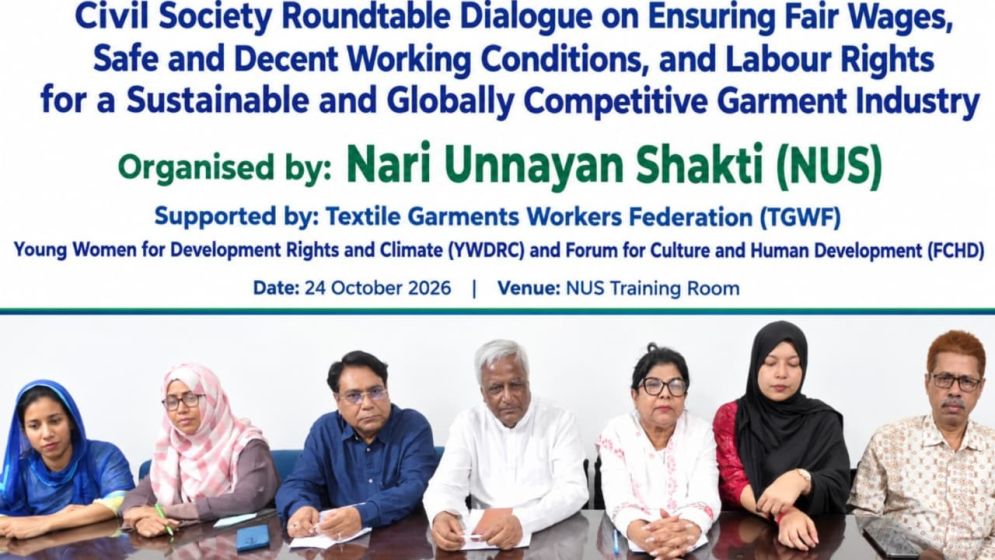
Photo: Courtesy
Civil society and workers’ representatives have called for
fair wages, safe and decent working conditions, and the protection of labour
rights to ensure the sustainable development and global competitiveness of
Bangladesh’s garment industry.
They made the remarks at a roundtable dialogue organised by
Nari Unnayan Shakti (NUS), with support from the Textile Garments Workers
Federation (TGWF), Young Women for Development Rights and Climate (YWDRC), and
Forum for Culture and Human Development (FCHD), at the NUS Training Room,
Banasree, Dhaka.
The session was chaired by Dr Afroja Pravin, executive
director of NUS. The keynote address was delivered by Abul Hossain, president
of TGWF and a freedom fighter.
Other speakers included Nusrat Sultana Afroj, executive
chairperson of YWDRC; Zarin Tasnim, YWDRC representative; Selina Khatun, publicity
secretary of the Domestic Worker Employers Association; Dr Sultan Muhammad
Razzak, executive director of FCHD; Abdul Momin, project coordinator of NUS;
and Hasnat Jahan, workers’ representative, among others.
At the event, workers presented the following ten-point
charter of demands to the government:
1. Establish fair wages reflecting the cost of living, with
regular wage reviews
2. Ensure safe, healthy, and decent working conditions and
enforce building, fire, and electrical safety standards
3. Protect freedom of association, trade union rights, and
collective bargaining
4. Prevent discrimination, harassment, violence, and sexual
abuse against women workers and ensure effective remedies
5. Ensure six months of maternity leave, maternity benefits,
childcare facilities, and a supportive workplace for women workers
6. Ensure appointment letters, identity cards, timely wages,
fair overtime payments, and legally entitled leave
7. Provide prompt compensation, medical assistance, and
social protection in cases of workplace accidents, illness, or death
8. Strengthen inspections and accountability and take legal
action against factories violating labour laws
9. Expand skills development, vocational training,
rehabilitation, and opportunities to adapt to technological changes
10. Establish regular tripartite dialogue among the
government, employers’, and workers’ organisations, and ensure that
international buyers share responsibility for the sustainable development of
Bangladesh’s garment industry
Participants called on the government and all relevant stakeholders to take effective measures to address these demands and build a fair, safe, and sustainable garment industry.