



 For all latest news, follow the Daily Sun's Google News channel.


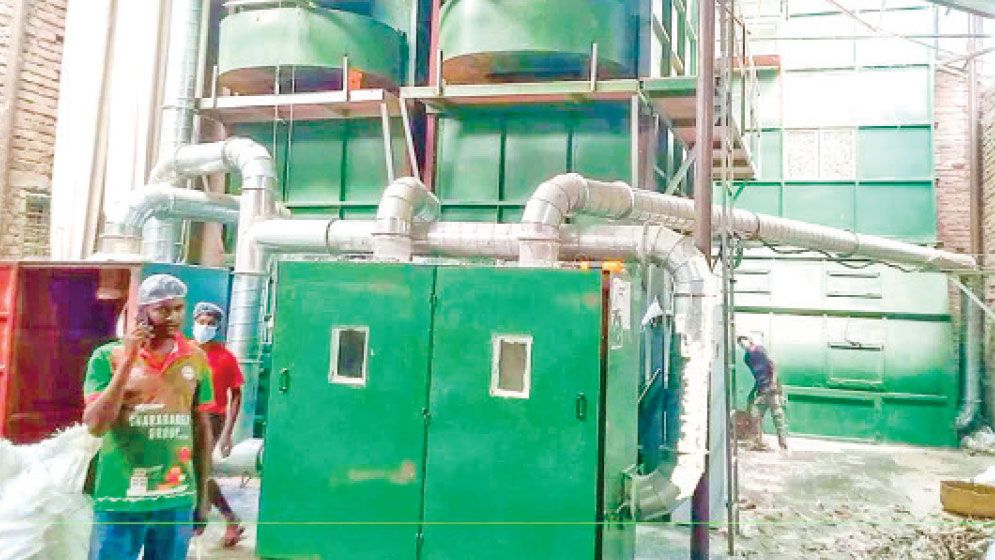
Discarded duck feathers are creating new export opportunities and employment in Joypurhat, where a factory processes the feathers collected from different parts of the country and exports them to China, Vietnam, Taiwan and India.
Located at Tilakpur Bazar in Akkelpur upazila, Sarabangla Down Products collects and processes 25 to 30 tonnes of duck feathers every month. The feathers are sorted, cleaned and processed using specialised machinery before being shipped abroad for use in winter clothing, blankets, bedsheets, pillows, sofa upholstery and badminton shuttlecocks.
Entrepreneur Altab Hossain, a resident of Sherpur, established the factory in 2022 with an investment of around Tk4–5 crore, using equipment imported from China.
Hossain started a small-scale duck feather business in 2014 but failed to achieve the expected success due to a lack of experience. He later went to China for higher studies and worked for a year at a feather-processing company to gain practical knowledge.
After returning to Bangladesh, he resumed the business with modern machinery and expanded operations in Joypurhat.
Hossain said countries with severe winters had a strong demand for products made from duck feathers. However, Bangladesh needed a fully equipped factory to manufacture finished products such as jackets, blankets and pillows rather than exporting processed raw materials.
He estimated that around Tk15 crore would be required to establish such a facility. Government support or low-interest loans could help expand production and enable direct exports of finished goods, increasing foreign exchange earnings, he added.

Factory manager Sohel Rana said feathers were collected from across the country, dried in the sun and processed through several stages using machines. The smaller feathers were used in jackets, blankets, bedsheets, pillows and sofa upholstery, while the larger ones were used to make badminton shuttlecocks. The factory currently employs 16 workers, including local women.
Meem Khatun, a worker, said her job helped support her family and cover her children's education expenses. She said workers initially dried the collected feathers before packing them into sacks for processing.
Samena Begum, another worker, said she had struggled to support her family of eight after her husband died eight years ago. She now earns Tk10,000 a month, with additional income from overtime work.
Kalpana Rani Roy, training officer at the district livestock department, said duck feathers, once discarded as waste, had emerged as a promising commercial resource.
She said officials had visited the factory and provided advice on meeting the necessary requirements, alongside technical assistance.
Increased investment could create opportunities to manufacture a wider range of feather-based products locally, generating more jobs and foreign exchange, she added.