


 For all latest news, follow the Daily Sun's Google News channel.


Around 90% exports to US would be 'tariff-free': Commerce Adviser
The new deal has an 'exit clause' to allow future Bangladesh government to leave it upon submitting an 'appropriate notice'
Daily Sun Report, Dhaka
Published: 10 Feb 2026, 08:15 PM
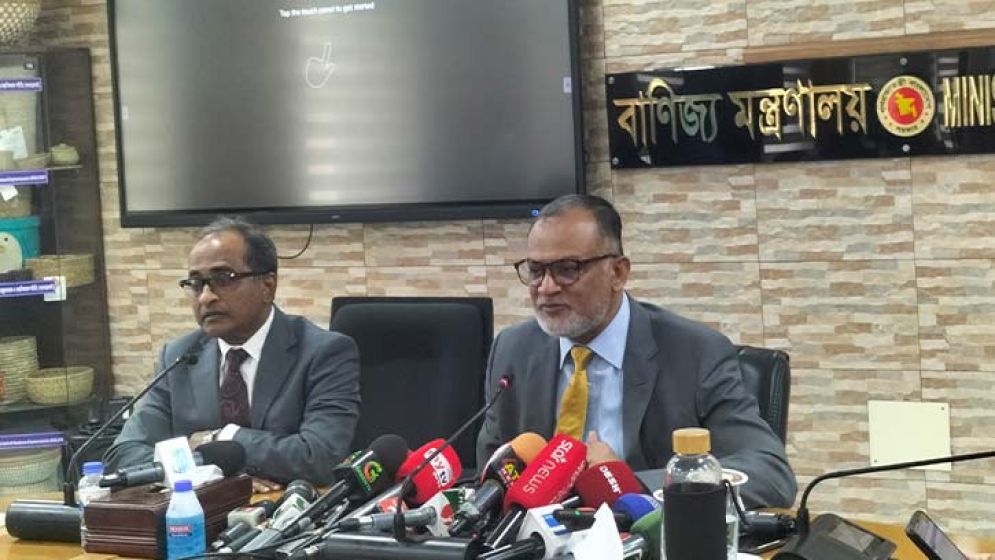
Photo: Collected
Around 90% of Bangladeshi exports to the US would likely face no
tariffs under a new trade agreement, Commerce Adviser Sheikh Bashir Uddin said
at a press conference on Tuesday.
Almost all garment exports, which account for 86% of all
exports to the US, as well as some other products like furniture components,
pharmaceuticals, plywood and boards would face no tariff, the adviser told journalists
at the presser hosted at the Secretariat.
The press conference was held to outline details of the “Agreement
on Reciprocal Trade” signed with the US on Monday.
Under the agreement, the US has agreed to reduce tariffs on
Bangladeshi goods to 19% – it was previously cut to 20% from 37%.
The agreement also has an “exit clause,” which would allow
any future Bangladesh government to leave the deal upon submitting an “appropriate
notice” if it is deemed necessary, Adviser Bashir Uddin told reporters.
The US would also impose zero tariffs on garment and apparel
items produced with American cotton. This gives a big advantage to Bangladeshi
garments, which are mostly produced with American cotton imports, the commerce
adviser said at the presser.
Bangladesh locally produces only 2% of the cotton it needs. American cotton is of fine quality and can be used as inputs for all garment exports to the world’s biggest economy, Sheikh Bashir Uddin noted.
Bangladesh locally produces only 2% of the cotton it needs.
American cotton is of fine quality and can be used as inputs for all garment
exports to the world’s biggest economy, Sheikh Bashir Uddin noted.
On its part, Bangladesh would import US-made agricultural products, fuel products, traditional scrap metal and a number of other products to reduce a “$6 billion trade surplus” with the American market.