


 For all latest news, follow the Daily Sun's Google News channel.


Gas shortage cripples power, industrial production
Power plants get just 29% of gas needs as LNG subsidy soars to Tk16,600cr, says CPD
Daily Sun Report, Dhaka
Published: 14 Aug 2026, 12:00 AM
Bangladesh’s escalating gas crisis is heavily crippling power generation and industrial output, with power plants receiving just 29% of their required gas supply and fertiliser factories getting only 38%, according to a new report by the Centre for Policy Dialogue (CPD).
The severe shortfall has forced an increased reliance on costly imported liquefied natural gas (LNG). As a result, the government’s LNG subsidy bill has ballooned to roughly Tk16,600 crore, nearly triple its initial budget allocation.
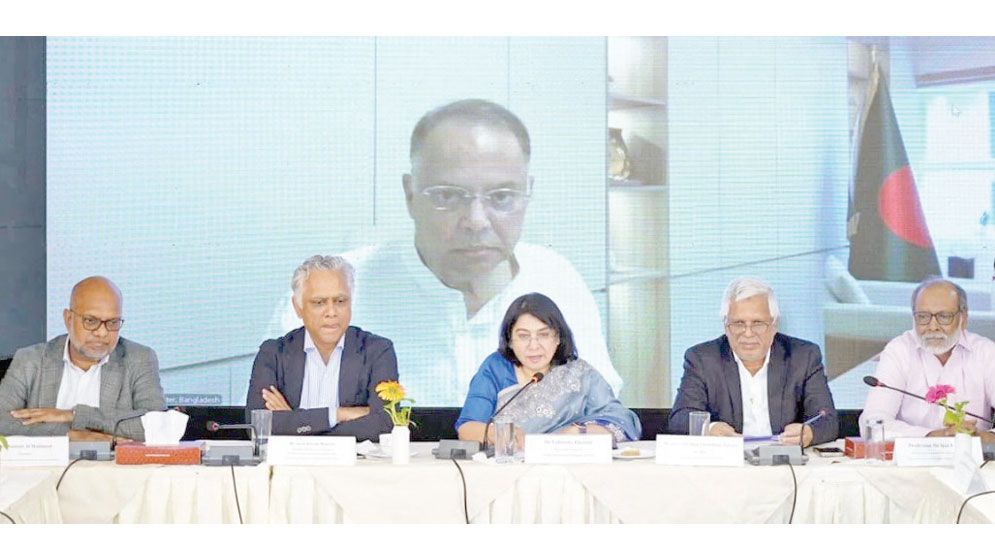
These findings were presented at a CPD dialogue titled “Addressing Bangladesh’s Energy Crisis: Immediate Priorities and a Sustainable Energy Future,” held at the BRAC Centre in Dhaka on Thursday.
Senior Research Associate Fakhruddin Al Kabir presented the keynote paper.
Gas shortage reaches 1,400 mmcfd
According to the CPD analysis, Bangladesh is currently facing a daily gas deficit of between 1200 million and 1400 million cubic feet (mmcfd).
The think tank attributed the shortage to declining production from ageing gas fields, limited success in new exploration and difficulties in importing sufficient LNG.
Citing supply data for 11 August, the CPD said only 57% of the operating capacity of five gas-producing companies was being utilised. The consequences are particularly severe for the power sector.
Gas supply disruption at fertiliser factories are also raising concerns over production and the availability of urea during the upcoming agricultural season.
LNG costs surge
The domestic shortage has coincided with disruptions in the international LNG market.
According to the CPD, geopolitical tensions in the Middle East and disruptions to shipping through the Strait of Hormuz have affected LNG supplies from Qatar under long-term contracts, reportedly reducing deliveries by almost half.
To meet the shortfall, Petrobangla has had to rely more heavily on the spot market. LNG prices there have increased from around $10 per mmBtu to between $15.88 and $16.98 per mmBtu.
The higher import costs have sharply increased the government’s financial burden. The LNG sector was allocated Tk6,000 crore in the 2025-26 budget, but the subsidy requirement has risen to around Tk16,600 crore.
FSRU repairs add to pressure
Power, Energy and Mineral Resources Minister Iqbal Hassan Mahmood said the government currently has limited options until repairs to a floating LNG terminal are completed.
He said the present crisis began after a fire affected an FSRU, preventing the facility from operating normally and limiting the amount of gas that could be supplied to the national grid.
Engineers from the United Kingdom and Singapore are working on the repairs, according to the minister.
Once the repair work is completed, the system will have to remain shut for around 72 hours to bring two new boilers into operation simultaneously.
The minister warned that the temporary shutdown could further intensify the gas shortage.
The government has already ordered a new FSRU, with a target of strengthening energy infrastructure by 2029. It is also planning to install three additional FSRUs at Payra, Mongla and Hiron Point.
Govt explores alternative gas supply
The government is also exploring ways to transport gas from Bhola to industrial consumers by container trucks.
The minister said one company had been authorised to operate 30 trucks for the purpose. Discussions are also under way with a Malaysian company on establishing facilities for direct gas transportation in containers.
He said the government was also dealing with rising electricity demand from battery-powered rickshaws, many of which are reportedly charged illegally after midnight, shifting part of the peak electricity demand to late night.
Private sector calls for infrastructure investment
David Hasnat, president of the Bangladesh Independent Power Producers Association, said many gas-fired power plants were being forced to remain shut because of inadequate gas supplies.
He called for the construction of land-based LNG terminals and urged the government to complete the third FSRU as quickly as possible.
Energy expert Professor Dr Ijaz Hossain blamed the crisis partly on weaknesses in governance, inappropriate pricing policies and system losses.
He said increasing supply alone would not be sufficient and called for stronger demand management and measures to prevent energy theft.
Syed Nasim Manzur, president of the Leather goods and Footwear Manufacturers & Exporters Association (LFMEAB), stressed the need for reliable gas and electricity supplies for industries, a clear load-shedding schedule and priority treatment for industrial consumers.
Mostafa Al Mahmud, president of the Bangladesh Sustainable and Renewable Energy Association, proposed reducing customs and administrative barriers, providing tariff incentives for energy-storage technologies and converting around 1.3 million diesel-powered irrigation pumps to solar power.