


 For all latest news, follow the Daily Sun's Google News channel.


Awareness discussion on plastic pollution held at Titumir College
Daily Sun Report, Dhaka
Published: 28 Sep 2026, 04:56 PM
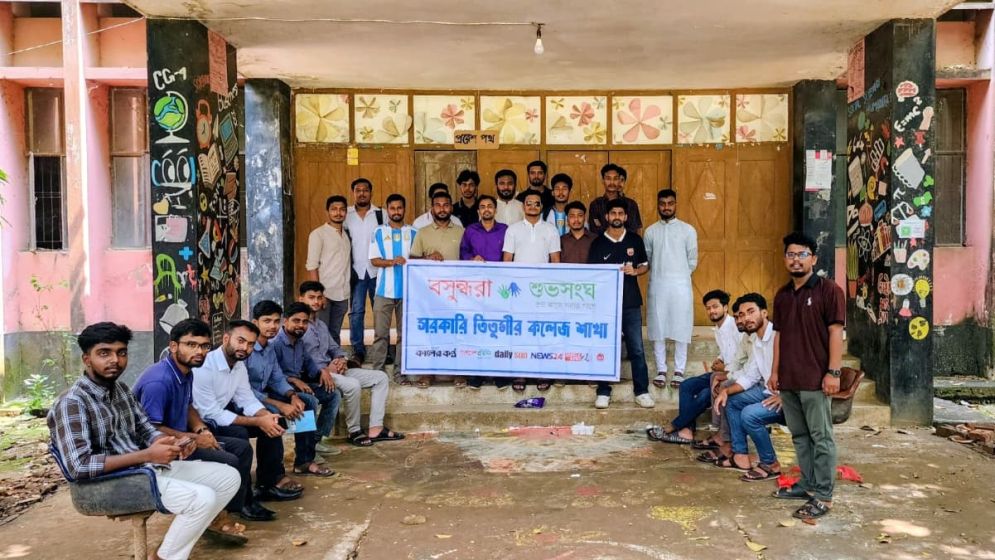
Photo: Daily Sun
Bashundhara Shuvosangho hosted a discussion session at the
Government Titumir College on Monday to raise awareness about the harmful
effects of plastic pollution and encourage students to adopt environmentally
friendly lifestyles.
Speakers said that although plastic has many uses it does
not easily decompose or mix with soil. Plastic waste gradually breaks down into
tiny particles, which can spread through soil and water. These microplastics
can enter the bodies of various organisms through the food chain. Plastic waste
accumulating in rivers, canals, and other water bodies also creates various
risks for aquatic life, they said.
In addition, the accumulation of polythene and plastic in
sewerage systems, and waterways can obstruct water flow, leading to
waterlogging.
In the awareness session, students were encouraged to use
jute bags, cloth bags, and other reusable, environmentally friendly materials
for shopping and everyday activities. The discussion also emphasized disposing
of used plastic at designated places and, where possible, sending it for reuse
or recycling.
Those present at the event included Bashundhara Shuvosangho
Titumir College branch President Nayan Ali, Vice Presidents Zahid Hasan and
Zahirul Islam Zahir, General Secretary Bayzid Hasan Bandhan, and Organizing
Secretary Chandan Chandra Das, among others.
Bayzid Hasan Bandhan said, “Change must begin with
individual awareness. If each of us reduces our use of plastic and avoids
littering, it will gradually be possible to bring about positive change at the
campus, community, and national levels.”
He further said that when students become aware, that awareness can spread to their families and communities. Therefore, the active participation of young people is essential for protecting the environment.