


 For all latest news, follow the Daily Sun's Google News channel.


Shuvosangho spreads dengue prevention message in Uttara’s Bijoynagar Palli
Daily Sun Report, Dhaka
Published: 18 Sep 2026, 05:19 PM
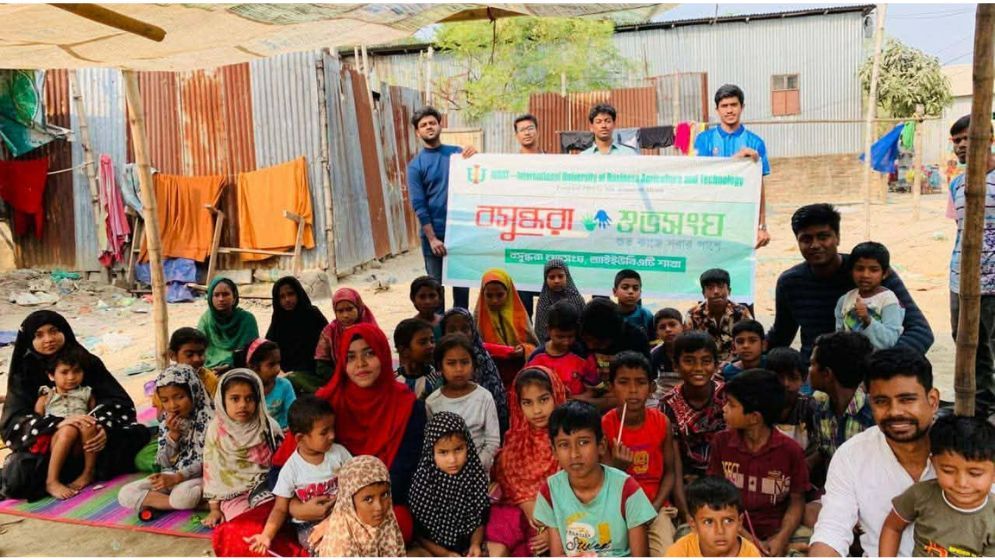
Photo: Daily Sun
An awareness meeting on dengue prevention was held at Bijoynagar Palli in Dhaka’s Uttara on Thursday, with Bashundhara Shuvosangho members urging residents to maintain cleanliness and eliminate potential breeding grounds for Aedes mosquitoes.
The programme was organised by the Bashundhara Shuvosangho’s International University of Business Agriculture and Technology (IUBAT) branch to raise awareness about the causes, symptoms and prevention of dengue, as well as individual and community-level measures to prevent the breeding of Aedes mosquitoes.
Local residents and Shuvosangho members took part in the programme.
Speakers said dengue is a viral disease transmitted through the bite of infected Aedes mosquitoes, which commonly breed in stagnant water. They stressed that alongside broader preventive measures, people must remain vigilant about everyday practices that allow water to accumulate around homes.
They advised residents to regularly clean flower pots and their trays, buckets, drums, discarded containers, coconut shells, old tyres and other places where water can collect on rooftops, balconies and in courtyards.
They also stressed the need to remove stagnant water promptly and keep water containers covered.
The speakers urged people not to ignore symptoms such as sudden fever, headache, pain behind the eyes, body and joint pain, nausea and weakness, and to seek medical advice promptly. They also emphasised obtaining immediate medical attention if serious symptoms develop.
Mohammad Farhad Hossain, adviser to the Bashundhara Shuvosangho IUBAT branch, said awareness was essential for preventing dengue.
“There is no alternative to awareness in preventing dengue. It is not enough to keep our own homes clean; we must also maintain the cleanliness of the surrounding environment. Effective control of dengue requires collective efforts involving families, neighbours and the wider community,” he said.
Branch president Dipta Pal said young people needed to play a more active role in dengue prevention.
“Alongside spreading awareness, we need to undertake practical social initiatives. If everyone acts responsibly from their own position, dengue prevention efforts will become more effective,” he said.
General secretary Nafiz Hasan said destroying Aedes breeding grounds was one of the most important ways to prevent dengue.
“People should regularly check rooftops, balconies, flower pots, drums, buckets, discarded containers and tyres for stagnant water. It is also important to seek medical advice promptly if symptoms of dengue appear,” he said.
Participants were also advised to remain cautious about Aedes mosquito bites during the daytime and, where necessary, to use mosquito nets and repellents and wear clothing that covers the body.
Speakers said dengue prevention should not be viewed solely as a health issue, as environmental management and civic responsibility were also directly linked to it.
They noted that stagnant water in one household could pose a risk not only to its residents but also to neighbouring people by creating a breeding ground for Aedes mosquitoes.
The organisers said an aware citizenry could play a key role in preventing dengue through regular inspection of homes and surrounding areas, removal of stagnant water and encouraging others to follow preventive measures.
The programme highlighted the importance of both personal awareness and community participation in dengue prevention. Members of the Bashundhara Shuvosangho IUBAT branch expressed their commitment to organising further public welfare and awareness activities.