


 For all latest news, follow the Daily Sun's Google News channel.


UNFPA, UNICEF recommend scrapping legal provision allowing child marriage
They also call for uniform marriage age of 18
Daily Sun Report, Dhaka
Published: 24 Nov 2026, 07:43 PM
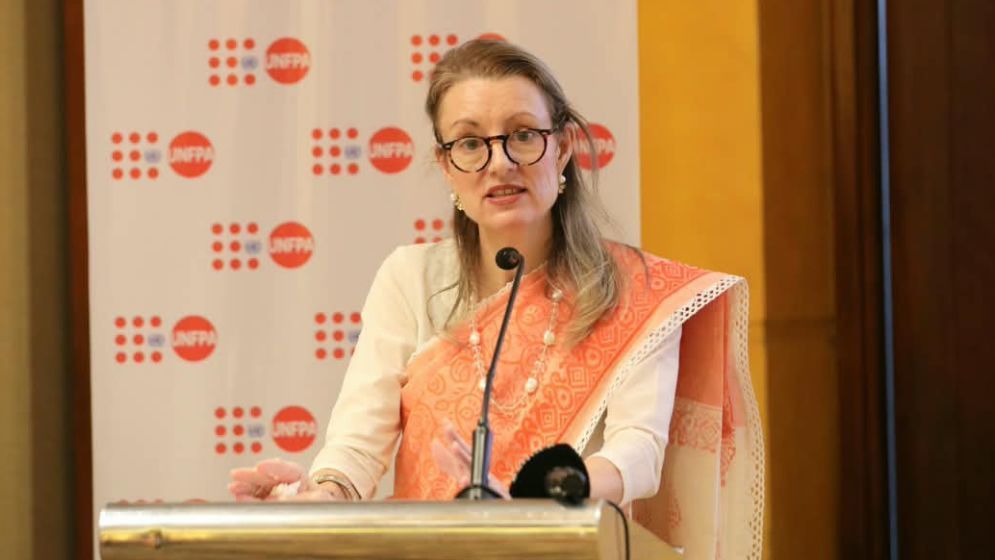
Photo: Courtesy
UNFPA and UNICEF have recommended repealing a provision of Bangladesh's Child Marriage Restraint Act 2017 that allows marriage below the legal age under special circumstances, alongside introducing a uniform minimum marriage age of 18 for both women and men.
The recommendations were discussed at a dialogue organised by the United Nations Population Fund (UNFPA) with senior editors and reporters in Dhaka on Tuesday, ahead of the inaugural International Day for the Elimination of Child, Early and Forced Marriage on 27 November.
The discussion focused on proposed reforms to the Child Marriage Restraint Act 2017 and their implications for girls in Bangladesh, drawing on a joint UNFPA-UNICEF legal review that identified gaps in the existing law and its 2018 Rules.
According to the Bangladesh Multiple Indicator Cluster Survey (MICS) 2025, 47.2% of women aged 20-24 were first married before turning 18, down from 51.4% in 2019.
However, the proportion of girls aged 15-19 who are currently married increased from 32.9% to 38.9% over the same period.
"Bangladesh has a law against child marriage, but a law only protects girls if they are aware of it, and if the justice system is accessible and fully accountable," said Catherine Breen Kamkong, UNFPA representative in Bangladesh.
She said accurate media reporting on the law and the lived experiences of girls married as children could help policymakers understand the importance of legal reform and raise public awareness about keeping girls in education.
The joint legal review found that although the 2017 Act criminalises child marriage, it does not invalidate the marriage itself.
The law sets the minimum marriage age at 18 for women and 21 for men. However, Section 19 allows marriage below the legal age under special circumstances with a court order, without specifying a minimum age or providing adequate safeguards.
The review also found that girls married as children have no direct legal mechanism under the Act to annul their marriages and must rely on personal laws, which often offer limited or no remedies.
Other implementation challenges include weaknesses in birth and marriage registration, forged birth certificates, marriages through affidavits, inactive child marriage prevention committees and limited prosecutions.
The UNFPA-UNICEF review proposed six key reforms: repealing Section 19; setting a uniform minimum marriage age of 18 for both women and men; making child marriages voidable at the option of the child; removing criminal liability for children; extending the period for filing complaints to six years; and clarifying the jurisdiction of courts, including mobile courts, in handling such cases.
UNFPA works with the Ministry of Women and Children Affairs to advance legal reforms and partners with the government and other stakeholders to keep girls in school, improve adolescents' access to sexual and reproductive health information and services, and address harmful social norms that perpetuate child marriage.
At Tuesday's dialogue, media professionals pledged to strengthen evidence-based and ethical reporting on child marriage and play a greater role in accelerating its reduction.
The event was organised in partnership with the Embassy of the Kingdom of the Netherlands in Bangladesh.