


 For all latest news, follow the Daily Sun's Google News channel.


River erosion accounts for 26% of climate-displaced people in Bangladesh
Daily Sun Report, Dhaka
Published: 23 Nov 2026, 11:59 PM
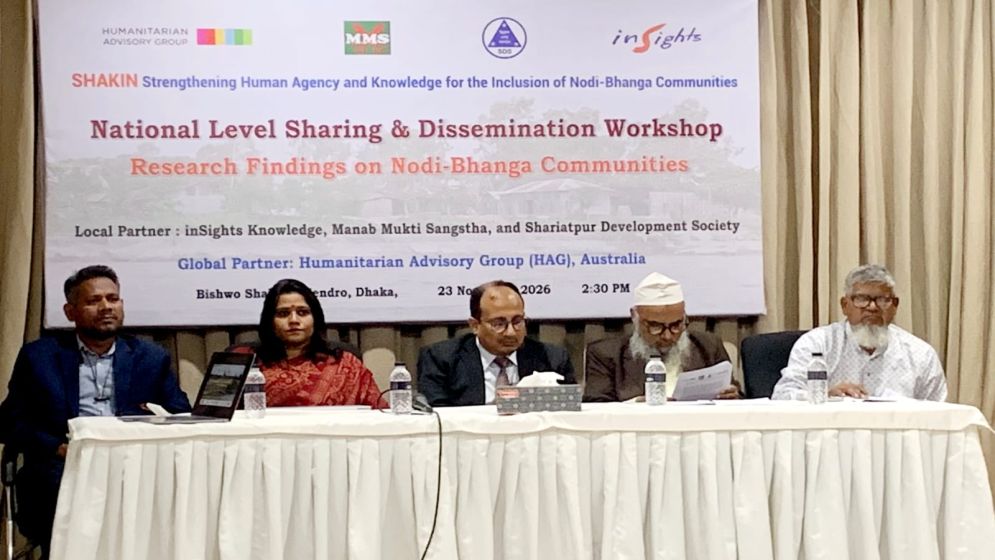
Photo: Collected
Around 26% of people displaced by climate change have been affected by river erosion, while nearly 1,500 square kilometres of land in Bangladesh have been lost to river erosion over the past 50 years, according to a study.
River erosion not only deprives people of their homes and livelihoods but also damages their social ties, civil rights, mental well-being and sense of identity and belonging, the study found.
The findings were presented at a discussion titled “Rehabilitation of River Erosion-Affected People, Civil Rights and Livelihood Security” at the World Literature Centre in Dhaka on Monday.
The study, titled “Sakin”, was conducted by Insights Knowledge, Manab Mukti Sangstha (MMS) and Shariatpur Development Society (SDS) in Sirajganj and Shariatpur districts, with funding from the Humanitarian Advisory Group (HAG).
Shah Mohammad Mahbub, director general of the Department of Social Services and an additional secretary, attended the event as the chief guest, chaired by Insights Knowledge Chairperson Nahid Siddiqui.
Mahbub said displacement caused by river erosion leaves people without an address, which is a greater concern than the loss of property. Displaced people often lose their civic identity and access to government services, he added.
“We are creating family trees and identifying family information for distributing Family Cards. We will be able to easily identify where a person came from, their origins and their family roots. This will help us identify people displaced by river erosion,” he said.
Insights Knowledge Adviser Sumon Ahsanul Islam presented the findings, saying river erosion was not merely a disaster involving the loss of land and homesteads, but also affected people's livelihoods, identity, social relationships, mental well-being, civil rights and personal identity, creating long-term crises.
The impact of river erosion is not equally felt by all members of a family, the study found. Women face disruptions to livelihood opportunities and productive household activities, while their responsibilities for elderly family members and children increase. Children's education is disrupted, contributing to a rise in child labour.
The study also found that no girls aged over 14 were unmarried in the surveyed areas, indicating a much higher prevalence of child marriage there than in other parts of the country.
Insights Knowledge Adviser Dr Ehsanur Rahman said the study aimed to highlight the need to give equal importance to protecting the lives, livelihoods, civil rights and future of people affected by river erosion, alongside riverbank protection.