


 For all latest news, follow the Daily Sun's Google News channel.


Solar power, net metering transforming irrigation system in Barind region
BSS, Rajshahi
Published: 23 Nov 2026, 01:21 PM
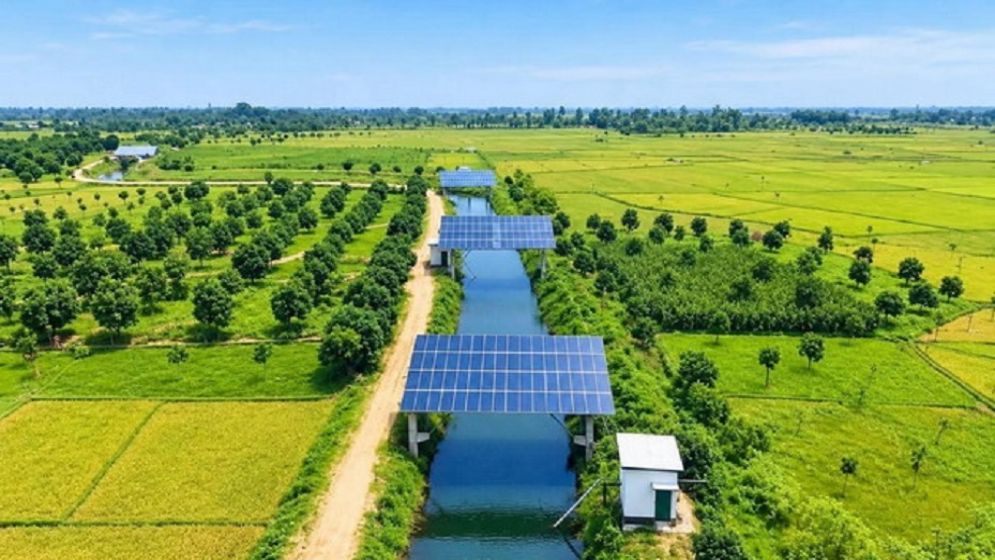
Photo: Collected
The Barind Multipurpose Development Authority (BMDA) has stepped up efforts to modernise the irrigation system in the Barind region by introducing solar-powered irrigation facilities and net metering to reduce costs, save electricity and promote environmentally sustainable agriculture.
BMDA Executive Director Jahangir Alam Khan told BSS that the authority was taking a range of effective measures to strengthen its institutional capacity and expand technology-based services.
"We are conducting activities by prioritising the resolution of existing institutional problems, strengthening administrative and financial capacity, and expanding technology-based services," he said.
To address an acute manpower shortage, the BMDA has maintained regular communication and coordination with the Ministry of Agriculture.
According to BMDA sources, initiatives are underway to transfer 650 employees to the revenue sector and recruit the necessary manpower to ensure smooth operation and maintenance of irrigation equipment at the field level and improve services for farmers.
Meanwhile, the authority has strongly advocated operating irrigation equipment using solar power and bringing the facilities under net metering at a recent high-level policy-making meeting.
Following a policy decision in this regard, work is progressing on forming a solarisation committee, preparing guidelines, conducting technical assessments and developing an implementation plan.
Of BMDA's 17,088 irrigation facilities, 692 have so far been brought under solar power, while net metering has been completed for 253 facilities.
Under the net metering system, solar-generated electricity will first meet irrigation requirements, while surplus power will be fed into the national grid through bidirectional meters.
According to the BMDA, the planned introduction of solar power and net metering in 15,757 irrigation facilities could help reduce carbon dioxide emissions by around 400,000 metric tonnes annually.
Solar-powered irrigation will enable farmers to access water during daylight hours, reducing their dependence on nighttime irrigation, which often involves additional hardship and labour shortages. It will also help reduce reliance on conventional electricity.
The authority has also taken an initiative to introduce a centralised real-time monitoring system to oversee the operation of irrigation facilities, electricity generation and consumption, and the supply of surplus power to the national grid.
Jahangir Alam Khan said the expansion of solar-powered irrigation infrastructure in the Barind region would bring multiple benefits, including reduced electricity and operational costs, substantial annual savings and lower carbon emissions.
He said farmers would benefit from reduced irrigation expenses, while the system would also ease the difficulties associated with nighttime irrigation.
He further stressed the need to gradually convert around 15,000 deep tube wells in the Barind region into solar-powered pumping facilities to ensure that surplus electricity generated from solar energy could be supplied to the national grid, contributing to the country's overall power supply.
The initiative is expected to reduce the BMDA's electricity consumption and operational expenditure while supporting the government's efforts to conserve energy and increase power generation through the use of renewable energy.
The authority is also working to strengthen its manpower and technological capabilities and improve coordination among field-level officers and employees to ensure more efficient, dynamic and farmer-friendly services.
The combined initiatives are expected to make a significant contribution to sustainable agriculture, renewable energy development and national energy security.