


 For all latest news, follow the Daily Sun's Google News channel.


Destroying country is terrorism, not politics; they must be stopped
Special Correspondent
Published: 23 Nov 2026, 12:00 AM
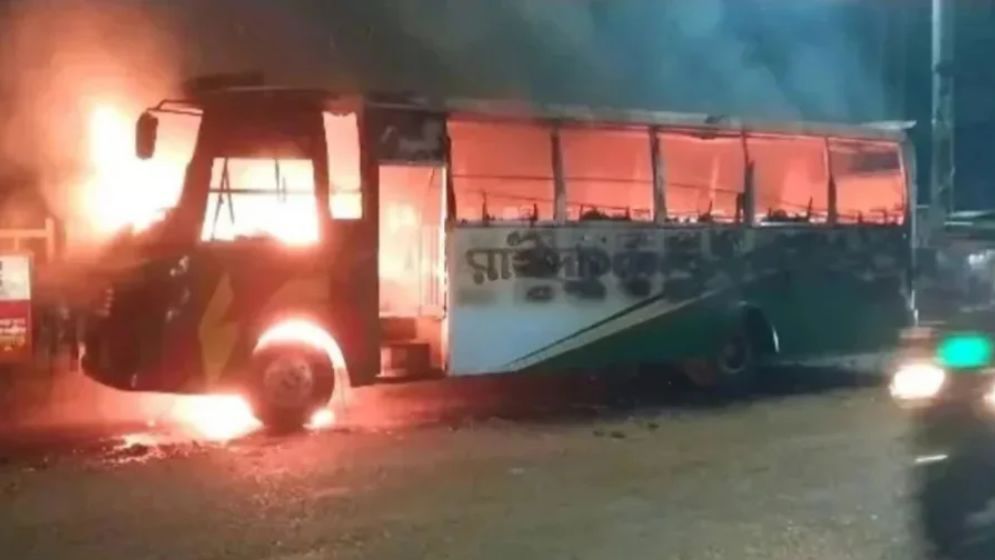
Attempts are under way to create fresh unrest in Bangladesh. Arson and sabotage have begun in the name of political programmes. Such acts of terrorism and anarchy may intimidate people and spread panic in society, but they cannot win public trust. World history shows that those who have tried to impose their ideology on people through violence and anarchy have ultimately met a terrible fate. They have been rejected by the public and consigned to the dustbin of history.
People in Bangladesh, as elsewhere in the world, do not tolerate oppression and persecution; they despise them.
Politics is about serving the people and improving their living standards. The primary responsibility of a political party is to earn public trust by presenting a clear manifesto and explaining its programmes to the people. In a democracy, there will naturally be several political parties, each approaching voters with its own agenda and explaining how its policies will benefit them. People vote for the party whose programmes they support, and the elected party assumes responsibility for governing the country. This is how a democratic state functions. There is no place for terrorism or violence in this process.
In a democracy, public support is the only legitimate means of achieving political demands. Setting buses on fire, killing political opponents, exploding crude bombs and engaging in sabotage have no place in a democratic system. Those who commit such acts cannot claim to be acting in support of any political party. Their only identity is that of terrorists.
People across Bangladesh have been anxious and concerned over the past few days as arson attacks, bombings and a politics of violence and murder have resurfaced.
A series of sabotage incidents have been reported in different parts of the country. Buses and trucks have been set on fire in some places, while attempts have been made elsewhere to disrupt train services by burning tyres on railway tracks. Two coaches of two separate trains have also been set on fire. The residences of Members of Parliament and political leaders have been subjected to arson and looting. Retaliatory attacks have further heightened fear and insecurity among ordinary people. The districts affected by these incidents include Gopalganj, Sylhet, Narayanganj, Feni, Bagerhat, Dhaka, Brahmanbaria, Lakshmipur, Khagrachhari, Chattogram, Gazipur, Natore, Mymensingh, Tangail, Kishoreganj, Chandpur, Netrokona, Rajshahi, Panchagarh, Rangpur, Pabna, Sunamganj and Rajbari.
In his 1919 essay “Politics as a Vocation”, German sociologist and philosopher Max Weber discussed the state’s authority over the legitimate use of physical force. From this perspective, when individuals or groups outside the state resort to violence or terrorism for political purposes, they pose a direct threat to state authority, sovereignty and the rule of law. In a modern liberal state, therefore, private or group violence cannot be considered a legitimate means of pursuing political objectives.
A similar situation is unfolding in Bangladesh today. In the name of advancing political demands, certain quarters are destroying public assets and endangering people’s lives and property. Such activities cannot be part of any legitimate political programme; they are acts of terrorism and must be resisted through political and social mobilisation.
The ruling BNP has already become active on the ground in response to the sabotage. Its leaders and activists, along with those of its affiliated organisations, are conducting patrols and organising protest processions and motorcycle rallies in Dhaka and various districts. Meanwhile, initiatives are under way to strengthen communication and unity among the pro-uprising political parties to counter the recent violence. Prime Minister Tarique Rahman and Leader of the Opposition Shafiqur Rahman have held discussions on the issue. Although opposition parties have responded positively to the call for unity, they have maintained their respective political positions. Jamaat-e-Islami, alongside the BNP, has also announced separate programmes on the ground.
Against the backdrop of these violent incidents, Prime Minister Tarique Rahman told parliament last Wednesday that terrorist groups must be crushed before they can raise their heads. Addressing a public rally in Lalmonirhat, he also called for a clear response to the terrorists, arsonists and murderers.
However, all political parties that believe in democracy must remain alert and vigilant in preventing terrorism and arson attacks. They have a responsibility to act with restraint and maturity. Democratic political parties must not fall into the traps set by those seeking to create anarchy. One of the principal objectives of those carrying out acts of terror and setting fires indiscriminately is to provoke parliamentary political parties into taking to the streets and retaliating. If that happens, those committing sabotage in the name of politics and the parties that believe in democracy will become indistinguishable in the public eye. Retaliatory violence and acts of terror will only plunge the country into further chaos. Political parties must therefore resist such provocations and instead mobilise public opinion against violence by taking the people into confidence.
Encouragingly, Prime Minister Tarique Rahman appears to be working towards that goal. He has called for national unity to resist terrorist activities and urged all concerned in parliament to stand together against those seeking to create anarchy. He said, “To prevent the resurgence of the fallen, defeated and ousted evil forces in the country, and to thwart the conspiracy to turn the country into a subservient state, what is needed at this moment is for all pro-democracy political forces, regardless of party or opinion, to stand on one platform just like in ‘24.”
Soon afterwards, he held a meeting with the leader of the opposition. Alongside efforts to bring political parties together, the prime minister has also begun reaching out to the public. He has resumed visits to different parts of the country, using public rallies to call for collective resistance to terrorism. Addressing a rally in Lalmonirhat, he said, “A clear response must be given to the arson terrorists and murderers. Enough is enough; no more. Enough is enough.”
The people, not terrorism, are the source of political power. Public unity is the strongest defence against terrorism. The right message must reach every section of society, and people must understand that arson and violence are not politics. Those who engage in such activities in the name of politics are enemies of the people and the country. If this message is conveyed effectively, no destructive force will be able to gain ground. The people of Bangladesh themselves will stand up against those seeking to destroy their country.
Democracy and terrorism cannot go hand in hand.