


 For all latest news, follow the Daily Sun's Google News channel.


Hasina's supporters launch 'Insurgency' to destabilise government: NYT
BSS, Dhaka
Published: 22 Nov 2026, 10:30 PM
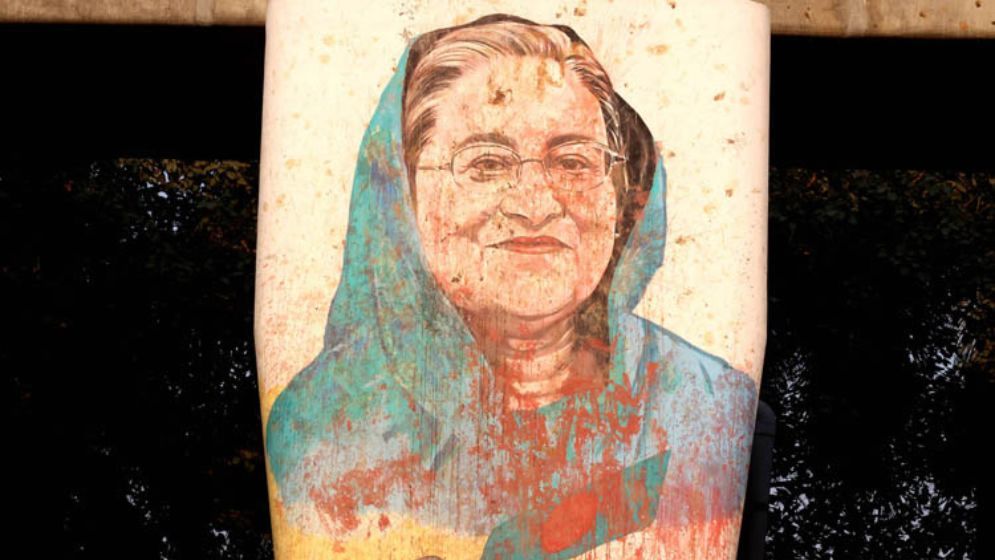
File Photo
Supporters of deposed Prime Minister Sheikh Hasina are carrying out a series of violent activities in an attempt to destabilise the current Bangladesh government, which the US-based daily The New York Times (NYT) has described as a 'small-scale insurgency' in a report.
The report, published on Saturday and updated
on Sunday, said political violence had unsettled Bangladesh for more than a
week, with Hasina's supporters clashing with police and targeting members and
supporters of the ruling Bangladesh Nationalist Party (BNP).
Citing police, the report said at least four
people had been killed in the violence. The victims included three members of
the ruling BNP and its affiliated organisations and a bus helper who died in an
arson attack. Separate reports also confirmed the deaths of political activists
and a transport worker in incidents involving arson and attacks during the
unrest.
According to the report, supporters of the
banned Awami League have carried out attacks involving arson against public
transport, police stations, a hospital and the homes of BNP members.
The violence has been particularly intense in
Gopalganj, Hasina's birthplace in south-western Bangladesh, where demonstrators
have disrupted traffic, attacked public property and engaged in clashes with
police.
The unrest in the district also involved a blockade of a major highway linking the western part of the country with Dhaka.
The report said the road remained blocked for 36 hours before reopening on Friday morning. Road blockades and transport disruption in the region were also confirmed in separate reports. However, the precise duration of the blockade remains attributed to the NYT report.
The report further said demonstrators
brandished weapons, set fire to a police vehicle and beat and injured a police
officer. Separate news reports confirmed attacks on police vehicles, police
installations and public property in Gopalganj, although the specific details
of the incidents described in the NYT report remain attributed to the
newspaper.
Hasina fled to India in August 2024 following
a deadly crackdown on student-led demonstrations. The United Nations has
estimated that as many as 1,400 people were killed during the crackdown.
In November 2025, Bangladesh's International
Crimes Tribunal convicted Hasina in absentia of crimes against humanity and
sentenced her to death. The verdict was delivered in connection with the
crackdown on the student-led uprising in 2024.
State Minister for Foreign Affairs Humaiun
Kobir described Hasina as 'a terrorist' and a 'fugitive criminal', reiterating
the government's call for India to extradite her to Bangladesh.
Meanwhile, Prime Minister Tarique Rahman, who
won an overwhelming majority in the national elections earlier this year,
appeared to criticise India for harbouring Hasina, according to the report.
Earlier this week, he remarked that agitators
were taking their orders from 'across the border', the report also said.