


 For all latest news, follow the Daily Sun's Google News channel.


Explainer
Deadly protests erupt in Bangladesh over exiled former leader Sheikh Hasina
Representatives for the Awami League did not respond to a request for comment on the recent protests
The New York Times
Published: 22 Nov 2026, 09:50 PM
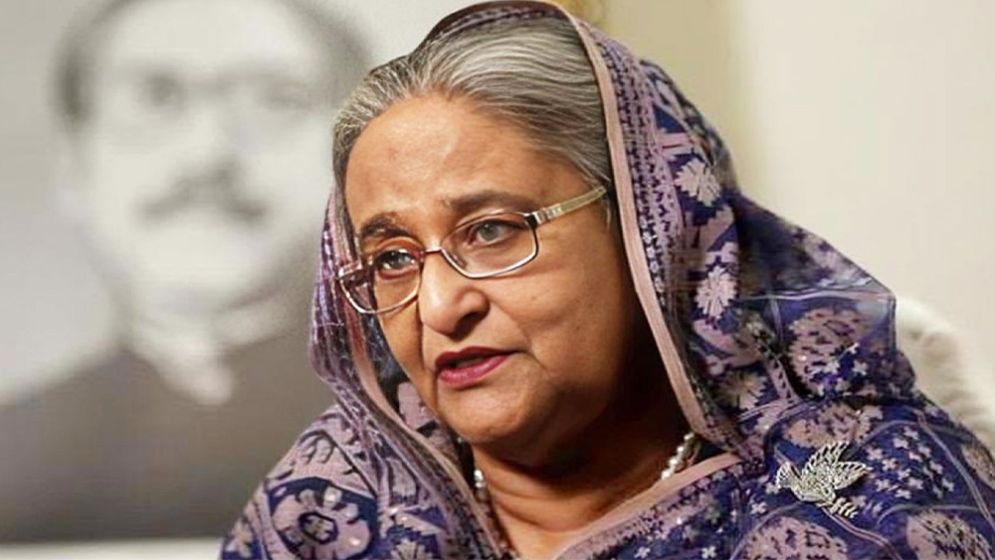
File Photo
Political violence has unsettled Bangladesh for more than a week as supporters of the exiled former prime minister clashed with the police and targeted members of the ruling political party.
The fighting has claimed four lives so far, the
police said. And anti-government forces are calling for more demonstrations in
the coming days, The New York Times reports.
The unrest has also added strain to Bangladesh’s
relationship with India, an erstwhile ally that took in the former prime
minister, Sheikh Hasina, after she fled in 2024 following a student-led
uprising.
Here’s what you should know.
Whoʼs behind the unrest?
Over the past week and a half, supporters of Hasina’s
have mounted a small-scale insurgency in an effort to destabilise the current
government. They have set fire to public transit, police stations and a
hospital. They also burned the homes of two members of the governing Bangladesh
Nationalist Party.
At least two members of the governing party were
killed, in addition to two public transit workers who died when their buses
were set ablaze, according to the police.
The violence is being carried out by members of the
Awami League, the political party that was led by Hasina until she was forced
from office after weeks of protests in 2024. Hasina fled to India, making a
dramatic escape as a swarm of angry demonstrators closed in on her residence.
Representatives for the Awami League did not respond
to a request for comment on the recent protests.
Late last year, the International Crimes Tribunal, a
Bangladeshi court, convicted Hasina of crimes against humanity and sentenced her
to death. The country’s chief prosecutor has said the government will carry out
her execution if she returns.
Hasina recently drew the ire of officials in Bangladesh
when she requested a passport and a national ID card by applying at the Bangladesh
High Commission in New Delhi. The Bangladeshi government has been adamant that
it will not issue her one.
In an interview with The Associated Press, she rejected
the death sentence and also challenged the legitimacy of the trial. She said
she was fully aware of the possibilities of being arrested, imprisoned or even
killed should she return.
The violence and accompanying pro-Awami demonstrations
were especially intense in Gopalganj, the city in southwestern Bangladesh where
Ms. Hasina was born.
Demonstrators blocked the main highway that connects
the western part of the country with the capital, Dhaka, closing it for 36
hours.
They marched down it brandishing weapons, set fire
to a police vehicle and beat and injured a police officer. The highway reopened
on Friday morning, and the police have made dozens of arrests.
Why is the former prime minister in exile?
Hasina was elected five times as prime minister of
Bangladesh, though her last three victories were marred by widespread
irregularities and crackdowns.
She has been both a victim and a perpetrator of
political violence. Ms. Hasina and her younger sister were the only survivors
after their father, Sheikh Mujibur Rahman, Bangladesh’s charismatic founding
leader, was massacred along with the rest of the family in a military coup in
1975. Hasina was visiting West Germany at the time.
Her first term lasted from 1996 until 2001, when her
party was defeated by the opposition nationalists. Their political rivalry over
the years led to a cycle of recriminations and accusations that the other
engaged in heavy-handed, brutally authoritarian tactics. Hasina and the Awami
League returned to power after national elections in 2009 and remained in
control until her use of overwhelming force to quell the protests in 2024.
Hasina has been exiled in India since she fled after
a deadly crackdown on student-led demonstrators in 2024. Atul Loke for The New
York Times What had been mostly nonviolent demonstrations over a quota system
for government jobs that favored Awami loyalists turned into deadly street
battles between young Bangladeshis and the Hasina partisans and security forces
she controlled. As many as 1,400 people were killed. Hasina also shut down the
internet and ordered security forces to round up agitators, resulting in more
than 10,000 people being thrown into jails.
What could happen next?
In response to Hasina’s plea for a passport, Bangladesh’s
deputy foreign minister, Humaiun Kobir, called her “a terrorist” and a
“fugitive criminal” and said the government wanted India to extradite her. That
appears unlikely, as Bangladesh, when it was run by the Awami League, had an
ally in India and its prime minister, Narendra Modi.
Modi has not weighed in on the questions surrounding
Hasina’s future, but his government is eager to reset its relationship with Bangladesh’s
new government. Its leader, Prime Minister Tarique Rahman, won an overwhelming
majority in national elections earlier this year. The Awami League, which has
been banned, was not on the ballot.
Rahman appeared to call out India for allowing
Hasina refuge, making an oblique comment earlier this week about the way that
agitators were taking their orders from “across the border.”
A spokesman for the Modi government on Friday
declined to comment on the unrest. But Modi had earlier invited Rahman for a
formal visit, which would be his first since becoming prime minister. Rahman
has not yet responded.