



 For all latest news, follow the Daily Sun's Google News channel.


COP31 speakers call for greater youth access to climate finance
Call for simplified funding procedures, dedicated financing and youth participation in decision-making
Daily Sun Report, Dhaka
Published: 21 Nov 2026, 05:43 PM
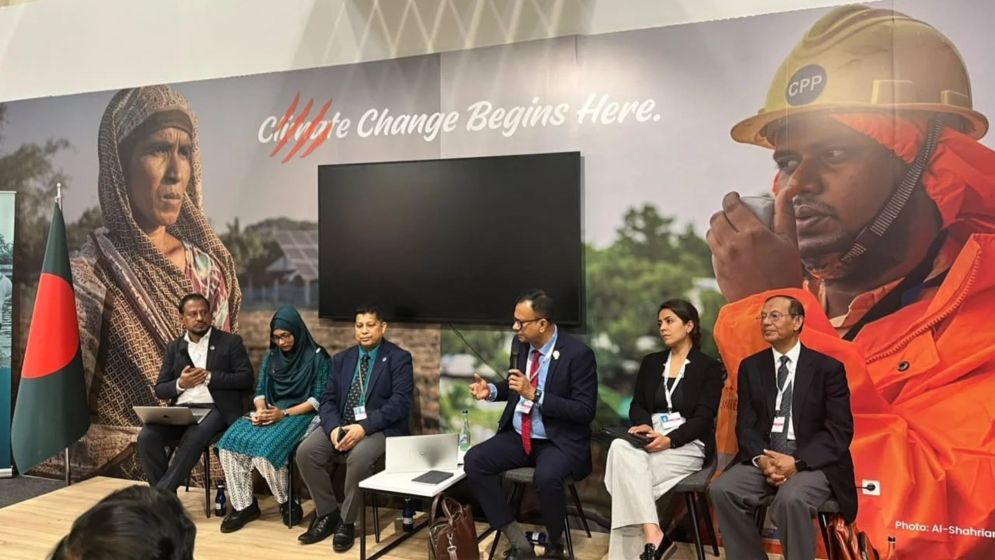
Photo: Daily Sun
They made the call at a side event titled “Unlocking Climate Finance for Youth: From Access to Action” at the Bangladesh Pavilion during the 31st UN Climate Change Conference (COP31) in Antalya, Türkiye, on 19 November.
The Ministry of Environment, Forest and Climate Change (MoEFCC), the Economic Relations Division (ERD) and the International Centre for Climate Change and Development (ICCCAD) of Independent University, Bangladesh (IUB) jointly organised the event.
Mohammad Navid Safiullah, Additional Secretary of the MoEFCC, attended the event as the chief guest, while AKM Sohel, Additional Secretary of the ERD, was present as the guest of honour.
Arif M Faisal, Director of ICCCAD, delivered the keynote address and moderated the discussion.
In his keynote speech, Faisal said young people face several barriers in accessing climate finance, including complicated application procedures, strict reporting requirements, banking and registration conditions, and minimum funding limits.
He called for introducing dedicated funding opportunities for youth within existing national and international climate funds. He also stressed the need for capacity-building support to help young people develop projects and manage funds.
Navid Safiullah said climate finance commitments must be translated into accessible resources for young people and local communities.
He called for moving away from fragmented small grants towards a sustainable financing system that would allow young people to lead and expand locally driven climate solutions.
AKM Sohel proposed establishing a youth leadership incubation hub, a project preparation facility and internship opportunities within financing institutions to help young people develop projects and understand funding procedures.
He also stressed the importance of mentorship from experienced professionals to strengthen youth leadership.
Hala Al-Hamaw of the Global Green Growth Institute (GGGI) highlighted the organisation's efforts to develop young people's skills in green innovation and support young entrepreneurs through financial and technical assistance.
Prof Mizan R Khan, Lead Advisor of the LDC Universities Consortium on Climate Change (LUCCC), emphasised research, education and cooperation between generations to strengthen youth participation in climate policy.
Youth climate leader Farzana Faruk Jhumu said registration, banking and fiscal sponsorship requirements create major challenges for grassroots youth organisations in accessing climate finance. She called for involving young people in decisions about funding opportunities.
The discussion also highlighted gender inequalities in climate financing, administrative deductions from foreign grants and the need for long-term support for youth-led initiatives.
Sohanur Rahman highlighted the contributions of young volunteers during disasters, while Mukit Majumdar Babu of Prokriti O Jibon Foundation stressed the need for stronger mentorship.
Farah Kabir of ActionAid called for improving young women's access to climate finance. Mahmudul Hasan of Helvetas urged authorities to simplify fund disbursement procedures and ensure sustained support for youth-led activities.
A discussion paper prepared for the event recommended introducing dedicated youth financing windows within existing climate funds and simplifying funding requirements according to the size of grants.
It also proposed introducing youth-specific indicators in climate budget reporting to track how much climate finance reaches young people and youth-led organisations.
The paper further recommended establishing a university-hosted Youth Climate Finance Facility to help youth organisations improve their capacity and gradually access funding directly.
It cited ICCCAD-IUB's Sida-funded CAP-RES project as an example of practical support for youth-led climate initiatives. The project supported 57 youth-led sub-projects between 2023 and 2026
The event concluded with closing remarks from Faisal, who said recognising young people's contributions was not enough. They also need financial resources, institutional support and opportunities to participate in decision-making to turn their climate ambitions into action.