


 For all latest news, follow the Daily Sun's Google News channel.


Bangladesh’s LNG reliance to deepen: IEA
Combined gas imports by Bangladesh and Pakistan projected to surge 70% by 2035 amid falling domestic output
Daily Sun Report, Dhaka
Published: 20 Nov 2026, 12:00 AM
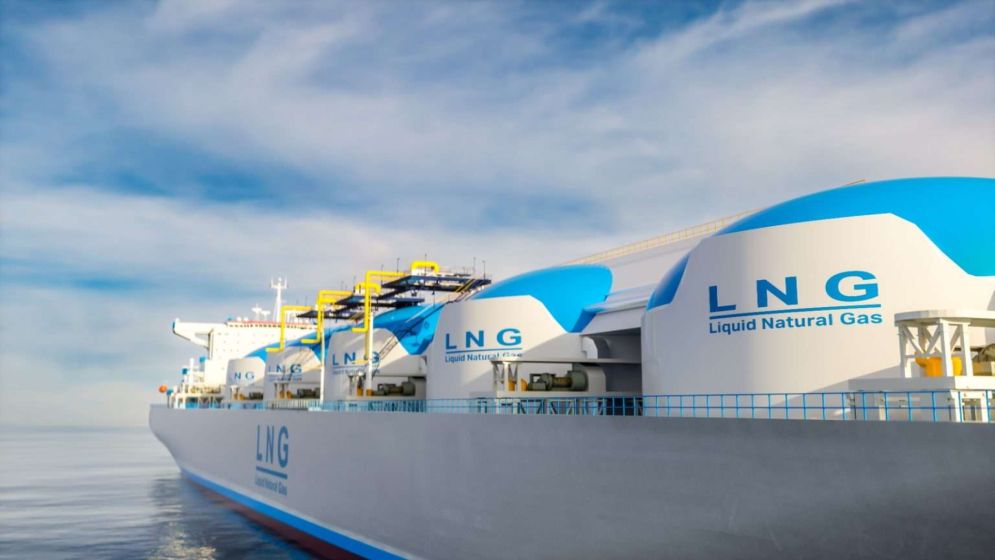
Bangladesh’s reliance on imported liquefied natural gas (LNG) is set to deepen significantly over the next decade as maturing domestic gas fields struggle to keep pace with rising energy demand, according to the International Energy Agency (IEA).
In its World Energy Outlook 2026, released Thursday, the agency projected that combined gas imports for Bangladesh and Pakistan will surge by roughly 70% – reaching 80 billion cubic metres (bcm) – by 2035 under its Current Policies Scenario.
For Bangladesh, this deepening dependence carries significant economic risks. Even as the country works to expand renewable energy, its push to boost LNG imports leaves its power sector increasingly vulnerable to global price volatility and geopolitical disruptions.
The IEA said around one-quarter of additional global LNG demand over the next decade would come from countries seeking to offset declining domestic gas production or reduced pipeline imports, including Bangladesh and Pakistan.
Global LNG trade is projected to increase by around 260 bcm between 2025 and 2035 under the agency’s Stated Policies Scenario (STEPS), representing average annual growth of about 4%, compared with just 1% growth in overall global gas demand.
Meanwhile, global LNG supply is expected to expand substantially, mainly through new projects in the United States and the Middle East, potentially pushing the global LNG surplus to its highest level around 2030.
Under STEPS, the surplus is projected to reach around 70 bcm by 2035.
The United States, currently the world’s largest LNG exporter, could account for around 35% of global LNG supply by 2035 under the CPS.
Asia is expected to remain the main destination for LNG exports, receiving more than 70% of global shipments by 2035.
India’s LNG imports are projected to rise from around 35 bcm to nearly 100 bcm by 2035, while Southeast Asia could become a net LNG-importing region by 2030, with imports potentially reaching 100 bcm by 2035.
The IEA outlook comes amid disruptions to energy shipments through the Strait of Hormuz following the Middle East conflict, raising fresh concerns over supply security for LNG-dependent economies such as Bangladesh.
Around 110 bcm of LNG, equivalent to roughly 20% of global LNG trade in 2025, passed through the strait, with about 90% destined for Asian markets.
The agency warned that prolonged disruptions could leave Asian economies heavily dependent on imported gas particularly vulnerable.
Unlike oil, LNG has no feasible alternative route around the Strait of Hormuz, making supply diversification increasingly important.
The crisis also threatens global oil trade. Before the disruption, around 20 million barrels of oil passed through the strait daily.
If significant risks persist, investments in bypass pipelines, alternative supplies and demand-reduction measures could reduce that volume to 8.5 million barrels per day by 2030 and below two million barrels by 2035.
The IEA said the crisis was prompting countries to reconsider their energy strategies by diversifying energy sources, trade routes and technology supply chains while increasing domestic resource use and accelerating electrification. Renewable energy, particularly solar power, and nuclear energy are expected to benefit from the shift, while improved energy efficiency and biofuel use could help reduce dependence on imported fuels.
IEA Executive Director Fatih Birol said the disruption in the Strait of Hormuz had delivered a major shock to the global energy system, warning that its effects would deepen the longer the crisis continued. He also cautioned countries against replacing one form of energy dependence with another while pursuing greater energy security.