


 For all latest news, follow the Daily Sun's Google News channel.


Stop this arson and vandalism in the interest of the country
Special Correspondent
Published: 20 Nov 2026, 12:00 AM
File Photo: Collected
At the time of independence in 1971, officials of the US State Department called Bangladesh a "bottomless basket." The country was poor and flood-prone, and aside from refugees, it had very few goods to export to the rest of the world. Yet afterward, Bangladesh showed remarkable success in development. Growth accelerated, poverty declined, and weak conditions in health and education also improved. The hardworking people of this country have made the greatest contribution to this incredible progress – people who struggled bit by bit to build a strong private sector. The creativity of large, medium, and small entrepreneurs, along with the hard work of farmers and workers, has transformed Bangladesh over the past 55 years from a bottomless basket into a promising nation. However, with the boundless vitality of this country's people, Bangladesh could have moved even further ahead if division and bloody conflict in its politics had not been so severe. Bangladesh has at times gone through flawed democracy, military coups, and unelected governments. Conflict and violence among political parties have made the path of development difficult and arduous. Even so, the country moved forward. Now Bangladesh faces a new crisis.
Once again, arson and incitement to sabotage have become obstacles to this country's forward march.
Terror, anarchy, and sabotage have started anew across the country. Ordinary citizens of the nation are already bewildered by various crises; on top of that, fresh incidents of such violence feel like adding insult to injury.
Because of global instability and the wrong policies of the previous government, the country's economy is already in disarray. Due to anti-private-sector actions by the Yunus government, many factories had already shut down, leaving millions of workers unemployed. In the early months of the war with Iran, fuel shortages closed even more factories, pushing over a hundred thousand more workers into unemployment. And now production is being disrupted by strikes. The World Bank estimates that in 2026, the poverty rate will rise for the third consecutive year, which could reverse a decades-long trend of falling poverty.
It was hoped that the political instability that began in Bangladesh around mid-2024 would fade after the election. Yet ever since the new government took office following the election, multi-faceted conspiracies and crises have begun. The war situation in the Middle East has emerged as a major threat to Bangladesh. In Bangladesh's economy now, growth is falling on one side while inflation is rising on the other. This economic crisis can no longer be viewed separately from politics. Unless the current rampage of arson terror is stopped immediately, the last remaining prospects of our economy will burn to ashes.
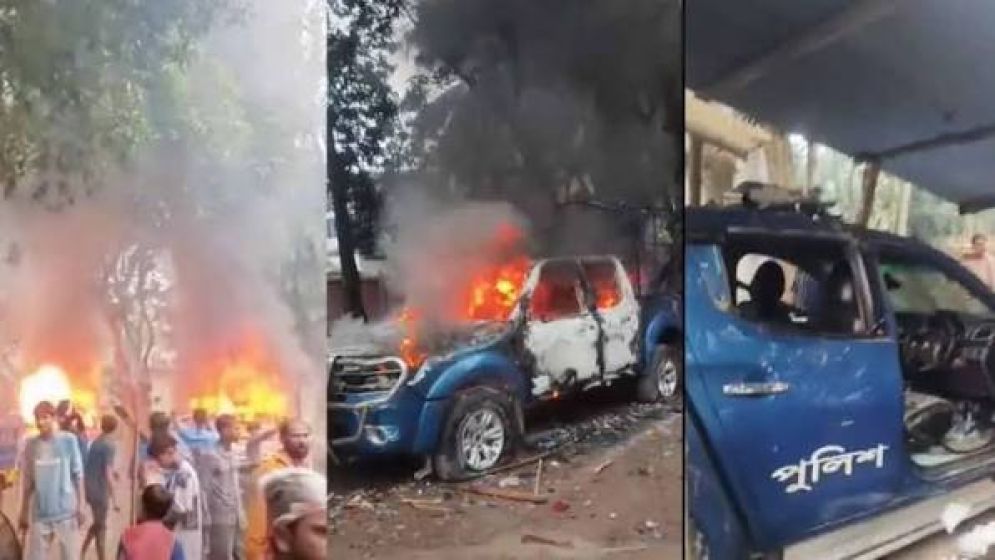
Political tension and violence that started in Gopalganj have gradually spread to different parts of the country. Incidents such as attacks, vandalism, arson, cocktail explosions, petrol-bomb attacks, and road and rail blockades have created an alarming situation. Over five days from 15 November to 19 November, reports of such violence emerged from various districts across the country, leaving at least four people dead.
Tension and clashes first broke out in Gopalganj on 15 November. At one point, the situation spiraled out of control due to attacks and vandalism by protesters. After that, the situation did not remain confined to Gopalganj alone. Violent incidents occurred one after another across various districts of the country on 17 and 18 November. From Tuesday night until early Wednesday morning, reports of sabotage came from at least 21 districts. On Thursday, police reported terror and anarchy in more districts.
Earlier, from mid-October, garment workers launched protests demanding wage increases. Unrest continues in the ready-made garment sector – one of Bangladesh's key export industries – over setting minimum wages for workers. Because of worker discontent, a kind of paralysis has developed in this vital sector. Many garment workers are carrying out ongoing protest programs in various places, including Savar, Gazipur, and Narayanganj.
All things considered, Bangladesh is now heading toward another conflict and period of anarchy. Yet amid a deep economic crisis now, Bangladesh cannot cope with terrorist acts in the name of politics. A country's politics and economy complement each other; economic development is impossible without political stability. The politics of burning buses, setting off cocktails, and carrying out arson that is happening now is not politics – it is sheer terrorist activity. These terrorist acts must be firmly resisted. Otherwise, the fragile economy will completely collapse due to anarchy. If economic activity comes to a halt, Bangladesh will turn into a failed state, and the country's very existence will be endangered. And if the country does not exist, what will you do politics with? Therefore, stop this sabotage and anarchy. Country above all. Do not destroy the country. Do not play with the lives and livelihoods of 180 million people. In the end, no one gains by destroying the nation's wealth.