


 For all latest news, follow the Daily Sun's Google News channel.


Public Procurement (2nd amendment) Bill, 2026 passes in JS
BSS, Sangsad Bhaban
Published: 16 Nov 2026, 11:33 PM
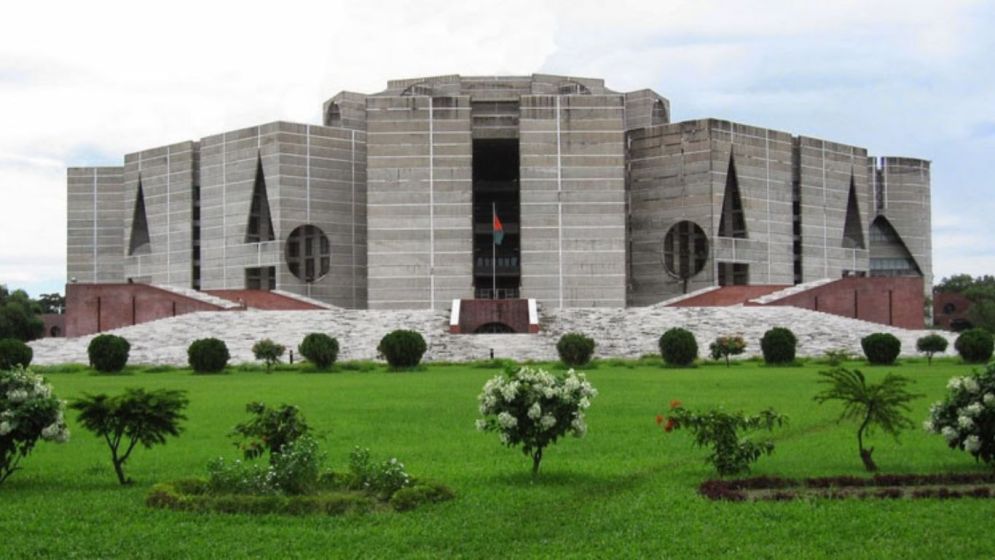
File photo
Jatiya Sangsad (JS) on Monday passed the Public Procurement (second amendment) Bill, 2026 seeking to ensure greater transparency, accountability, equal treatment and open competition in government procurement.
The bill, moved by Finance and Planning Minister Amir Khosru Mahmud Chowdhury which was unanimously passed by voice votes with Speaker Hafiz Uddin Ahmad, Bir Bikram, in the chair.
Before passing the bill, opposition lawmakers including National Citizen Party (NCP) Abdul Hannan, lawmaker of Noakhali-6, Shahjahan Chowdhury of Chattogram-15, Shafiqul Islam of Patuakhali-2, Kamrul Hasan of Mymensingh-6, M Ali Asgar of Pabna-3, Sheikh Mujibur Rahman Iqbal of Kishorganj-5, Ruhul Amin of Chuadanga-2, Jahirul Islam of Chattagram-16, Rashedul Islam Rashed of Sherpur-1, Rumeen Farhana of Brahmanbaria-2, Al Faruque Abdul Latif of Nilphamari-2, Abdul Gafur of Kushtia-2, Mst Nazmun Nahar of women reserved seat-40 and M Akhter Hossen of Rangpur-4 urged the parliament to send the bill for seeking public opinion.
Rejecting the opposition lawmakers amendment in the bill, the minister said, "The purpose of is not to create opportunities for certain individuals, but to ensure the participation of those who have been deprived of opportunities. It does not mean that someone will automatically benefit simply because they have been deprived of an opportunity; rather, the objective is to ensure the participation of disadvantaged groups."
Regarding the review committee constituted for this purpose, representatives from the private sector are also included. Therefore, sufficient transparency is being reflected in the appeal process.
Some of the other issues raised are already covered under our existing legal framework. The remaining observations and suggestions you have made, including several points relating to the management and conduct of the procurement process, may be considered while formulating the Rules.
However, not all the issues can necessarily be incorporated into the Rules.
Therefore, these matters may be duly considered when the Rules are being drafted.
According to the objectives and reasons stated in the bill, the proposed law will protect local industries, create greater competition in public procurement, expand provisions related to the administration and management of procurement contracts, and modernise procedures under the open tendering method.
The draft law also proposes provisions for ratio-based evaluation of goods, works and physical services under procurement, known internationally as the "Rated Criteria" concept, with a view to promoting sustainable procurement.
Besides, it proposes applying the limited tendering method to ensure balanced distribution of resources, clarifying provisions related to professional misconduct, and keeping an alternative procurement arrangement in cases of urgent requirements of the country.
The Public Procurement Act, 2006, which serves as the principal legal framework for government procurement, has so far been amended six times.
The latest amendment was made through the Public Procurement (Amendment) Ordinance, 2026, promulgated on 21 September 2026.
The ordinance was issued to introduce updated provisions aimed at protecting local industries and creating greater competition in procurement activities.
The proposed amendment includes special provisions for new, micro and small, women and disadvantaged bidders to ensure their participation in government procurement.
It also seeks to modernize the procedures under the open tendering method and expand the application of the limited tendering method to ensure a more equitable distribution of resources.
The draft law also aims to clarify provisions relating to professional misconduct and introduce alternative procurement arrangements to meet urgent state requirements.
The draft of the Public Procurement (Second Amendment) Act, 2026, was published on the websites of the Bangladesh Public Procurement Authority (BPPA) and the Implementation Monitoring and Evaluation Division (IMED) for public opinion.
Earlier on November 9, an ordinance promulgated under Article 93(1) was placed before Parliament following the promulgation, as stipulated in Article 93(2).
The cabinet gave final approval to the draft law, subject to vetting by the Legislative and Parliamentary Affairs Division.
On November 2, the approval-- both in principle and final-- came at the 26th Cabinet meeting of the current government, chaired by Prime Minister Tarique Rahman at the Bangladesh Secretariat.