



 For all latest news, follow the Daily Sun's Google News channel.


Fuel oil to flow from Maheshkhali to Patenga through subsea pipeline in February
BSS, Dhaka
Published: 15 Nov 2026, 12:37 PM
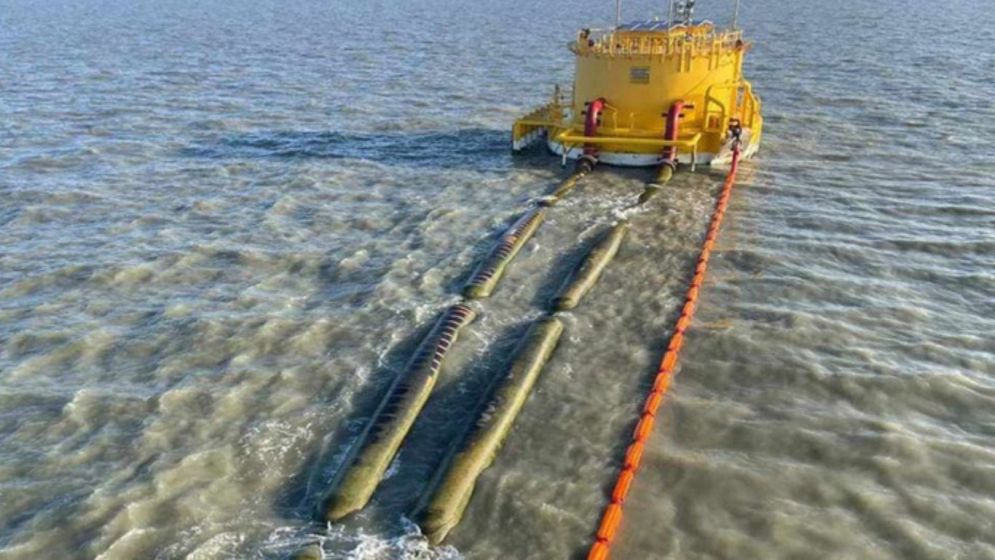
Photo: Collected
Bangladesh is set to begin commercial operation of its Single Point Mooring (SPM) system in the first week of February 2027, enabling imported fuel oil to be unloaded directly from large vessels and transported through subsea pipelines to storage facilities in Maheshkhali.
The offshore facility, designed to speed up the unloading and transportation of imported petroleum, will allow crude oil to be transferred to Eastern Refinery PLC (ERPLC) in Patenga, while diesel will be supplied to designated installations, including the Jamuna Oil Company depot.
The Bangladesh Petroleum Corporation (BPC) expects the operating company to complete the deployment of the required manpower and equipment by January 2027. Following final preparations, commercial operations are scheduled to begin in the first week of February.
The corporation estimates that the SPM will save around Tk800 crore annually by reducing unloading time, transportation costs and system losses.
BPC Chairman Dr Md Rafiqul Islam said the corporation expected to launch the SPM in early February next year, adding that preparations were underway to meet the target.
He said imported fuel currently had to be transferred from large vessels to smaller vessels in the deep sea, a process that involved considerable time and transportation costs.
"Once the SPM is utilised at full capacity, it will eliminate the need for lighter vessels, drastically reduce unloading time and transportation costs, and prevent system losses, resulting in annual savings of around Tk 800 crore," he added.
On 5 November, BPC signed a five-year contract worth US$128 million with Indonesia's state-owned PT Pertamina Trans Kontinental for the operation and maintenance of the SPM. The agreement was signed at BPC's liaison office in Dhaka.
Direct pipeline transfer from mother vessels
Currently, large fuel-carrying ships, known as mother vessels, cannot berth directly at the ERPLC jetty because of channel and draft limitations at Chattogram Port.
As a result, the vessels anchor in the deep sea at the port's outer anchorage or near Kutubdia Island in the Bay of Bengal. Their cargo is then transferred to smaller lighter vessels, which carry the fuel to the ERPLC jetty or storage tanks. The process takes around 11 to 12 days.
The SPM will change this arrangement by allowing fuel to be pumped directly from mother vessels through the floating mooring system and subsea pipeline to the Maheshkhali storage facility.
From there, crude oil will be transported through a pipeline to ERPLC in Patenga, Chattogram, while diesel will be supplied to the Jamuna Oil Company depot and other designated facilities.
BPC officials said the SPM would reduce the unloading period from 11–12 days to just 48–72 hours. This would shorten vessel turnaround times, reduce dependence on lighter vessels and minimise transportation costs and system losses.
Two pipelines with a combined capacity of 4.5 million tonnes
According to BPC, the Single Point Mooring with Double Pipeline project was implemented at a cost of more than Tk8,000 crore to modernise the country's fuel import, unloading and transportation infrastructure.
Work on the project began in 2018 under a government-to-government (G2G) agreement between Bangladesh and China. ERPLC implemented the project on behalf of BPC, and construction and commissioning were completed in March 2024.
Under the project, a floating mooring buoy was installed in the deep Bay of Bengal, west of Maheshkhali. Two parallel pipelines, each measuring 110 kilometres and covering a combined 220 kilometres across subsea and onshore routes, connect Maheshkhali with Patenga.
One pipeline will carry crude oil, while the other will transport refined diesel.
Each pipeline has a pumping capacity of 900 cubic metres per hour. The crude oil pipeline has an annual design capacity of 4.5 million metric tonnes, while the diesel pipeline will supply fuel from the Maheshkhali storage facility to designated depots.
A Pumping Station and Tank Farm (PSTF) has also been built in Maheshkhali, featuring six large storage tanks and supporting infrastructure for unloading, storing and distributing imported fuel.
Maheshkhali facility has 200,000-tonne storage capacity
The SPM project includes storage facilities in Maheshkhali with a combined capacity of 200,000 metric tonnes, comprising 125,000 metric tonnes for crude oil and 75,000 metric tonnes for diesel.
Unloaded crude oil will initially be stored in Maheshkhali before being pumped to ERPLC in Patenga. Diesel will be transported to Jamuna Oil Company and other designated depots.
Officials said there were also plans to extend the fuel supply pipeline network to Fatullah and Narayanganj in the future.
Security and maintenance arrangements
To ensure the security of the offshore infrastructure, BPC has formally written to the Bangladesh Coast Guard, Chattogram Port Authority and Bangladesh Navy, seeking their cooperation in safeguarding the facilities.
Under the contract, the operator will manage and maintain the pipelines, floating buoy and associated facilities, as well as carry out necessary repairs in the event of operational damage.
BPC said the project infrastructure had been designed to withstand natural disasters, tidal fluctuations and adverse marine conditions, with regular maintenance and security measures receiving particular attention.
During the five-year contract period, PT Pertamina will also train BPC officials and employees to operate the facilities, enabling the corporation to take over operations independently after the contract expires.
ERPLC-2 crucial to full capacity utilisation
Although the SPM's crude oil pipeline has an annual capacity of 4.5 million metric tonnes, ERPLC's existing unit can refine only around 1.5 million metric tonnes a year. As a result, the pipeline's full capacity cannot be utilised immediately.
The implementation of Eastern Refinery's second unit, known as ERPLC-2, is crucial to maximising the benefits of the SPM. Once operational, the new unit will expand the country's refining capacity and enable the system to handle larger volumes of imported crude oil.
BPC Chairman Dr Md Rafiqul Islam said the deadline for commissioning ERPLC-2 was 2030.
"Until then, we are exploring alternative ways to utilise the SPM so it does not remain underutilised. Feasibility studies and assessments are currently underway to ensure more effective use of the installation," he said.
BPC expects the SPM to streamline fuel imports, reduce dependence on lighter vessels and cut transportation costs. However, its full potential will depend on the timely commissioning of ERPLC-2 and effective operational planning.