



 For all latest news, follow the Daily Sun's Google News channel.


BB plans to cap corporate lending at 45%, boost SME and retail credit
Central bank may set lending targets for banks next year; seeks to attract more foreign currency through expatriate accounts and bonds
Daily Sun Report, Dhaka
Published: 14 Nov 2026, 09:16 PM
Photo: Collected
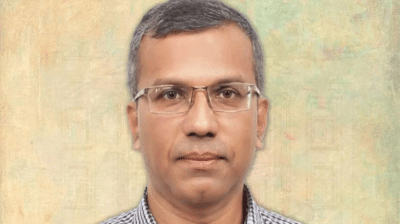
Bangladesh Bank is considering setting targets for commercial banks next year to reduce their heavy dependence on large corporate borrowers and increase lending to small and medium enterprises (SMEs) and retail customers, Governor Md Mostakur Rahman has said.
Under the proposed framework, banks may be asked to allocate
at least 20% of their total lending to retail customers and 35% to SMEs,
bringing the share of corporate lending down to 45% from the current 70–80% in
private commercial banks.
The central bank is also working to attract more foreign
currency from expatriate Bangladeshis by promoting Non-Resident Convertible
(NRC) accounts and relaxing investment restrictions on three types of
expatriate bonds, including removing their existing 15-year maturity ceiling.
The governor disclosed these plans while speaking at the
Fifth Bangladesh Economic Summit 2026, organised by Bonik Barta at Pan Pacific
Sonargaon Hotel in Dhaka on Saturday.
He said commercial banks were not licensed solely to finance
large corporate entities and that the existing concentration of lending needed
to be addressed to ensure a more balanced distribution of credit across the
economy.
"I am talking to the managing directors and chief
executive officers of banks on this issue. I think we can set a target for
lending next year. We will request bankers to allocate at least 20% of their
lending to retail customers and 35% to SMEs," he said.
He added that corporate lending, which currently accounts
for 70–80% of private banks' total lending, should be brought down to around 45%.
"The financing needs of large corporates should be met
through the capital market," he said.
According to the governor, shifting a greater portion of
corporate financing to the capital market would create purchasing power in the
economy and make it easier for large industries to sustain their operations.
The proposed lending targets are aimed at diversifying credit flows, expanding financing opportunities for smaller businesses and reducing banks' excessive exposure to large corporate borrowers.
BB seeks more foreign
currency through expatriate accounts
Alongside efforts to diversify domestic lending, Bangladesh
Bank is pursuing initiatives to attract foreign currency from non-resident
Bangladeshis to strengthen the country's foreign exchange reserves.
Mostakur Rahman said the central bank had introduced
Non-Resident Convertible (NRC) accounts to encourage expatriates to deposit
their foreign currency in the country's banking system.
Bangladesh Bank is also conducting international promotional
campaigns for the accounts with support from the Asian Development Bank (ADB).
Expressing optimism about the initiative, he said Bangladesh
could attract substantial foreign currency if the facility gained popularity
among expatriates.
Citing examples from neighbouring countries, he said India
had mobilised around $32 billion through similar accounts within four to five
months, while Pakistan had attracted approximately $13 billion.
Bangladesh also wants to tap this potential, he said.
The governor added that the central bank was working to
ensure that payments falling due under NRC accounts over the next three to four
years would not create significant pressure on the country's foreign exchange
reserves.
15-year maturity
ceiling on expatriate bonds may go
Bangladesh Bank is also working to remove the 15-year
maturity ceiling on three types of bonds available to non-resident
Bangladeshis, allowing expatriate investors greater flexibility in choosing
investment tenures.
Mostakur Rahman said the maturity of these bonds had been
restricted to a maximum of 15 years around five years ago, limiting investment
opportunities for expatriates.
"We are working to make the maturity period
unlimited," he said.
According to the governor, investments in the three categories
of expatriate bonds currently stand at around $606 million.
He expressed hope that removing the maturity restrictions
would make the bonds more attractive, encourage expatriates to invest
additional foreign currency and increase dollar inflows into the domestic
economy.
The move is also expected to support the country's foreign
exchange reserves by bringing more expatriate savings into formal investment
channels.
Banks urged to
channel excess liquidity into productive sectors
Speaking at the summit, City Bank Managing Director and CEO
Mashrur Arefin said banking sector reforms and efforts to restore governance
were gradually helping rebuild public confidence in the financial system.
He said commercial banks were holding excess liquidity of
around Tk4.82 lakh crore, which should be channelled into productive sectors to
accelerate economic growth.
Rather than focusing solely on expanding lending volumes,
banks should prioritise credit quality and provide more financing to SMEs, small
entrepreneurs, retail businesses and consumers, he said.
Arefin also highlighted the need to bring an estimated
Tk1.87 lakh crore held outside the formal banking system into the mainstream
economy.
Wider adoption of QR-code-based transactions could help
bring these funds into the formal financial system, he suggested.
On the country's macroeconomic situation, he said foreign
exchange reserves had increased to $30.12 billion under the IMF's BPM6
methodology.
Remittance inflows grew 14.2% between 1 July and 11 November
of the current fiscal year, reaching nearly $13 billion, he said.
Exports also recorded 6% growth, although the country's
export earnings remained heavily concentrated in the readymade garment sector,
which accounts for around 80.7% of total exports.
Arefin called for establishing asset management or asset
recovery companies to address the growing burden of non-performing loans and
help banks clean up their balance sheets.
Business leaders seek
sectoral support and fresh investment
Metropolitan Chamber of Commerce and Industry (MCCI)
President Kamran T Rahman called for low-interest financing to revive the
country's tea industry, saying tea producers had been selling their products
below production costs for at least five years.
Bangladesh now produces more than 100 million kilograms of
tea annually, compared with around 30 million kilograms in 1972.
However, rising costs of electricity, gas and fertiliser
have put tea producers under increasing financial pressure, he said.
Walton Hi-Tech Industries Managing Director SM Mahbubul Alam
sought additional policy support to expand electronics exports and low-cost
financing to accelerate the adoption of renewable energy.
Meanwhile, Southeast Bank Chairman MA Kashem urged the
government to organise an international investors' conference, similar to the
initiative taken in 1986, to attract foreign investment and restore confidence
in Bangladesh's economy.
He said such an initiative could help showcase investment
opportunities, encourage foreign investors and create fresh momentum for
economic growth. Recommended Stories