



 For all latest news, follow the Daily Sun's Google News channel.


World Diabetes Day
Experts call for dedicated institute to strengthen diabetes control
Daily Sun Report, Dhaka
Published: 14 Nov 2026, 09:45 AM
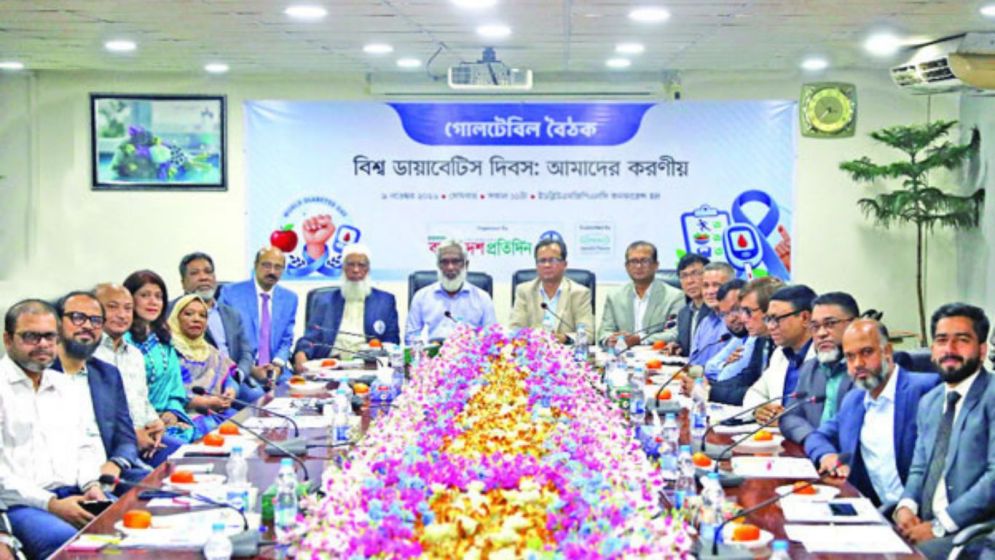
Photo: Courtesy
Bangladesh is facing a growing diabetes burden, with a significant proportion of its population either living with the disease or at risk of developing it.
Nearly half of adults are estimated to be at risk of diabetes or pre-diabetes, while around 50% of people with diabetes remain unaware of their condition.
Against this backdrop, health experts have called for establishing a National Institute of Endocrinology and Metabolism to strengthen diabetes prevention, treatment, research and specialist training.
The demand came at a roundtable discussion where speakers stressed the need for preventive healthcare, affordable medicines, early diagnosis and greater public awareness to tackle the growing disease burden.
Preventive healthcare and awareness are essential
Dr Md Zahirul Islam Shakil, secretary general of the Doctors Association of Bangladesh (DAB), said diabetes could damage almost every organ of the body and was a major contributor to serious health conditions, including kidney failure, heart disease and fatty liver disease.
He said diabetes also played a significant role in polycystic ovary syndrome (PCOS) and infertility among women.
"Keeping diabetes under control is essential to protecting public health," he said, stressing that public awareness was a key requirement for building a preventive healthcare system.
Citing the International Diabetes Federation (IDF), he said around 14 million people in Bangladesh were living with diabetes, while nearly 40% of the population had pre-diabetes.
National institute for metabolic and endocrine diseases
Dr Md Nurul Islam, director of the Directorate General of Health Services (DGHS), said the government was preparing to establish a national institute to provide modern treatment for metabolic and hormonal disorders, conduct quality research and train specialist physicians.
He said a site had already been selected for the proposed Bangladesh Institute of Metabolic and Endocrine Diseases, and project activities would begin soon.
He noted that diabetes was increasing at an alarming rate in the country, with approximately one in every eight people affected by the disease.
As diabetes has no definitive cure, he said prevention and treatment based on standard protocols are essential.
According to him, following the government's diabetes and hypertension control protocols could help manage the diseases in 67% of cases.
Treatment and medicines must be affordable
Loton Ekram, editor of Bangladesh Pratidin, called for effective measures to make quality healthcare and life-saving medicines, including insulin, affordable for low-income and ordinary people.
He said policymakers needed to demonstrate strong commitment, while the media should play a more active role in raising public awareness as diabetes was spreading at an alarming rate.
He also stressed the need to properly implement the long-discussed referral system so that poor patients would not have to visit multiple healthcare facilities and spend huge amounts of money to receive treatment.
Effective implementation of the national drug policy was also necessary to prevent medicine price hikes, particularly for insulin, and ensure an uninterrupted supply of essential medicines, he said.
He urged the authorities to prevent bureaucratic complications from delaying timely healthcare initiatives.
Today's awareness can protect tomorrow
Prof Dr Farid Uddin, president of the Association of Clinical Endocrinologists and Diabetologists of Bangladesh (ACEDB) and founding chairman of the Department of Endocrinology at Bangladesh Medical University, said diabetes had assumed epidemic proportions.
He said the growing prevalence, complications and death toll associated with diabetes had prompted the United Nations to recognise World Diabetes Day as an international observance.
Bangladesh had made significant contributions to the initiative, which was a matter of pride, he added.
Citing research findings, he said more than 50% of diabetes cases could be prevented through dietary control and regular exercise.
People with diabetes could also lead healthy and normal lives through scientifically proven treatment, he said, calling for coordinated efforts to tackle the disease.
He echoed the demand for establishing a national institute dedicated to diabetes and hormonal disorders.
Ten proposals to control diabetes
Prof Dr Indrajit Prasad, general secretary of ACEDB and head of the Department of Endocrinology at Dhaka Medical College Hospital, said the association had placed 10 proposals before the government to strengthen diabetes prevention and treatment.
The proposals include establishing a National Institute of Endocrinology and Metabolism to provide advanced treatment for complex diabetes and hormonal disorders alongside training and research.
They also call for free and regular blood sugar screening for everyone aged above 35 and people at high risk at upazila health complexes and community clinics.
The association recommended ensuring year-round availability of essential diabetes medicines, insulin and blood glucose testing strips at government hospitals and community clinics, either free of charge or at affordable prices.
Other proposals include creating endocrinologist posts at every district hospital, appointing diabetes educators and nutritionists, and arranging regular training for primary healthcare physicians.
Gestational diabetes needs special attention
Prof Dr Firoza Begum, president of the Obstetrical and Gynaecological Society of Bangladesh (OGSB), said national development was impossible without addressing women's health, as women account for more than half of the country's population.
She said more than 25 % of pregnant women in Bangladesh had diabetes and presented with a high body mass index (BMI), posing significant health risks.
Uncontrolled diabetes during early pregnancy increases the risks of congenital abnormalities, premature delivery and stillbirth, she said.
According to the American Diabetes Association guidelines, insulin treatment should begin from the first trimester in women with gestational diabetes mellitus (GDM) or pre-existing diabetes during pregnancy, she added.
She said around 4,000 gynaecologists affiliated with OGSB regularly referred mothers with diabetes to endocrinologists for specialised care.
Diabetes control can reduce complications
Prof Dr Mohammad Ibrahim Chowdhury, director of the National Institute of Cardiovascular Diseases and Hospital, said diabetes was one of the major public health challenges in Bangladesh.
He said the disease was not limited to elevated blood sugar levels but was also a major risk factor for heart disease, stroke, kidney failure, eye problems and neurological complications.
People with diabetes face a significantly higher risk of cardiovascular disease, and heart-related symptoms may not always appear in the usual way among them, he said.
He stressed the importance of healthy eating, regular physical activity, weight management, avoiding smoking and routine blood sugar testing to prevent and control diabetes.
Regular monitoring of blood pressure, cholesterol and kidney function, alongside medication and follow-up consultations as advised by physicians, was also essential, he added.
The roundtable was moderated by Golam Mahbub Liton, news editor of Bangladesh Pratidin.
Among others, Dr Sayeed Mehbub Ul Kadir, director of the National Institute of Ophthalmology and Hospital; Prof Dr Mohammad Nazrul Islam of Bangladesh Medical University; Prof Dr Mir Mosharraf Hossain, vice-president of ACEDB; Prof Dr AKM Aminul Islam, treasurer of ACEDB; and several other endocrinology specialists, healthcare professionals and representatives of Opsonin Pharma Limited attended the discussion.