


 For all latest news, follow the Daily Sun's Google News channel.


Dhaka pushes for grant-based climate finance, green jobs at COP31
Daily Sun Report, Dhaka
Published: 11 Nov 2026, 08:18 PM
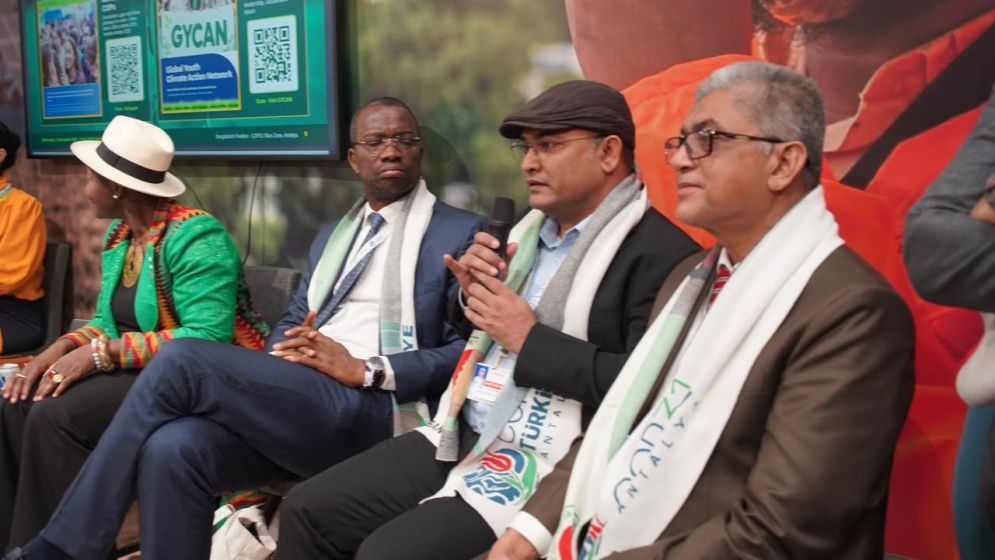
Photo: Courtesy
Bangladesh aims to take a leading role in advancing the
interests of climate-vulnerable countries at the 31st UN Climate Change
Conference (COP31), rather than limiting its efforts to highlighting its own
climate challenges, said Dr Saimum Parvez, the prime minister's special
assistant for environment, forests and climate change.
Bangladesh is pressing for increased funding for climate
adaptation, mitigation and loss and damage, despite contributing only a small
share of global carbon emissions while facing significant climate-related
losses, Parvez, who is also deputy head of the country's COP31 delegation, told
reporters at the conference.
He said climate finance should be provided as grants rather
than loans, arguing that it would be unfair to impose additional debt burdens
on countries that bear little responsibility for climate change.
Bangladesh is coordinating with the Climate Vulnerable Forum
(CVF), the Least Developed Countries (LDC) Group and regional partners through
Bangladesh-Bhutan-Nepal cooperation to advance the collective demands of
climate-vulnerable nations, he said.
Parvez described the prime minister's participation in COP31
as an important reflection of Bangladesh's environmental and climate
commitments. One of the country's key priorities at the conference is ensuring
a just energy transition, he said.
The government aims to shift from a fossil fuel-dependent
economy towards renewable energy while protecting existing jobs and creating
new employment opportunities in green industries.
Over the next five years, the government plans to plant 25
crore trees and excavate or re-excavate 20,000 kilometres of canals to
strengthen environmental protection and climate resilience, Parvez said. Other
priorities include renewable energy, waste management, methane emission
reductions and the development of environmentally friendly industries.
Bangladesh has made progress in disaster preparedness
through early warning systems for cyclones and floods, volunteer networks,
salt-tolerant crops and floating agriculture, he said. These initiatives could
serve as examples for other climate-vulnerable countries.
The delegation is also seeking to expand international
markets for jute and biodegradable products as alternatives to plastic. During
a meeting with Türkiye's first lady, Bangladesh proposed expanding the global
reach of these products, with discussions yielding a positive response and
potential opportunities for technical cooperation, Parvez said.
Bangladesh is also considering setting up a pavilion to showcase
and promote such products.
On carbon markets, he said work was progressing on a
national policy framework and the establishment of a carbon registry. These
initiatives are expected to create new opportunities for Bangladesh to access
climate finance through international carbon markets.
Bangladesh wants to position itself not only as a country
affected by climate change but also as a climate-resilient, innovation-driven
nation with economic potential, Parvez said.
He expressed hope that the prime minister's leadership and
the delegation's diplomatic efforts at COP31 would strengthen Bangladesh's push
for equitable climate finance, grant-based assistance, green employment and the
collective interests of climate-vulnerable nations.
Editorial note: I have retained the original claims, figures and attributions. The headline foregrounds Bangladesh's diplomatic ambition, while the opening paragraphs establish the central issue of climate finance. I have also consolidated repetitive references to the country's climate priorities without removing substantive details.