



 For all latest news, follow the Daily Sun's Google News channel.


No legal scope to issue passport to Hasina: Chief Prosecutor
Daily Sun Report, Dhaka;
Published: 10 Nov 2026, 04:01 PM
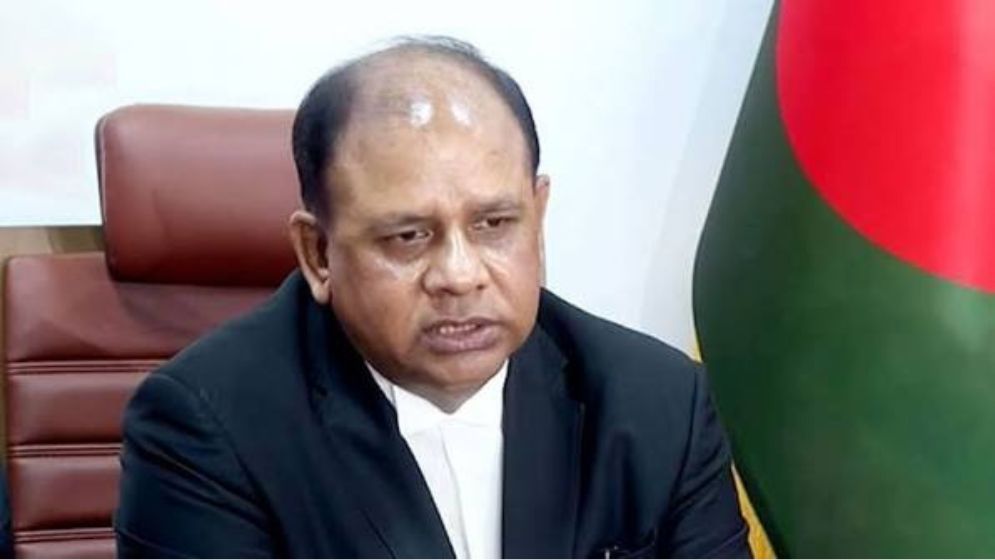
Chief Prosecutor Md Aminul Islam. Photo: Collected
There is no legal scope for issuing a fresh passport to ousted prime minister Sheikh Hasina, who has been sentenced to death for crimes against humanity, said Chief Prosecutor of the International Crimes Tribunal (ICT) Md Aminul Islam.
Speaking at a press conference on the ICT premises on
Tuesday, he said that the Bangladesh government could not issue a passport to a
convicted person who had evaded judicial proceedings and remained a fugitive.
Referring to the Bangladesh Passport Order, 1973, the chief
prosecutor said that Article 6 bars passport issuance to a person convicted
within five years preceding an application if the sentence is at least two years'
imprisonment.
He also cited Article 7, which provides for the seizure or
cancellation of passports issued to individuals convicted of offences involving
moral turpitude.
The chief prosecutor said that Hasina had been sentenced to death by the International Crimes Tribunal for crimes against humanity, which fall within the category of offences involving moral turpitude. Her passport had consequently been cancelled, he added.
He further said that the relevant provisions of Article 6,
particularly sub-clauses (a), (b), (c) and (e), collectively left the passport
authorities with no legal authority to issue a new passport to her.
Referring to Article 36 of the Constitution, which
guarantees citizens the right to enter and leave Bangladesh, Aminul Islam said
that the constitutional provision did not override the restrictions applicable
to convicted or fugitive individuals.
He alleged that Hasina had evaded judicial proceedings
against her and noted that an arrest warrant had been issued to facilitate her
return to Bangladesh. Other legal and administrative steps had also been taken
in this regard, he said.
Under Article 6(e) of the Passport Order, a person who
evades ongoing judicial proceedings or remains a fugitive is not eligible for a
passport, he added.
Commenting on reports that a London-based law firm had
approached the Bangladesh High Commission in New Delhi seeking a new passport
for Hasina, the chief prosecutor questioned the legal authority of the firm to
submit such an application on her behalf.
He said a passport application must be made by the concerned
individual and claimed that neither Hasina herself nor her political party had
directly submitted any application.
Instead, a London-based legal chamber had filed the request,
he said, questioning the nature of the legal agreement between the firm and
Hasina, who is currently staying in India.
He also pointed out that no copy of the alleged agreement
between the lawyer's chamber and its client had been made public.
Aminul Islam said that the Bangladesh Passport Order, 1973,
was enacted by the country's first government after independence and that its
provisions did not permit the issuance of a passport to Hasina under the
present circumstances.
Issuing a passport or travel document to a convicted
individual in such circumstances would amount to undermining the judicial
process, he added.