


 For all latest news, follow the Daily Sun's Google News channel.


Draft law proposes legal protection for rescuers of road accident victims
BSS, Dhaka
Published: 07 Nov 2026, 01:09 PM
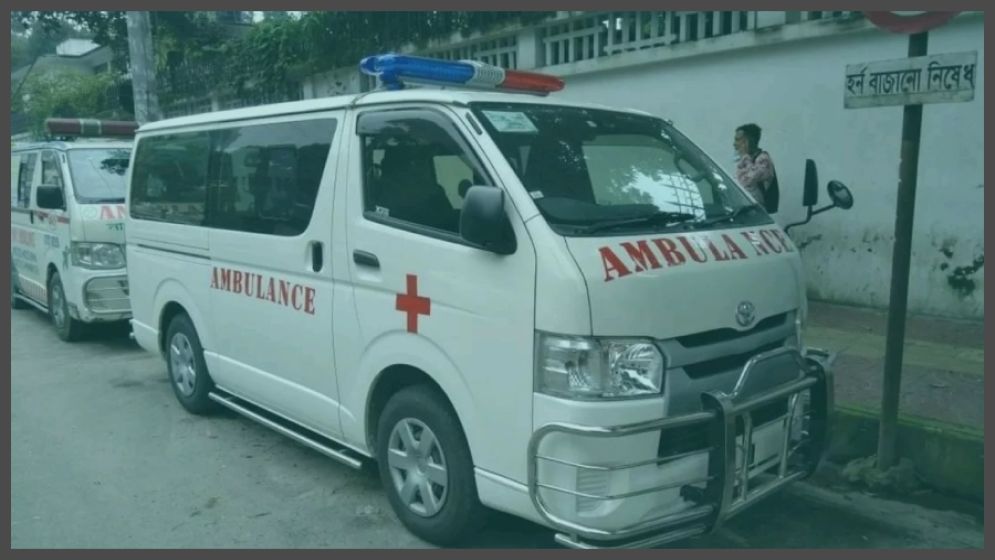
Draft law proposes legal protection for rescuers of road accident victims. Photo: Collected
No rescuer providing humanitarian assistance to a road accident victim can be held liable in criminal or civil cases solely for rescuing the injured person and taking them to hospital, under a proposed provision in the draft Road Safety Act 2026.
Even if the injured person subsequently dies, the rescuer would not be held liable solely for providing such assistance, according to the proposed provision on legal protection for 'Good Samaritans' or humanitarian rescuers.
The draft has been designed to save the lives of road accident victims and encourage public participation in rescue operations.
The first hour after an accident is extremely crucial for saving the life of an injured person and is commonly referred to as the 'golden hour'. Providing proper medical treatment within this period can significantly reduce the risk of death and serious physical injuries.
However, many people are often reluctant to take injured victims to hospital for fear of police complications, legal cases or being summoned to court.
As a result, many victims become critically ill due to delays in receiving timely medical treatment. To change this situation, the proposed law has placed emphasis on legal protection for rescuers, emergency medical services at hospitals and the development of a rapid rescue system.
Currently, Section 62 of the Road Transport Act 2018 requires the driver, conductor or representative of a motor vehicle involved in an accident to report the incident to the nearest police station and take the injured person to a hospital promptly to ensure medical treatment.
Violation of this provision carries a penalty of up to one month's imprisonment, a fine of Taka 20,000 or both. However, the need to further strengthen explicit legal protection for ordinary citizens providing humanitarian assistance has emerged.
Speaking to BSS in this regard, Secretary of the Road Transport and Highways Division Dr Mohammad Ziaul Haque said, "An effective protection mechanism is important so that ordinary people do not hesitate to take accident victims to hospital promptly out of fear of legal complications. Therefore, the proposed Good Samaritan protection provision has been designed to ensure the safety of rescuers."
Under the proposed provision, anyone who rescues an injured person, provides first aid or transfers them to hospital in good faith and on humanitarian grounds cannot be held liable in criminal or civil cases for any accident-related injury or death resulting from such assistance.
Asked for his opinion, Bangladesh Supreme Court lawyer Barrister Tahmidur Rahman told BSS that providing legal protection to people who take injured victims to hospital on humanitarian grounds could encourage public participation in rescue operations.
However, he said, the scope of protection in the law needs to be clearly defined to distinguish genuine humanitarian assistance from intentional harm or gross negligence.
The proposed law also calls for the formation of community volunteer and ambulance teams to reach accident sites quickly after receiving information about an incident. These teams will work towards reaching the scene within 30 minutes of receiving an accident report.
It also places emphasis on taking injured victims to appropriate hospitals and ensuring treatment within the golden hour.
The proposal also seeks to make hospitals and healthcare centres responsible for providing initial treatment to injured people in emergencies.
The draft Road Safety Act 2026 also places emphasis on accident prevention and the construction of safe infrastructure, alongside post-accident medical care.
It proposes ensuring safety in road design, construction and management. If an accident occurs due to faulty design or unsafe infrastructure, the responsible individual or organisation may face up to two years' imprisonment or a fine of Taka one lakh.
For pedestrian safety, the draft emphasises the construction of footpaths, safe crossing facilities and necessary infrastructure.
It also proposes making helmet use mandatory for both motorcycle drivers and pillion riders, formulating safety regulations for transporting children and constructing separate lanes for cyclists.
The draft also includes provisions for ensuring roads and public transport suitable for women, children, elderly people and persons with disabilities.
According to experts, road accidents cannot be prevented by simply blaming drivers' mistakes or negligence. All aspects, including road design, construction, maintenance, the technical condition of vehicles, speed limits and traffic management, must be considered in an integrated manner.
In this regard, emphasis has been placed on following the internationally recognised 'Safe System Approach'.
The existing Road Transport Act 2018 provides for punishing drivers responsible for accidents. Under Section 98 of the law, reckless driving, exceeding prescribed speed limits, risky overtaking or carrying excess passengers or goods that cause loss of life or property in an accident are punishable by up to three years' imprisonment, a fine of Taka three lakh or both.
Under Section 105, incidents of serious injury or death caused by reckless or negligent driving may, subject to specified conditions, carry a penalty of up to five years' imprisonment, a fine of Taka five lakh or both.
One of the key objectives of the proposed new road safety law is to contribute to achieving the global target of reducing deaths and injuries from road accidents by 50 percent by 2030.
According to concerned stakeholders, effective implementation of Good Samaritan protection will reduce public fear and hesitation about taking injured accident victims to hospital.
However, to prevent misuse of this protection, the law needs to clearly define the conditions for providing assistance in good faith, liability in cases of intentional harm and gross negligence, and the process for collecting the identity of rescuers.
As prompt medical treatment is essential to saving the lives of road accident victims, timely action by a driver, pedestrian or eyewitness can save lives.
Therefore, an effective road safety system can be established only by ensuring safe infrastructure, emergency rescue services, hospital medical care and legal protection for humanitarian rescuers, alongside punitive measures.