


 For all latest news, follow the Daily Sun's Google News channel.


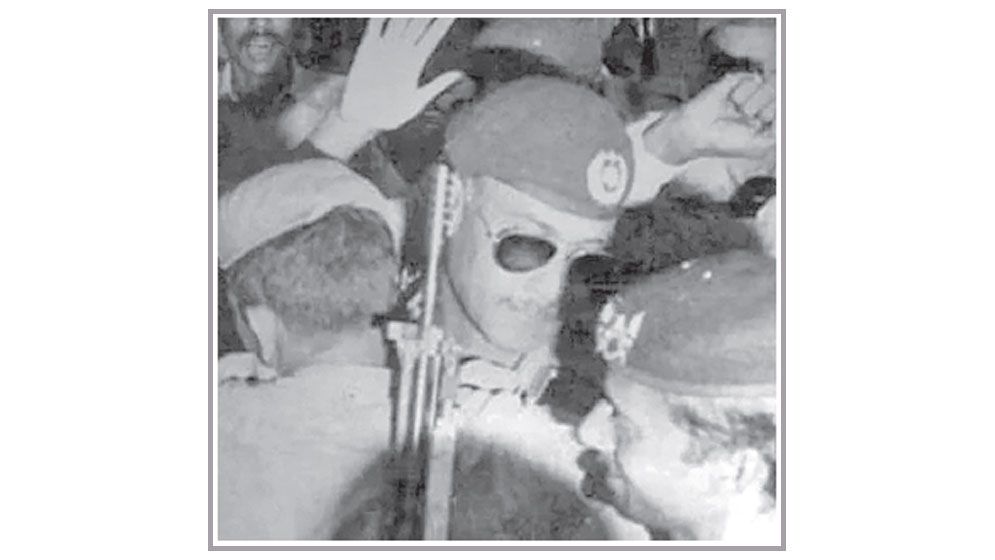
Ziaur Rahman was a blessed son of history, repeatedly drawn into pivotal moments in the nation’s destiny.
Whenever the country faced a crisis during the War of Liberation or in the years that followed, he found himself at the centre of events, often playing a decisive role, whether by design or circumstance.
The 7 November 1975 uprising thrust him back into the heart of Bangladesh’s military and political landscape, 1,686 days after his declaration of Bangladesh’s independence on 27 March 1971.
His release from house arrest and reinstatement as Army chief, however, did not immediately translate into undisputed authority.
Rather, it marked the beginning of a much bigger challenge: restoring order in a deeply divided military, a fragile government and an increasingly influential ultra-leftist political force, the Jatiya Samajtantrik Dal (JSD), whose revolutionary ambitions differed fundamentally from his vision of the country’s future.
At the time, the Army was plunged into an unprecedented crisis of discipline following weeks of coups, counter-coups and internal bloodshed following the assassination of then President Bangabandhu Sheikh Mujibur Rahman and most of his family members on 15 August 1975. The coup, carried out by a group of mid-ranking officers, created multiple rival power centres within the military and weakened its chain of command.
Appointed Army chief on 25 August, Ziaur Rahman initially served under the military-backed government of then President Khondaker Mostaq Ahmad. But he could hardly approach the President to seek decisions on vital matters, as Mostaq had placed two layers of obstruction between them by appointing Gen (retd) MAG Osmani as his defence and security adviser and Maj Gen (retd) Khalilur Rahman as chief of defence staff. Officers involved in the 15 August coup were also kept at Bangabhaban, according to Lt Col (retd) MA Hamid’s book Tinti Sena Ovvutthan o Kichu Na Bola Kotha.
In this situation, on 3 November, then Chief of General Staff (CGS) Brig Khaled Mosharraf staged another coup, placing Zia under house arrest and removing him from the Army leadership. On the same day, four national leaders who had led the War of Independence in Sheikh Mujibur Rahman’s absence — Syed Nazrul Islam, Tajuddin Ahmad, Captain Mansur Ali and AHM Quamruzzaman — were brutally killed inside Dhaka Central Jail.
Mosharraf’s takeover, however, failed to consolidate authority. Resentment among soldiers, factional rivalries within the Army and the growing influence of leftist political groups created an explosive situation.
In the early hours of 7 November, soldiers revolted with the organisational backing of Col (retd) Abu Taher and his Biplobi Sainik Sangstha and Gonobahini, the military and civilian armed wings of the JSD, according to Lawrence Lifschultz’s Bangladesh: The Unfinished Revolution. Zia was released from captivity, while Khaled Mosharraf and several other senior officers were killed.
For Zia, the path ahead was far from easy, with numerous adversaries on different fronts. Lt Col (retd) MA Hamid writes that although the uprising achieved its two immediate objectives — overthrowing the Khaled Mosharraf-led faction and releasing and reinstating Ziaur Rahman — the demand for establishing a classless army based on the revolutionary soldiers’ 12-point demands remained unresolved.
Inside the cantonment, Zia faced soldiers influenced by the Biplobi Sainik Sangstha (Revolutionary Soldiers’ Organisation), those involved in the 15 August coup and supporters of Brig Khaled Mosharraf who had taken part in the 3 November coup. Outside, Awami League sympathisers and members of the JSD and its Gonobahini (People’s Force) were also poised to destabilise an already deteriorating situation.
Describing the events of 8 November, Brig Gen (retd) Sakhawat Hossain writes in his book Bangladesh: Roktakto Oddhay 1975-81: “Later that afternoon, after the weapons had been surrendered, a group of soldiers who were hardcore members of Col (Retd) Taher’s Biplobi Sainik Sangstha began spreading various provocative messages. At around dusk, some members of the organisation dragged three innocent officers out of the Ordnance Mess and killed them in front of the mess.”
He further writes: “I was surprised to see that only 40 to 50 officers were present in the entire Dhaka Cantonment that day. The gathering was, in effect, an armed show of strength, as almost all the soldiers, except those 40 to 50 officers, were carrying weapons.” The soldiers continued chanting slogans: “Soldiers are brothers, we want officers’ blood.”
Sakhawat writes that the soldiers had vowed to continue their struggle until all their demands were met.
“At around 9pm on 8 November, I was sitting at the Brigade Headquarters when the brigade’s signal operator came to inform me that the Biplobi Sainik Sangstha had prepared another list of officers to be killed that night,” he writes.
According to Sakhawat, Ziaur Rahman moved swiftly and firmly across the cantonment, meeting and talking to soldiers. At various gatherings, he began emphasising the need to restore discipline and re-establish the army’s chain of command.
Maj Gen (retd) Moinul Hossain Chowdhury also recounts similar events in his book Ek General-er Nirab Shakhya: Swadhinotar Prothom Dashak. Recalling a speech delivered by Ziaur Rahman, he writes: “The situation was still somewhat tense. Zia tried to calm the soldiers, but failed. At one point, he took off his army belt, threw it to the ground and said, ‘If you keep making so many demands, I no longer wish to remain the Army chief.’ The situation calmed down somewhat afterwards. Following the speech, we all returned to Army Headquarters.”
Years later, recalling that day, Moinul could not hide his apprehension, wondering what might have happened had Ziaur Rahman failed to bring the situation under control.
“If the soldiers at Dhaka Cantonment had not been brought under control that day, a leaderless and terrible class struggle marked by indiscipline would have erupted across the country, both within the military and among civilians,” he writes.
This was how Zia initially confronted the turmoil inside the cantonment. But the challenges did not end there. Debates and discussions continue over the methods he later adopted to deal with the resentment and unrest.
Zia also had to navigate the political vacuum. Although he emerged as the most influential military figure after 7 November, he did not immediately become president or assume full executive authority. President Justice Abu Sadat Mohammad Sayem became chief martial law administrator, while Zia and the chiefs of the other two services served as deputy chief martial law administrators.
Zia became chief martial law administrator on 19 November 1976, following Sayem’s resignation, and president on 21 April 1977. Thus, 7 November opened the door to power for him, but consolidating that power took another year and a half.