


 For all latest news, follow the Daily Sun's Google News channel.


LNG power face rising subsidy burden, financing risks in Bangladesh
Institute for Energy Economics and Financial Analysis (IEEFA) reports
Daily Sun Report, Dhaka
Published: 05 Nov 2026, 02:23 PM
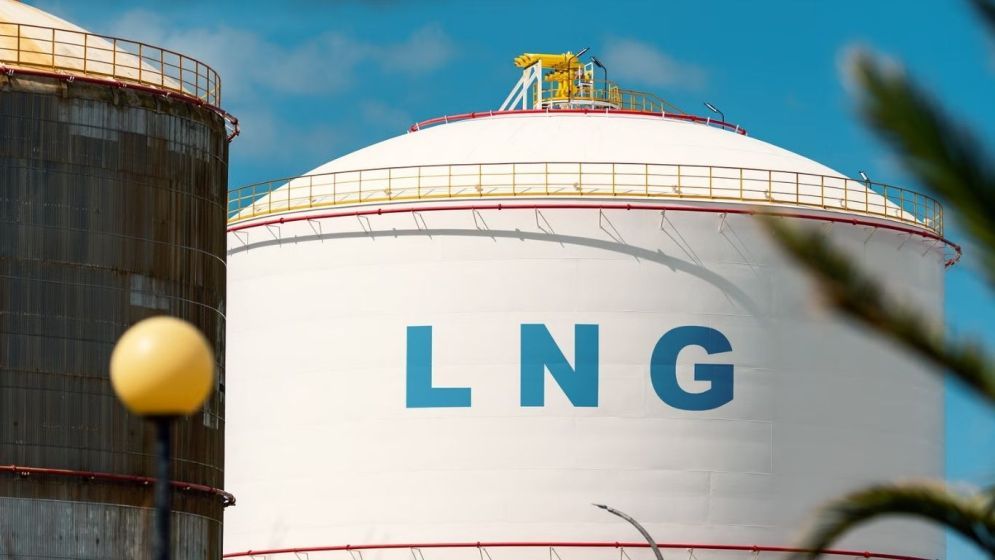
Bangladesh has to provide more than Tk60 in subsidy for every cubic metre of gas when imported LNG costs $20 per million British thermal units (MMBtu). Supply disruptions have forced the country to pay even higher prices at times this year, putting further pressure on public finances.
The rising cost of LNG has also undermined the viability of new gas-fired power projects across emerging Asia. More than half of the proposed LNG-fired power plants and import terminals in Bangladesh and three other Asian countries have been cancelled or made little progress since 2021, according to a new report by the Institute for Energy Economics and Financial Analysis (IEEFA).
The report, titled LNG-to-Power in Emerging Asia: A Five-Year Review of Project Outcomes, released on Thursday. It examines LNG-related projects in Bangladesh, Philippines, Vietnam and Thailand over the past five years.
Shafiqul Alam, IEEFA's lead energy analyst for Bangladesh, said LNG price trends over the past four to five years had raised serious concerns about affordability and supply reliability for a price-sensitive importer like Bangladesh.
The country would be better off using its untapped domestic gas resources, significantly improving energy efficiency and expanding renewable energy on a large scale, he said.
IEEFA reviewed 92 proposed LNG-fired power projects worth an estimated $109.2 billion and 44 LNG import terminals valued at $21 billion across the four countries.
Of these, 49 proposed power plants and 22 LNG regasification terminals, worth a combined $67.8 billion, were cancelled or made no notable progress between 2021 and 2026. Their combined value was nearly 4.5 times that of the projects completed during the same period.
Only 11 percent of the proposed power generation capacity and 15 percent of the proposed LNG import terminal capacity came online across the four markets during the period.
Completed power plants took more than seven years on average to reach commercial operation, significantly longer than the three to four years typically projected by developers.
Rising costs undermine project viability
The report said volatility in LNG prices, higher capital costs, longer delivery times for gas turbines and depreciation of Asian currencies against the US dollar had weakened the financial viability of LNG-to-power projects. These factors have also made it more difficult for developers to secure financing.
Christopher Doleman, co-author of the report and IEEFA Asia's LNG and gas specialist, said the combined impact of these risks could increase the lifetime levelised cost of electricity from LNG-fired power plants by up to 130 percent compared with the assumptions made in 2021.
Many energy plans in emerging Asia had been based on expectations of lower fuel prices and affordable capital, but those assumptions no longer held, he said.
Asian spot LNG prices reached $27.50 per MMBtu in September 2026, nearly three times pre-conflict levels.
Global LNG prices have remained well above their pre-2020 averages following Russia's full-scale invasion of Ukraine in 2022 and the outbreak of conflict in the Middle East in 2026.
The report also highlighted a global shortage of gas turbines, which is pushing up construction costs and delaying new gas-fired power projects.
Capital costs for recent gas projects in the United States have nearly quadrupled since 2022, while delivery times for heavy-duty gas turbines now extend to six years or more.
Meanwhile, falling costs and shorter deployment times for solar and wind power are reducing the need for LNG-fired baseload generation. Growing battery storage capacity could further reduce reliance on gas plants to meet peak demand, increasing the risk of underutilised gas infrastructure.
Bangladesh's subsidy burden grows
According to the report, Bangladesh has commissioned three LNG-fired power plants since 2021. But high LNG and electricity costs have increased the government's subsidy burden and deepened its reliance on external financing to protect foreign exchange reserves.
Despite substantial spending, the country continues to face gas shortages because of unreliable LNG supplies.
Shafiqul Alam said the government provides more than Tk 60 in subsidy per cubic metre of gas when imported LNG costs $20 per MMBtu. Supply disruptions have forced Bangladesh to purchase LNG at even higher prices at different times this year, putting additional pressure on public finances.
He said addressing the energy crisis would require more than increasing LNG imports. The country should make better use of domestic gas, improve energy efficiency and expand renewable energy.
He also called for greater attention to demand-side electrification alongside renewable energy expansion. For example, industries could replace gas-fired boilers with highly efficient heat pumps, reducing gas consumption while improving energy efficiency.
Different challenges across four countries
The report identified different barriers to LNG investment in the four countries.
In the Philippines, several projects have been cancelled since 2021, largely because developers struggled to secure bankable power offtake agreements with distribution utilities. Renewable energy expansion has also complicated dispatch arrangements for fossil fuel-based plants, while limited LNG demand outside the power sector has weakened the business case for new import terminals.
Vietnam has ambitious LNG-to-power targets, but only one LNG-fired power project has reached commercial operation in the past five years. Uncertainty over the bankability of power purchase agreements, rising LNG prices and the ability to recover costs through electricity tariffs have discouraged investment and raised concerns about the financial health of the state-owned utility.
Thailand has made comparatively greater progress in developing gas-fired power projects. However, a significant share of the capacity of existing gas-fired plants and LNG terminals remains underutilised.
Sam Reynolds, co-author of the report and IEEFA Asia's LNG and gas research lead, said volatility in fuel, equipment and currency markets had increased execution risks for LNG-to-power projects across emerging Asia.
Weakening revenue certainty had also made it harder to secure project financing, slowing LNG expansion far below the expectations of the global gas industry.
The poor track record of LNG-to-power projects since 2021 suggests that expectations of rapid LNG demand growth in emerging Asia may be disconnected from actual project outcomes, he said.