


 For all latest news, follow the Daily Sun's Google News channel.


RMG workers to get revised wages with January salary
New wage rates to take effect from 1 December as owners, workers agreeNew wage rates to take effect from 1 December as owners, workers agree
Daily Sun Report, Dhaka
Published: 04 Nov 2026, 02:40 PM
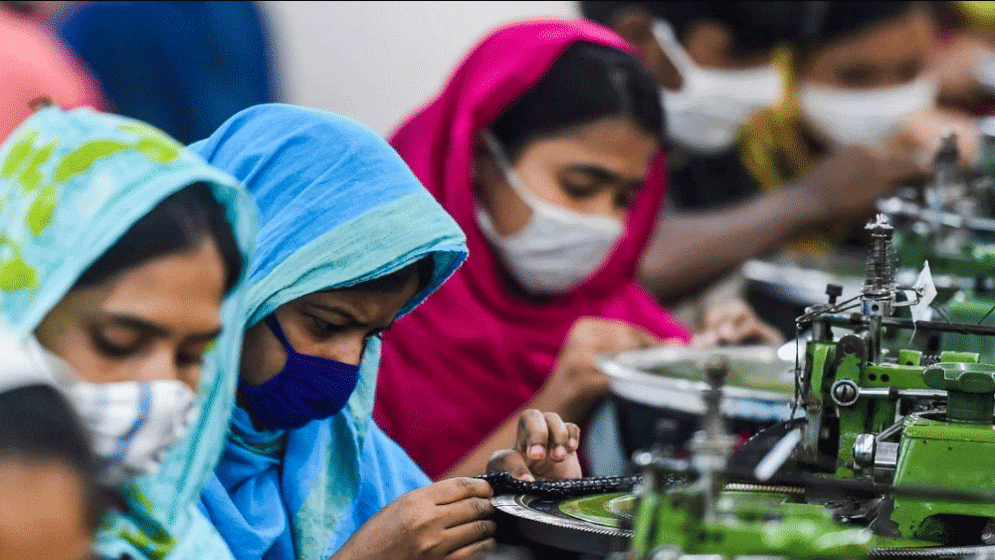
File Photo
Readymade garment workers are expected to receive their revised minimum wages with their January salaries, following an agreement between representatives of factory owners and workers at the first meeting of the newly formed minimum wage board on Wednesday.
The representatives agreed that the revised wages would take effect from 1 December and workers would receive the increased amount with their January salaries, within the first seven working days of the month.
The understanding came at the first meeting of the eighth minimum wage board for the readymade garment (RMG) sector, held at the board's office in Segunbagicha, Dhaka, with its chairman, District and Sessions Judge Syed Azad Subhani, in the chair.
Speaking to journalists after the meeting, chairman Syed Azad Subhani expressed optimism that the board would make significant progress towards preparing its recommendations within a month.
He said the government formed the wage board on 1 November and convened its first meeting just three days later.
The meeting discussed the legal procedures and methods for determining the minimum wages, while representatives of workers and employers shared their views and experiences.
"We hope to make significant progress towards preparing the wage recommendations at our next meeting. We may also seek written proposals and recommendations from both sides," the chairman said.
Asked how many meetings might be required this time compared with seven meetings during the previous wage-setting process, he said such exercises generally have a six-month timeframe.
However, he hoped the process would not take as long as before, given the government's prompt formation of the board and its early commencement of work.
Addressing workers who have been demonstrating for higher wages, he urged them to have confidence in the board, saying its work plan and procedures were in their interests.
He also called on workers to continue their work, stressing their contribution to the country's economy.
Asked whether the new wages would be announced by December, the chairman did not give any specific deadline but expressed optimism about reaching a positive outcome soon.
Worker representative Babul Akhtar said the representatives of workers and employers had reached an understanding at the meeting that the revised wages would be effective from 1 December and workers would receive the increased salary with their January pay.
He said worker representatives wanted the wage-setting process to be completed within December so that workers could receive the revised wages from January.
An employers' representative also expressed agreement with completing the process within December and ensuring that workers receive the increased amount with their January salaries.
Babul Akhtar said both sides had discussed the workers' demands in a cordial atmosphere and expressed gratitude to the chairman for convening the first meeting within a short time.
He urged workers to remain calm and avoid being influenced by any third party or political interest, saying the interests of workers and employers were linked to the survival of the garment industry.
He also called on the government to address workers' other longstanding grievances, including the implementation of labour laws, trade union rights, leave facilities and alleged harassment of workers and labour leaders.
The worker representative said different labour organisations had proposed varying wage demands, and the federations would sit together to formulate a common proposal for submission to the board.
He also urged the board's independent member to prepare an independent wage proposal for consideration.
The chairman said the next meeting could be held next week, allowing both worker and employer representatives time to consult their respective organisations and experts before submitting proposals.
He cautioned that rushing the process might not produce the desired outcome.
The board will prepare its recommendations after considering proposals from both sides and submit them to the government for further action.