


 For all latest news, follow the Daily Sun's Google News channel.


Bangladeshis get new route to Italy outside migration quota
Daily Sun Report, Dhaka
Published: 04 Nov 2026, 12:00 AM
File Photo
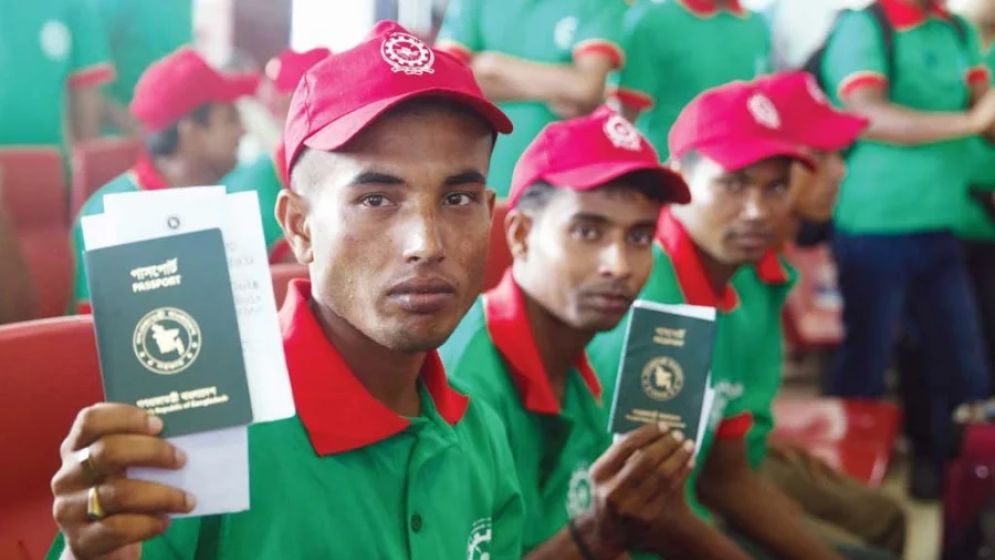
Bangladeshi workers can now migrate to Italy outside its annual foreign worker quota by completing government-approved language and professional training in Bangladesh, free of charge.
Under Article 23 of Italy’s immigration law, workers completing pre-departure training certified by the Italian Ministry of Labour and Social Policies can enter without being subject to the annual Decreto Flussi quota.
The initiative was highlighted at a seminar titled “Language, Civic and Professional Training for Skilled Migration to Italy” at Dhaka Regency Hotel and Resort on Tuesday.
The free training covers basic Italian, civic education and sector-specific professional skills. Unlike regular migration, it has no fixed application window or “click day”, allowing year-round applications.
Around 2.17 lakh Bangladeshis currently live legally in Italy, including 80,000 work permit holders. Under the regular Decreto Flussi system, Italy plans to recruit 164,850 foreign workers in 2026, 165,850 in 2027 and 166,850 in 2028, totalling 4,97,550. Bangladesh has a designated quota, but Article 23 provides an alternative route beyond it.
Antonio Milo, a representative of Format, said the initiative offers quota-free entry, free training, Italian government monitoring and pre-departure language and professional skills. These skills could also benefit trainees who eventually choose not to migrate. The Italian Embassy said the initiative's guidelines were adopted on 7 July 2023.
Warning against fraud
The seminar warned prospective migrants against brokers and unauthorised intermediaries amid widespread fraud. Official Italian visa fees range from 50 to 116 euros, while the VFS service charge is 38 euros, bringing the maximum total to 154 euros. Brokers reportedly demand $10,000–15,000, often using fake documents and false promises.
Prospective migrants were advised to follow information from the Italian Embassy and the Bureau of Manpower, Employment and Training (BMET).
Workers must apply for a residence permit at the relevant police headquarters (Questura) within eight days of arriving in Italy. The permit is valid for up to two years, depending on the employment contract, and is renewable.
Chief guest Mahdi Amin, adviser to the Ministry of Expatriates' Welfare and Overseas Employment and spokesperson for the Prime Minister's Office, said the government would try to issue expatriate cards before workers' departure to facilitate remittances and access to government services. Government agencies, including Bangladesh Overseas Employment and Services Limited (BOESL), would support skilled migration.
He said trainees were undergoing five to six months of Italian language training and the government was considering introducing the curriculum at technical training centres and vocational institutions.
Italian Ambassador Antonio Alessandro delivered the opening remarks, while Baiba Zarina, deputy head of the EU Delegation to Bangladesh, highlighted the EU's Talent Partnerships initiative for safe and skilled migration. Representatives of the International Labour Organization, International Organization for Migration, Format and Frontier Skills also addressed the seminar.
Two groups are currently receiving Article 23 training: one in restaurant and hospitality services under Frontier Skills' TASTE project and another in the textile sector under Format.